Post by : Shakul
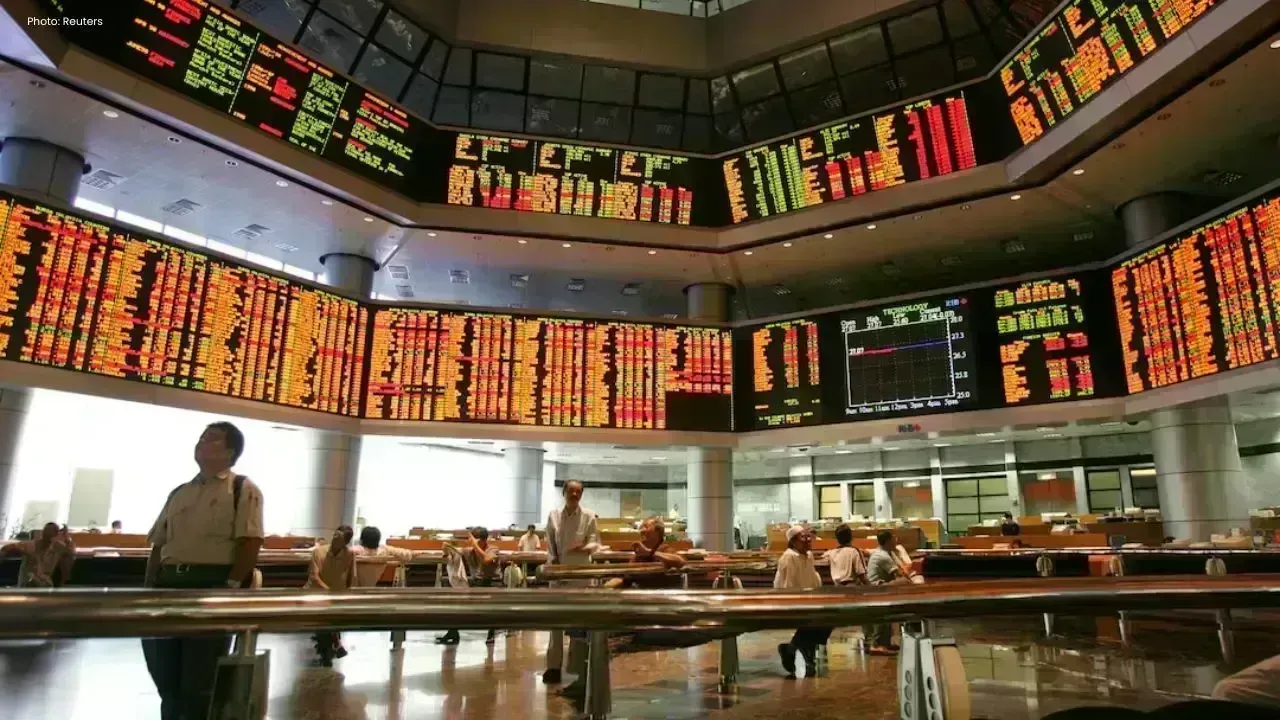
On Wednesday, Bursa Malaysia experienced a downturn as fears surrounding the global economy intensified. Investors displayed diminished confidence due to rising bond yields and heightening geopolitical tensions. Analysts observed a trend towards safer asset adoption throughout the trading session.
The FTSE Bursa Malaysia KLCI recorded a decline of 9.58 points, or 0.56 percent, closing at 1,717.69, a fall from Tuesday's 1,727.27. The index fluctuated between 1,716.47 and 1,727.50 during the day following an initial drop in early trading.
The market's breadth revealed a predominantly negative climate, with 840 stocks declining compared to 366 that advanced, indicating significant selling pressures across multiple key sectors like technology, finance, and export-driven firms.
Economists highlighted a pronounced weakening of global sentiment following a significant sell-off in semiconductor and technology shares globally. Investors expressed concerns over rising inflation and the potential for prolonged elevated interest rates from major central banks, which could heighten borrowing costs and diminish market liquidity.
Renewed geopolitical tensions, particularly following US President Donald Trump’s comments on possible military actions involving Iran, added to the pressure. Analysts noted that these developments heightened fears of energy supply disruptions and broader financial instability, leading many investors to adopt defensive stances across regional markets.
In the heavyweight sector, Maybank and Public Bank both saw declines of two sen, while CIMB fell by eight sen. Tenaga Nasional and IHH Healthcare also reflected losses as selling persisted throughout the trading day. However, certain stocks like Malaysian Pacific Industries and Fraser & Neave managed to achieve gains despite the adverse market conditions.
Trading levels remained robust with a total turnover of 4.15 billion units, equating to RM4.29 billion, up from 3.36 billion units valued at RM3.24 billion in the preceding session. Market watchers interpreted the increased activity as a reflection of heightened volatility and investor repositioning amid the uncertain global landscape.
Financial analysts project that investor caution will persist in the near future as markets continue to evaluate inflation rates, central bank strategies, global bond trends, and geopolitical developments. They suggest that regional equity markets may remain prone to fluctuations until more clarity on global economic stability emerges.


 English