Post by : Saif
Al-Najjar
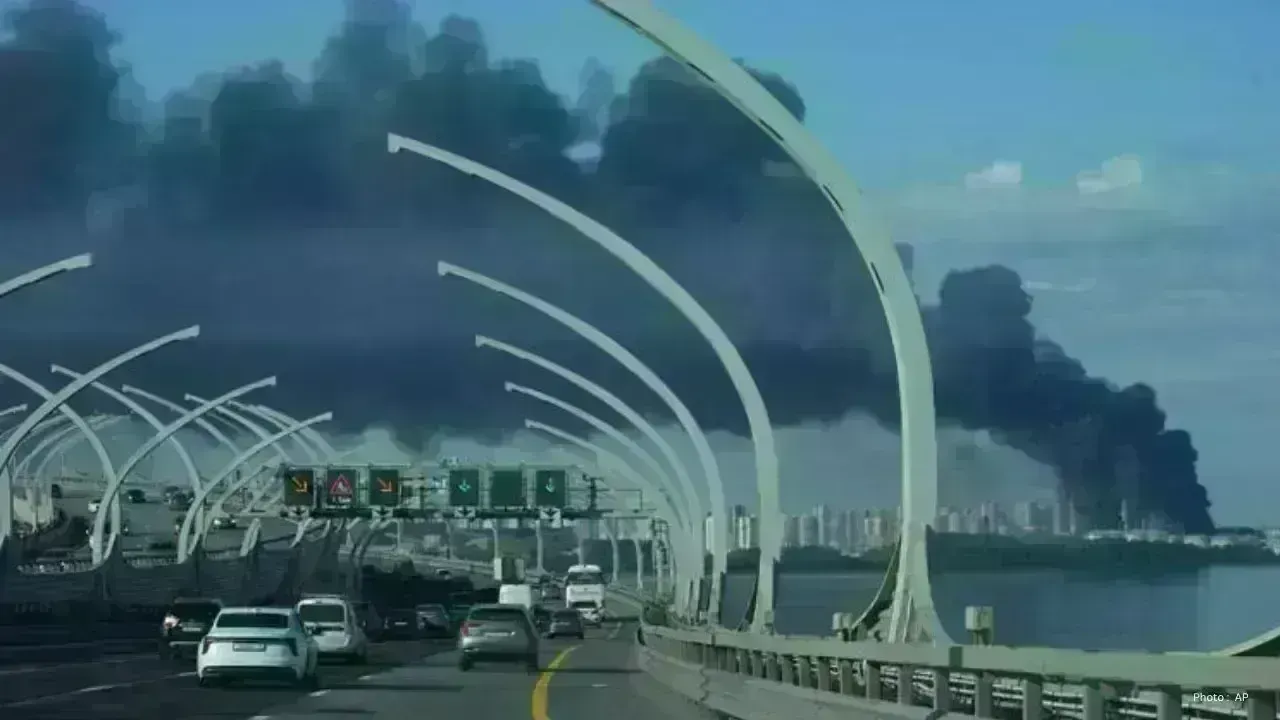
A recent drone strike on an oil terminal near St. Petersburg has intensified focus on the ramifications of the ongoing Russia-Ukraine conflict. This incident unfolded as President Vladimir Putin attended an important economic forum, highlighting the extensive impact of the war beyond traditional battle zones.
The attack targeted a significant energy facility in Russia’s second-largest city. Rapid responses were initiated by authorities to assess the damage and its implications for operations. Such incidents illustrate a growing trend of long-range strikes that have increasingly characterized the conflict.
Since the onset of hostilities, both Ukrainian and Russian forces have recalibrated their military tactics to meet evolving battlefield dynamics. Long-distance drone operations have become a pivotal strategy, enabling attacks on critical infrastructure many miles from active combat zones.
This recent event underscores the increasing significance of unmanned aerial vehicles in modern warfare. Unlike traditional military operations, drones can traverse vast distances to strike strategic targets, all while maintaining relatively low operational costs, making them essential tools in contemporary conflicts.
The focus on energy facilities during the ongoing war is telling. Oil terminals and fuel depots are central to facilitating economic activity and logistics. Interruptions at these sites can generate repercussions that extend well beyond direct physical damages.
Moreover, the timing of this strike drew particular scrutiny, occurring during a major economic summit in St. Petersburg that featured political and business leaders from around the globe. Such large-scale events often serve as platforms for showcasing economic accomplishments and courting investment.
Security is a paramount concern at events of this nature. Incidents affecting vital infrastructure can lead to inquiries regarding adequacy in security measures and the challenges of safeguarding critical resources situated far from ongoing military engagements. Policymakers across various nations are increasingly evaluating how swiftly advancing technologies are reshaping conventional security paradigms.
The Russia-Ukraine conflict starkly illustrates that modern warfare extends far beyond direct combat. Economic assets, transport networks, communication infrastructure, and energy facilities have all become integral to the overarching conflict, thereby amplifying its impact on civilian life.
For businesses and investors, these attacks on infrastructure introduce a level of unpredictability. Energy sites are crucial within supply chains and broader economic frameworks; even transient disruptions can sway market views and raise concerns about overall stability.
The global geopolitical ramifications are also profound. As hostilities persist, both sides are exploring methods to attain strategic advantages while navigating military, economic, and diplomatic pressures. Long-range operations signify one of the dimensions of this unfolding competition.
Civilian communities often bear the brunt of these indirect consequences. Concerns surrounding safety, the resilience of infrastructure, and economic stability can undermine public confidence. Localities linked to vital facilities may experience heightened anxiety after attacks.
International observers remain vigilant about ongoing developments, with this conflict leading the charge as one of Europe’s key geopolitical hurdles, shaping global energy markets, security policies, and diplomatic relations. Incidents involving crucial infrastructure consistently attract scrutiny due to their potential widespread implications.
From an analytical perspective, the attack near St. Petersburg is indicative of the metamorphosis in modern warfare. Technological advancements have broadened the operational scope of military activities and rendered critical infrastructure more vulnerable. Governments are tasked with evolving their security frameworks to counter these emerging threats.
This event accentuates the need for safeguarding essential facilities that underpin economic and societal needs. Energy infrastructure is vital for millions and plays a key role in national fiscal health. Ensuring resilience against potential threats has risen to prominence on many countries' agendas.
As the dynamics of the Russia-Ukraine conflict remain fluid, similar incidents may increasingly characterize the security landscape. Strengthening defenses, enhancing readiness, and protecting vital assets will likely become urgent priorities in the foreseeable future.
The strike near St. Petersburg serves as a poignant reminder that the repercussions of modern conflicts echo far beyond the confines of conventional battlegrounds, reflecting the growing intricacies of contemporary warfare and the persistent challenges confronted by governments, enterprises, and communities amid geopolitical strife.


 English