Post by : Saif
Al-Najjar
The conflict along the Israel-Lebanon border has escalated significantly following a fatal drone attack and the notable seizure of Beaufort Castle, a pivotal location in southern Lebanon. These events accentuate the persistent volatility in the area and raise alarms about a potential broader conflict that might impact both nations and the larger Middle Eastern landscape.
Recent hostilities saw a Hezbollah drone engaging Israeli forces, resulting in the death of a soldier stationed in southern Lebanon. This incident underscores the integration of advanced drone technology in contemporary warfare, allowing non-state actors to actively engage military targets through innovative methods. It serves as a stark reminder of the shifting paradigms in regional confrontations where technology plays an increasingly significant role.
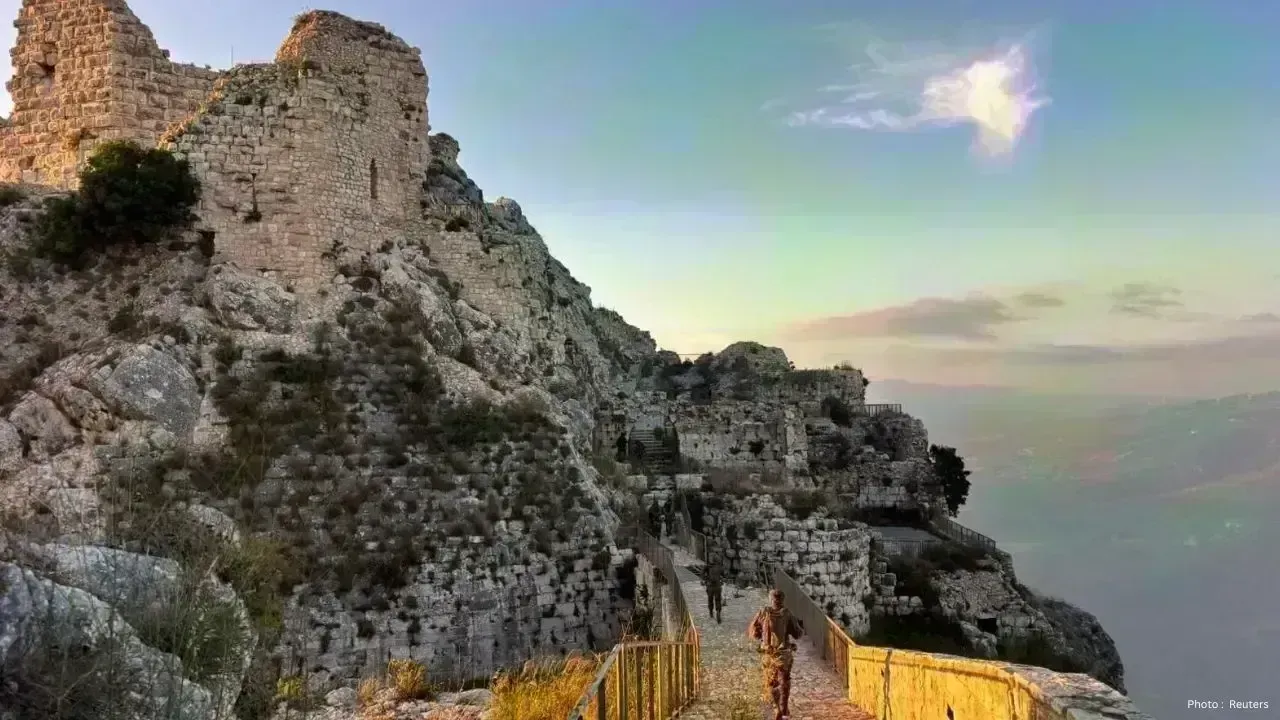
Simultaneously, Israeli troops announced their successful capture of Beaufort Castle, an ancient fortress that carries both historical and strategic connotations. Positioned prominently in southern Lebanon, the castle provides crucial oversight of surrounding regions and has long been recognized as an essential military stronghold due to its commanding elevation. Control of such locations offers substantial tactical leverage, facilitating better surveillance and strategic planning.
The dual occurrences of this drone strike and the occupation of a significant military post highlight the intensifying confrontations between the two sides. Military engagements have notably surged in recent weeks, with instances of fire exchanges becoming both more frequency and sophisticated. This suggests a troubling evolution beyond isolated border skirmishes, signaling a growing and intricate security dilemma.
The advent of drone warfare represents a major transformation in conflict dynamics. Both insurgent groups and national armies are prioritizing investment in unmanned systems capable of reconnaissance, intelligence-gathering, and offensive maneuvers. While these technologies extend operational capabilities and mitigate risks to personnel, they concurrently introduce novel challenges for defense strategies aimed at shielding military installations and civilian communities.
The death of a soldier in this incident echoes the profound human toll associated with the ongoing hostilities. Each casualty resonates within families and communities, and such tragedies often exacerbate tensions, compelling stronger military responses and complicating diplomatic negotiations.
Beaufort Castle's capture transcends mere military strategy; it is steeped in historical context and has implications for future engagements in the region. Its control may heavily influence forthcoming maneuvers, becoming emblematic of wider strategic pursuits by the involved factions.
Worrying signs emerge among regional observers as they speculate that continued hostilities could spiral into a more extensive confrontation. The border area has witnessed consistent exchanges of fire, air operations, and security incidents over prolonged periods. As military operations intensify, the risk of misjudgments or unforeseen escalations correspondingly rises.
Civilians, particularly near the conflict zones, bear the brunt of this ongoing instability. Communities frequently confront displacement, interruptions to normal life, and heightened safety concerns. Economic activities suffer as schools, businesses, and public services struggle to sustain operations in an environment marked by uncertainty. Such prolonged insecurity engenders enduring challenges that outlast immediate military considerations.
The international community continues to focus attention on averting further escalation, with foreign governments and diplomatic entities advocating for restraint and fostering dialogue aimed at alleviating tensions. Despite military developments commanding media headlines, many analysts contend that political negotiations remain pivotal for establishing enduring stability.
The intricate regional backdrop compounds the complexity of the situation, with the Middle East grappling with various security threats. Events in one locale can swiftly affect broader geopolitics, prompting policymakers to remain vigilant over border occurrences and their repercussions.
Experts highlight the crucial significance of controlling strategic landscapes and the escalating role of advanced technologies that have come to define modern conflicts. These elements heavily influence operational strategies, decision-making, and the equilibrium of power. The latest incidents in southern Lebanon reflect these overarching trends, demonstrating the capricious nature of the battlefield.
This ongoing standoff also prompts inquiries regarding forthcoming security measures in the border territories. Achieving lasting stability demands more than mere military actions; sustainable peace hinges on political resolutions, proactive communication, and addressing root causes of tensions that contribute to repetitive conflicts.
As this situation progresses, the region navigates a landscape of uncertainty. The interplay of military losses, critical territorial gains, and the advancements in military technologies creates a context calling for astute management from all involved parties. Choices made in the following weeks may significantly affect not only immediate security dynamics but also the overarching trajectory of the conflict.
The intertwining of the recent drone attack and the acquisition of Beaufort Castle underscores how swiftly the security landscape can transform. While tactical objectives remain central to those engaged, the broader imperative of diminishing violence and ensuring civilian safety endures as a priority. Attaining enduring stability necessitates a foundation built on diplomacy, restraint, and a mutual commitment to curtailing any further escalation within a region fraught with a history of conflict.


 English