Post by : Anis
Al-Rashid
Satellite Innovations in Daily Life
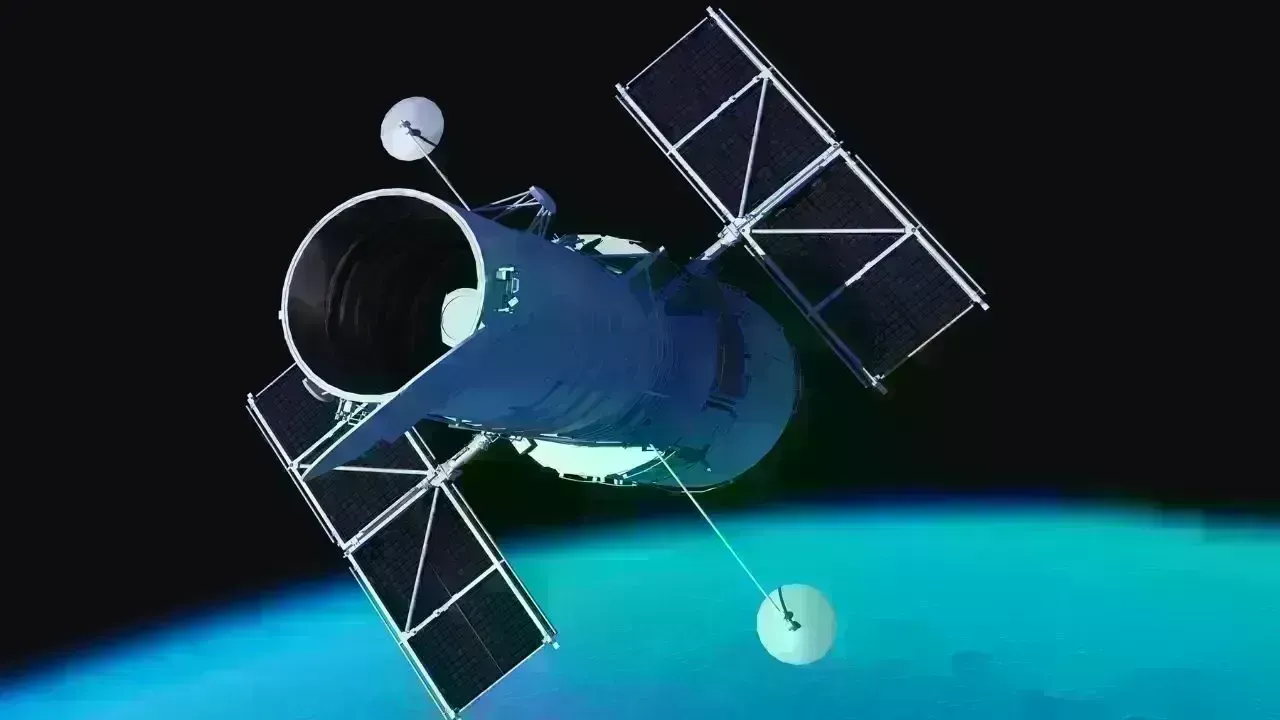
When the term “satellite technology” is mentioned, visions of astronauts, rockets, and scientific labs often come to mind. Yet, it’s the phone in your pocket, the navigation application, and those weather alerts that connect us to this technology every day.
Modern living is intricately linked to satellites.
Even if you’ve never launched into space, systems in orbit influence your daily life. They help plan your journeys, notify you about impending storms, monitor your packages, facilitate online banking, manage communication networks, and aid farmers in their crop decisions.
Space has become a tangible part of our world.
Empowering Digital Services with Satellite Technology
Numerous digital applications rely on precise location data, uninterrupted connectivity, and monitoring of natural phenomena, with satellites providing all these vital functions.
The next time you:
you’re benefitting from data transmitted via space.
Satellites are not simply machines in orbit; they are tireless resources working behind the scenes.
Why Your Smartphone Is Location-Savvy
Your location services depend on a network of navigation satellites that orbit the Earth. These satellites send timing and positioning signals that your smartphone utilizes to pinpoint your location.
Your device doesn’t make wild guesses about your whereabouts.
It accurately determines your exact position by syncing with satellites located over 20,000 kilometers away.
This accuracy enables functionalities in:
Ride-sharing platforms
Food delivery services
Emergency response teams
Fitness monitoring tools
Social media check-ins
Any absence of satellites would leave your device navigating blindly.
Understanding Digital Maps and Satellite Input
While digital mapping seems straightforward, with a simple blue dot moving on screen, there’s a complex system at work:
Satellites continuously survey roads and terrains, gathering data that assist map developers in noting changes like:
Data from satellites allows for real-time adjustments in your navigation app.
The reason your app can swiftly suggest alternate routes in traffic is thanks to satellites continuously updating their data.
Precision in Location Tracking
Today, smartphones can connect to multiple satellites simultaneously, enhancing location precision.
While tall buildings can impede signals, locations like highways provide clear satellite access.
Nonetheless, location accuracy can often narrow your position to just a few meters—thanks to efficient space technology operating above.
Weather Monitoring: A Satellite Endeavor
Weather predictions aren’t magical; they stem from a worldwide network of satellites that track:
Each weather forecast begins with information gathered from space.
Satellite data feeds into massive models used to predict temperature fluctuations, rainfall trends, and extreme weather events.
This empowers meteorologists to:
When your weather app indicates rain in a couple of hours, it’s relying on cloud signatures detected from space, not mere speculation.
Satellite Systems: Essential for Disaster Management
Timely disaster warnings save lives.
Satellites can detect:
In many regions, disaster response teams depend on satellite systems to:
Assess damage extents
Identify isolated areas
Plan rescue missions
Monitor flood levels
Evaluate forest damage
Observe landslide areas
Often, satellites are the first to report on disaster zones long before teams can provide assistance.
Modern Communication Relies Heavily on Space
Video calls, live sports streaming, and international news coverage frequently utilize satellite technologies.
Remote regions lacking fiber cables largely depend on satellite communication.
Sent via satellites:
While undersea cables transmit a significant volume of data, satellite networks are vital in spots lacking infrastructure.
For some, satellites aren’t just a convenience but a necessity.
Satellite Technology in Banking and Finance
Bank transactions depend on precise timestamps.
Digital payments rely on accurate timing systems.
ATM operations need proper location verifications.
All these functions hinge on satellite signals.
If satellite communications were interrupted, various systems impacted would include:
Finance is intricately linked to systems in orbit.
The financial ecosystem quietly exists in space.
The Role of Satellites in Precision Timing
Satellites host atomic clocks.
These clocks provide superior timing than any terrestrial clocks.
Digital economy frameworks require this timing to:
Verify payments
Synchronize networks
Ensure stock exchange correctness
Support secure encryption
Handle international transactions
The internal clock of your smartphone traces its accuracy back to space.
The Agricultural Revolution Through Satellites
Contemporary agriculture isn't left to guesswork.
Satellite images provide farmers with insights on:
Soil conditions
Plant health
Moisture levels
Pest alerts
Predictive weather
Irrigation necessities
This facilitates:
Targeted fertilizer application
Efficient yield forecasts
Water conservation
Maximum productivity
Minimized ecological damage
What once took years of learning now includes satellite-generated insights.
Agriculture is evolving into a science supported by space.
Satellite Navigation: The Backbone of Aviation Safety
Every flight relies on satellite systems for navigation.
Aircraft do not navigate visually.
They depend on satellites for:
Locational accuracy
Optimal routing
Avoiding adverse weather
Landing precision
Time synchronization
Without space technology, flying would be riskier, slower, and costlier.
Modern airports depend on satellite inputs for:
Each safe flight verifies the efficiency of satellite systems.
Entertainment and Streaming Services: The Satellite Connection
Live sports events, satellite television, remote coverage situations, emergency broadcasts, and global interviews all depend on satellite networks.
Streaming platforms require:
When undersea connections falter, satellites take over the role.
The entertainment industry thrives thanks to space support.
Protecting the Environment Through Satellite Data
Space technologies extend beyond convenience.
They play a role in environmental preservation.
Satellites measure:
Authorities utilize this data to:
Enforce environmental regulations
Monitor unlawful mining habits
Oversee forest utilization
Identify pollution sources
Evaluate climate alterations
Today, ecological reporting relies more on satellite data than field observations alone.
Emergency Services Powered by Satellites
Emergency responders, police units, and disaster relief organizations all depend on satellite technologies to:
Today, rapid assistance is often facilitated by the guiding power of satellite systems.
Preparing for Space-Related Careers
Space technology is becoming a mainstream career path.
Employment in the space sector now encompasses:
Children interested in coding may end up working on satellite projects in the future.
Space is transitioning into a workplace, beyond just being a destination.
Potential Consequences of Satellite Failures
It's crucial to consider the implications of satellite disruptions.
A sustained interruption in satellite services could lead to:
Navigation systems failing
Communication slowdowns
Halt in trading on stock exchanges
Loss of weather alerts
Weakening of emergency responses
Modern society hinges on satellite infrastructures.
Its seamless operation often goes unnoticed due to its efficiency.
The Future Will Continue to Expand Satellite Dependence
As technology evolves, our reliance on satellites will likewise grow.
Future innovations will include:
Autonomous vehicle navigation
Space-linked internet resources
AI-enhanced weather forecasting
Urban planning supported by satellite insights
Healthcare delivery using satellite networks
Climate modeling from space
Future smart cities will heavily lean on satellite data for:
The sky may increasingly act as the control center for Earth.
Why People Often Overlook the Value of Satellite Technology
Its invisibility plays a significant role.
Cables and towers are seen, whereas satellites orbit discreetly.
This obscurity contributes to their importance not being properly acknowledged.
However, if satellites ceased functioning, life would be dramatically disrupted within days.
The true measure of a successful system is its reliability to the point that it fades from notice.
Concluding Remarks: Space Technology Is Part of Your Life
Space technology is not merely a concept for the future.
It is integrated into your daily life.
It wakes you up with alarms.
It navigates your travels.
It notifies you of storms.
It handles your financial transactions.
It entertains you during leisure hours.
It alerts you to threats.
It supports agricultural tasks.
It illuminates your pathways.
It powers your society.
You may never look to the sky for satellites.
Yet, they continuously watch over you.
Steadily. Reliably. Quietly.
DISCLAIMER
This article is meant for educational and informational purposes only. It should not be interpreted as technical, governmental, or policy guidance. For detailed advice related to satellite services or communication technologies, readers are encouraged to seek expertise from qualified professionals or official agencies.


 English