Post by : Shweta
A Generation That Did Not Witness 9/11
Twenty-five years after the September 11, 2001 attacks, a generation too young to remember the tragedy firsthand is reflecting on how it first learned about one of the defining events of modern American history. Members of Generation Z, generally born between 1997 and 2012, were children or had not yet been born when four hijacked planes were used in the attacks.Unlike older Americans who remember exactly where they were when the attacks happened, Gen Z members have memories of discovering the event years later. For many, their first understanding came through teachers, parents, family stories and later their own research.
Personal Stories Shaped Their Understanding
For Avery Black, a 20-year-old journalism student, learning about 9/11 in elementary school eventually led to a deeply emotional conversation with her mother. Her mother described where she was on the day of the attacks and told her about firefighters who entered the World Trade Center and never returned.Other young Americans similarly remember family stories as their first connection to the tragedy. Annie Erickson, 26, said her mother had grown up in New York City and knew someone who died in the World Trade Center. These personal accounts gave younger people an understanding of the human impact behind the historical event.
Read more : Anwar Gargash to Keynote Arab Media Summit 2026
Schools Play Different Roles Across America
The way American students learn about 9/11 varies considerably across the country. There is no nationwide requirement for US schools to teach the attacks, while individual states have different rules concerning 9/11 education.According to a recent Associated Press analysis cited in the report, 25 states require or expect public schools to teach about the attacks, while 13 states make such instruction optional. However, even states requiring instruction do not necessarily prescribe a specific curriculum.For some Gen Z Americans, classroom lessons introduced the event only through a few basic details. Allegra Tashjian, who grew up in Wisconsin, recalled being told in elementary school that 9/11 was an important and sombre day. She later began asking questions at home and eventually conducted her own research to understand what had happened.
Young Americans Turned to Their Own Research
Several Gen Z interviewees said they gained a deeper understanding of 9/11 only after researching the attacks themselves. For some, the complexity of terrorism, the scale of the deaths and the events that followed were difficult concepts to understand as young children.Jack Coyne, 28, said it was not until his early teenage years that he watched detailed news coverage and fully processed the scale and horror of the attacks. As an adult, he also believes discussions about 9/11 should recognize not only the tragedy itself but also the Islamophobia and wars that followed.
Why 9/11 Still Matters to Young People
Interest in 9/11 has not disappeared among younger Americans. Professor David Schanzer of Duke University, who teaches a course on 9/11 and its aftermath, said student interest remains strong. His course is full, with dozens of students reportedly on a waiting list.Schanzer argued that understanding 9/11 remains important because its consequences continue to influence the modern world. He described the attacks as one of the major global catastrophes of the early 21st century and said understanding the event helps explain developments that followed.
Gen Z Uses a Different Way to Discuss Tragedy
Some Gen Z members told the BBC that younger people sometimes use humour when discussing 9/11. Historians and students suggest that this can reflect the distance of a generation that did not experience the attacks personally, while humour can also serve as a way of coping with difficult subjects.However, people whose families had direct connections to the attacks often approach the subject more carefully. Individual stories remain particularly important for young people trying to understand the enormous human cost of the tragedy.
Remembering 9/11 Across Generations
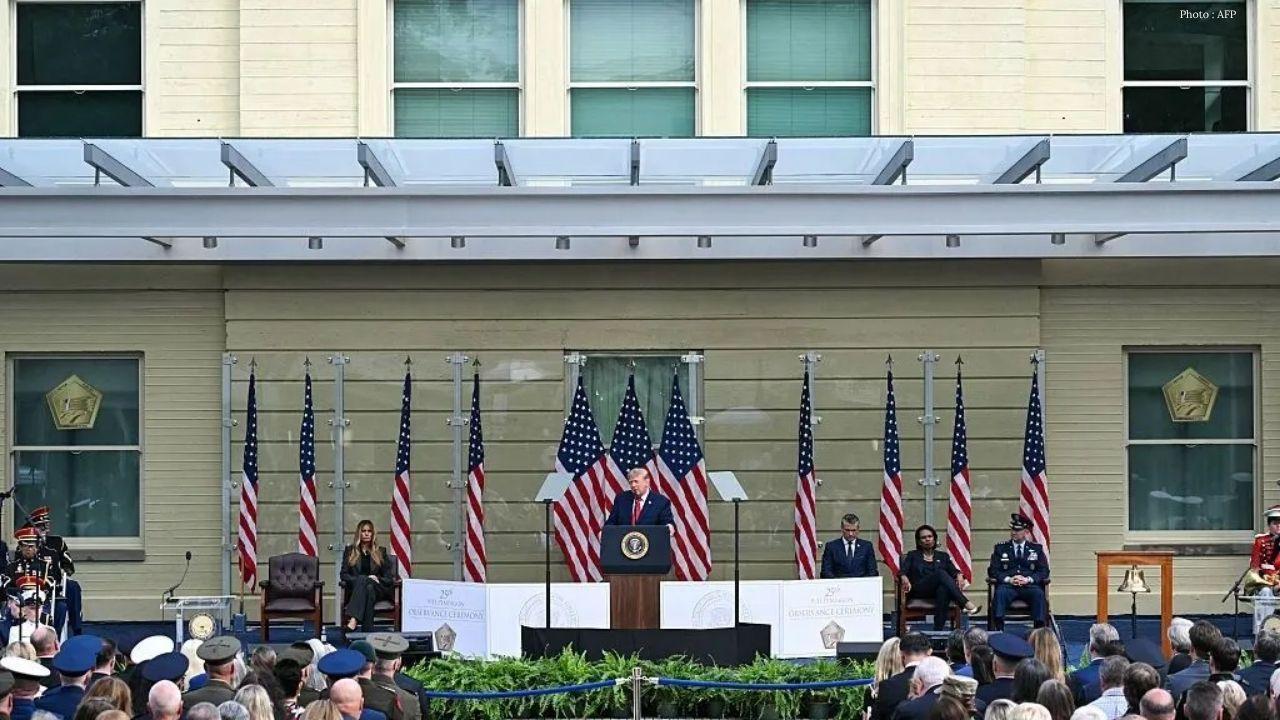
The 25th anniversary of the September 11 attacks has brought renewed attention to how historical memory is passed from one generation to another. For Gen Z, 9/11 is not a memory of watching the towers fall or hearing breaking news in real time. Instead, it is a history learned through parents, teachers, documentaries, photographs, news reports and personal research.As the number of Americans with firsthand memories of the attacks changes with each generation, educators and historians say understanding both the attacks and their long-term consequences remains essential. For younger people, learning about 9/11 is increasingly about understanding not only what happened on September 11, 2001, but also how that day transformed American society and shaped the world that followed.


 English