Post by : Sami
Al-Rahmani
Gold Price Trends: Insights on Falling Values Amidst Iran Conflict
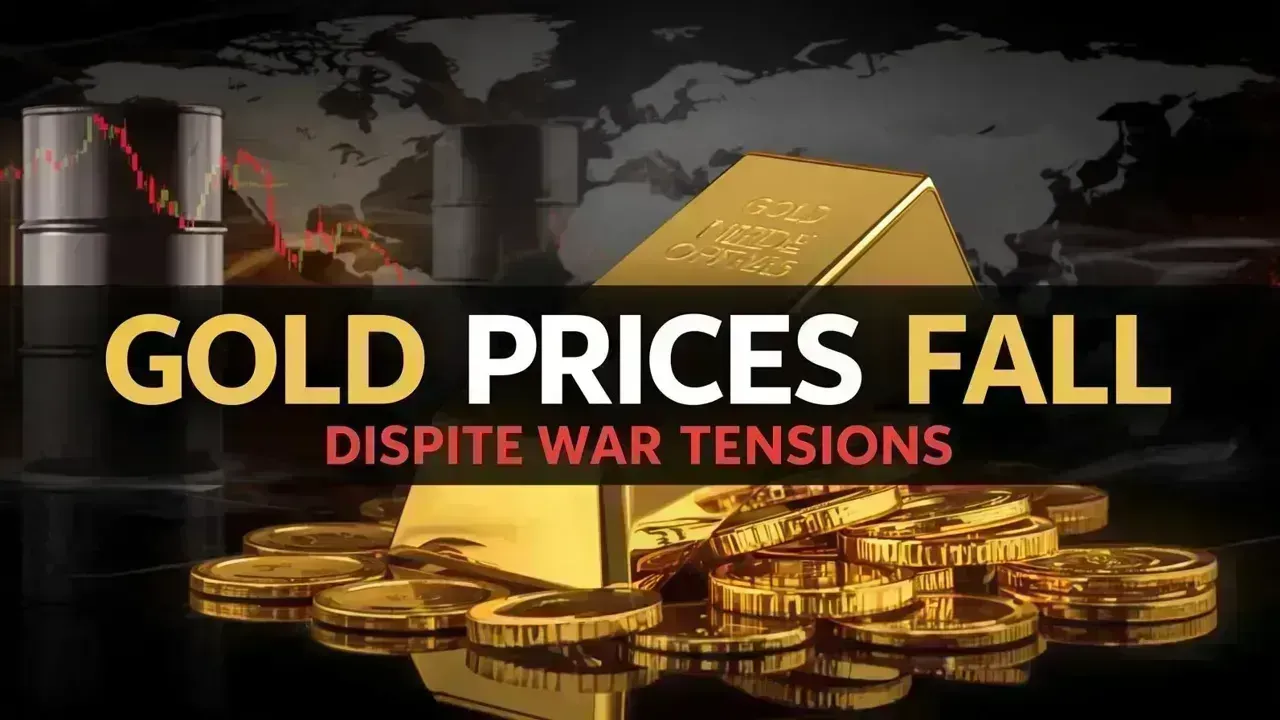
Traditionally viewed as a safe-haven asset, gold tends to thrive during periods of conflict and economic turmoil. Yet in 2026, despite escalating tensions in Iran and instability near the Strait of Hormuz, gold prices are experiencing unexpected declines rather than the expected rise.
This phenomenon leads investors and economists to question: Why is gold deviating from its historical pattern during crises? The answer is rooted in various substantial economic forces presently overshadowing geopolitical anxieties.
Gold's Historical Role in Crisis Situations
Historically, gold has served as a buffer against:
- Economic turbulence
- Currency devaluation
- Inflationary pressures
- Global conflicts
During turbulent times, investors typically shift from risky equities to gold, viewing it as a stable asset unaffected by government or monetary fluctuations.
However, the modern financial landscape is influenced by an increasing array of factors. Although warfare remains significant, interest rates, currency values, and worldwide liquidity are now equally decisive in influencing gold’s price trajectory.
Interest Rates: The Dominating Factor
One prominent cause behind the drop in gold values is the prevailing high interest rate environment.
Gold is a non-yielding asset. Unlike financial securities or interest-bearing accounts, it offers no returns. Therefore, when interest rates surge:
- Investors prioritize fixed-return assets
- Government bonds appear more attractive
- The appeal of holding gold diminishes
As looming inflation, mainly due to energy costs tied to geopolitical developments, escalates, central banks, particularly the U.S., are anticipated to uphold or raise interest rates.
This scenario manifests a dual pressure:
- Inflation might ostensibly bolster gold's appeal
- Yet, heightening interest rates diminish its market viability
The outcome reveals a conflicted dynamic, with interest rates exerting a more pronounced effect than inflation-induced demand.
The Impact of the U.S. Dollar on Gold Valuation
The strength of the U.S. dollar significantly influences gold prices.
Gold is globally traded in dollars; hence, when the dollar strengthens:
- Gold becomes pricier for buyers using alternative currencies
- This results in decreased global demand for gold
- Leading to downward price pressure
During global uncertainty, investors frequently flock to the U.S. dollar, reinforcing its strength while simultaneously weakening gold.
The prevailing conditions of a robust dollar coupled with elevated interest rates pose a significant challenge for gold pricing.
Soaring Oil Prices and Shifts in Investor Preferences
The ongoing unrest in the Middle East has caused oil prices to surge. With a substantial share of the world’s oil traversing the Strait of Hormuz, any disruptions lead to immediate supply issues.
As oil prices climb:
- Energy firms enjoy enhanced profitability
- Investors reallocate funds to the energy sector
- Oil gains attractiveness as a short-term investment
Consequently, many investors are opting for energy-related assets rather than gold, an unusual behavior considering the typical reactions to geopolitical tension.
Inflation: Support for Gold, Yet Insufficient
While inflation often drives gold prices upward, the current inflationary trends are predominantly spurred by energy prices and supply disruptions rather than demand metrics.
This type of inflation induces:
- Tighter monetary policies
- Increased interest rates
- Reduced market liquidity
Thus, although inflation would theoretically support gold, the measures implemented to counteract inflation effectively hinder its potential growth.
Market Corrections and Profit-Taking Activities
Prior to the ongoing crisis, gold had seen a significant price surge, reaching heightened levels and drawing in many investors.
When prices hit those peaks, investors tend to:
- Book profits
- Heighten selling pressures
- Trigger downward price corrections
This market behavior serves as another reason contributing to gold’s failure to see a typical rise amidst global tensions.
Investors' Sentiments Amidst Uncertainty
Contemporary markets remain highly responsive to investor expectations and future forecasts.
At the moment, investors closely monitor:
- Central bank policy shifts
- Inflation patterns
- Developments concerning the Iranian conflict
- Supply chain stability on a global scale
Opting for a more cautious approach, many investors prefer to await greater clarity, consequently lowering the short-term demand for gold.
How Gold Competes with Other Safe-Haven Options
Gold is no longer the sole safe-haven asset available.
Present alternatives comprise:
- U.S. Treasury bonds
- Strong currencies globally
- Certain commodities such as oil
- And potentially, some digital assets
These alternatives present:
- Enhanced liquidity
- Promising returns
- Lower volatility in the short term
Such competition underscores gold's challenge even during periods of crisis, a stark contrast to previous decades.
Short-Term Predictions for Gold Prices
In the immediate future, gold prices are anticipated to remain:
- Volatile
- Responsive to interest rate movements
- Subject to currency fluctuations
If interest rates continue to be high alongside a resilient U.S. dollar, gold may persistently grapple with downward pressures.
Long-Term Perspectives: The Continued Importance of Gold
Despite its current vulnerability, gold is an integral aspect of any long-term investment strategy.
Experts believe gold could regain its footing if:
- Interest rates begin to decline
- The U.S. dollar softens
- Geopolitical strains intensify
- Global economic growth sees a slowdown
Such conditions could allow gold to revert to its status as a key hedge and safe investment.
Key Insights: Evolution of Market Dynamics
The present circumstances underscore a crucial evolution in the financial market ecosystem.
Historically, warfare and geopolitical crises predominantly drove gold's pricing. In contrast, today's market responds to a broader array of elements, including:
- Monetary policies
- Currency capabilities
- Investment preferences
- Global liquidity
This shift indicates that gold no longer reacts to isolated triggers but to a multifaceted interplay of global economic dynamics.
Conclusion
The decline in gold valuations amidst the Iran war illustrates not a contradiction, but rather a reflection of contemporary market tendencies.
At this juncture:
- Elevated interest rates diminish gold's attractiveness
- Strong U.S. dollar constrains global demand
- Investor interest is shifting towards energy and yield-generating assets
- Market uncertainty fosters cautious investment behaviors
Although gold faces immediate challenges, its long-term significance remains profound. As economic conditions evolve, particularly regarding interest and currency fluctuations, gold has the potential to regain its foothold as a sought-after safe-haven asset.
Disclaimer
This article is intended for informational purposes exclusively and does not constitute financial advice. Market variables may shift as global events and economic policies progress.


 English