Post by : Saif
Al-Najjar
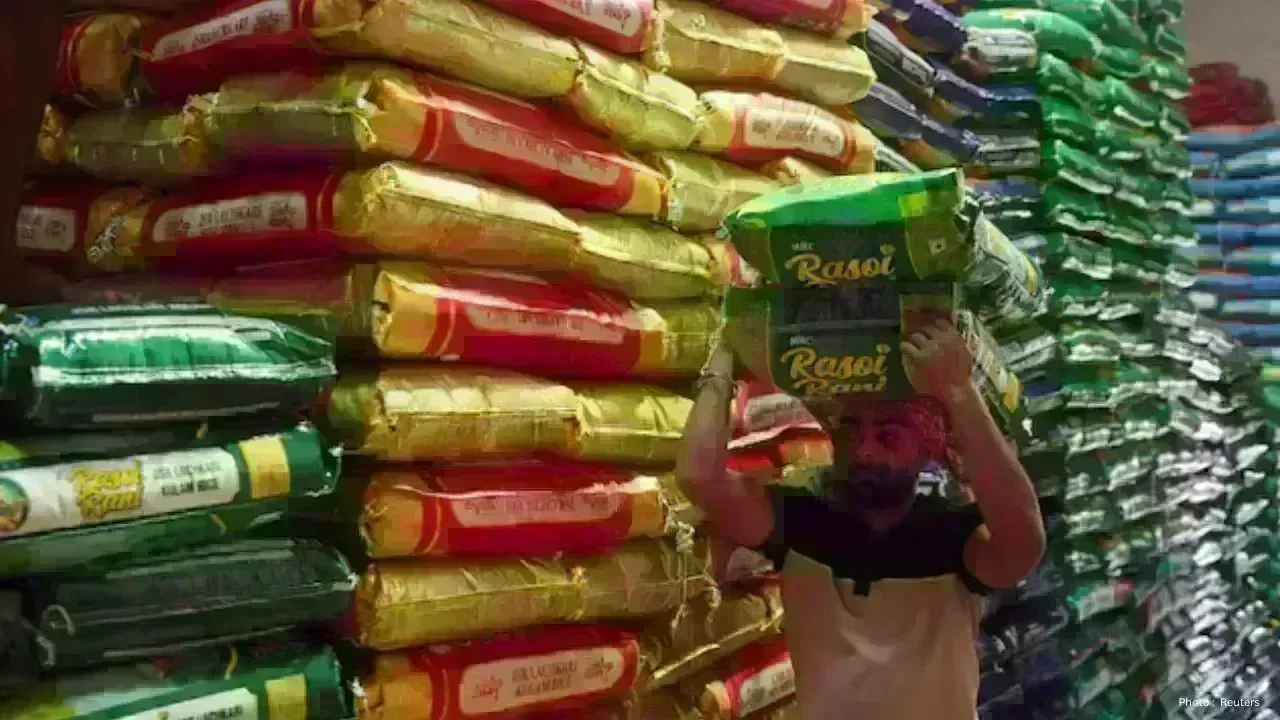
India’s rice exports have encountered a downturn attributed to regional tensions and shipping disruptions impacting basmati rice trade with Gulf nations. This decline has alarmed exporters, traders, and agricultural entities reliant on foreign demand for Indian rice.
As a leading rice exporter globally, India significantly contributes to the international food grain supply. Basmati rice, revered for its distinctive aroma and quality, maintains a robust demand in Gulf countries.
Trade reports reveal that recent geopolitical instability, coupled with transportation bottlenecks, has hindered cargo shipments to key international destinations. Increased shipping costs and delays along trade routes have complicated export operations in recent weeks.
Businesses face challenges due to these disruptions, as shipping delays can inflate storage costs, jeopardize contracts, and diminish confidence among global buyers.
Experts in agricultural trade assert that this decline illustrates how worldwide conflicts can directly influence food supply chains and international trade dynamics. Disruptions in transportation, even with stable production, can pose significant challenges for exporters and importers alike.
India’s rice sector supports millions, spanning farmers, traders, transport workers, and processing facilities across various states. Consequently, any fluctuations in export demand have a cascading effect on rural economies and agricultural markets.
Particularly vital, basmati rice exports yield substantial foreign exchange for the nation, with Gulf countries being primary consumers due to their strong preferences for premium Indian rice.
Trade analysts warn that shipping disruptions can escalate transportation and insurance costs while also generating delivery uncertainties. This scenario can compress the profit margins for exporters and inflate prices for buyers in importing nations.
The situation underscores the interconnectedness between global relationships and food trade. Events in one area can swiftly alter shipping logistics, commodity pricing, and supply chains worldwide.
Farmers and exporters are keenly observing developments in trade routes and regional security. Many stakeholders hope for stabilization to resume typical export functionalities without undue delays.
Economic specialists advocate that agricultural exports are crucial in bolstering India's economy, enhancing rural incomes and solidifying its role in international food markets.
The shortages may pose challenges for international buyers reliant on Indian rice, as importers benefit from consistent delivery schedules for seamless food distribution.
Moreover, shipping firms and logistics providers are under strain as heightened operational risks could impact transportation strategies and cargo movement efficiency. Disruptions in vital maritime pathways extend repercussions across multiple industries beyond agriculture.
Government bodies and export organizations are anticipated to keep a close watch on the evolving situation, as safeguarding smooth trade operations is vital for sustaining domestic agricultural interests and international partnerships.
Analysts indicate that global food markets have already faced significant pressures recently due to climatic events, inflation, supply chain hiccups, and geopolitical tensions. Further trade interruptions could exacerbate uncertainty in agricultural sectors.
Extended transportation issues might affect consumers in importing nations, potentially leading to higher retail prices and limited product availability.
Despite these hurdles, India's agricultural sector stands out as a vital contributor to the global food supply chain. Exporters are optimistic that enhanced shipping conditions and stable trade routes will facilitate the resumption of normal export activities soon.
Trade observers suggest that diversifying shipping networks and reinforcing logistics planning will be pivotal for exporters navigating unpredictable global conditions. A stronger focus on risk management and alternative transport solutions seems inevitable for thriving under these challenges.
The recent dip in rice exports highlights the intricate links between agriculture, trade, and global stability. Even transient disruptions in shipping routes can result in far-reaching economic impacts for producers, exporters, and consumers globally.
As international markets continue to adapt to geopolitical changes, the agricultural realm will heavily rely on robust transportation frameworks and consistent global trade networks.


 English