Post by : Shweta
Iran and UAE Signal a New Diplomatic Direction
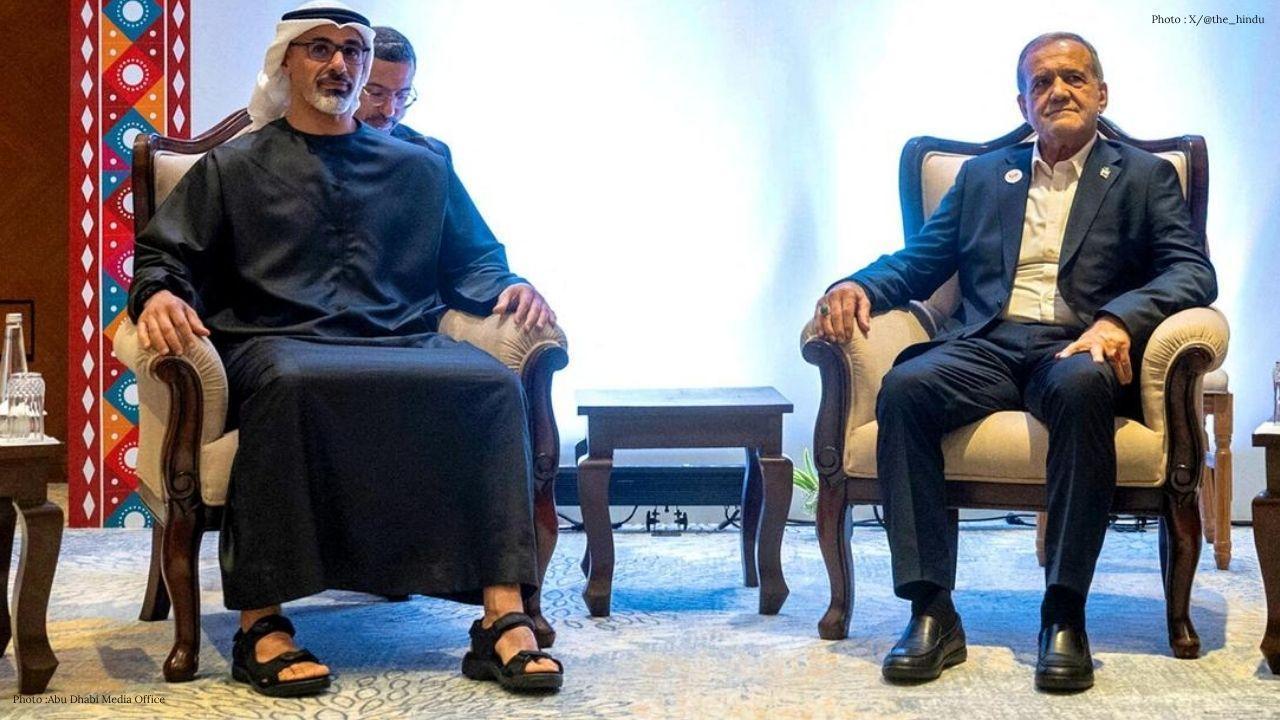
NEW DELHI: Iran and the United Arab Emirates have signalled a possible new phase in their relations after Iranian President Masoud Pezeshkian and Abu Dhabi Crown Prince Sheikh Khaled bin Mohamed bin Zayed Al Nahyan held a high-level meeting on the sidelines of the BRICS Summit in New Delhi. The encounter came as tensions across the Middle East remain high and both countries face the wider impact of the ongoing regional conflict.
Pezeshkian Says Both Sides Want to “Turn the Page”
Pezeshkian said Iran and the UAE had a constructive exchange and agreed to move beyond the recent period of tension. He said the two countries wanted to “turn the page,” look toward the future and work together. His comments were made after his meeting with Sheikh Khaled, signalling a potential diplomatic opening between Tehran and Abu Dhabi.
Read more : Saudi Tourism Ministry Updates Four Key Regulations
High-Level Meeting Held During BRICS Summit
The meeting between Pezeshkian and Sheikh Khaled took place during the 18th BRICS Leaders’ Summit in New Delhi. The two sides discussed regional and international issues of mutual interest, including the importance of reducing tensions, supporting de-escalation and strengthening regional stability. They also discussed prospects for peace and development across the region.
Relations Have Been Under Pressure During the War
The diplomatic message is significant because relations between Iran and the UAE have come under pressure during the Middle East conflict. Iran has faced confrontation with US and Israeli forces, while the UAE has been among the regional countries affected by the wider escalation. The recent meeting therefore provides an important channel for direct dialogue between the two sides.
BRICS Provides a Platform for Dialogue
The BRICS summit brought together leaders from countries with differing positions on the Middle East conflict, making the Iran-UAE meeting particularly significant. The summit also produced a joint declaration calling for restraint and addressing the deteriorating security situation in West Asia. The diplomatic engagement showed that BRICS can provide space for dialogue even when member states have serious disagreements.
Focus Shifts Toward Stability and Cooperation
The UAE and Iran have both stressed the importance of regional stability, while Pezeshkian has indicated that Tehran wants stronger relations with neighbouring countries. The latest exchange does not by itself resolve the broader conflict, but it creates an opportunity for continued communication and could support wider diplomatic efforts aimed at reducing tensions.
What the Iran-UAE Meeting Means for the Region
The New Delhi meeting represents an important diplomatic signal at a time of severe regional uncertainty. While there is no indication that the encounter has ended the broader conflict or resolved all differences between Tehran and Abu Dhabi, the willingness of senior leaders to meet and discuss a future-oriented relationship could become significant for Gulf security, regional trade and wider efforts toward de-escalation.


 English