Post by : Saif
Al-Najjar
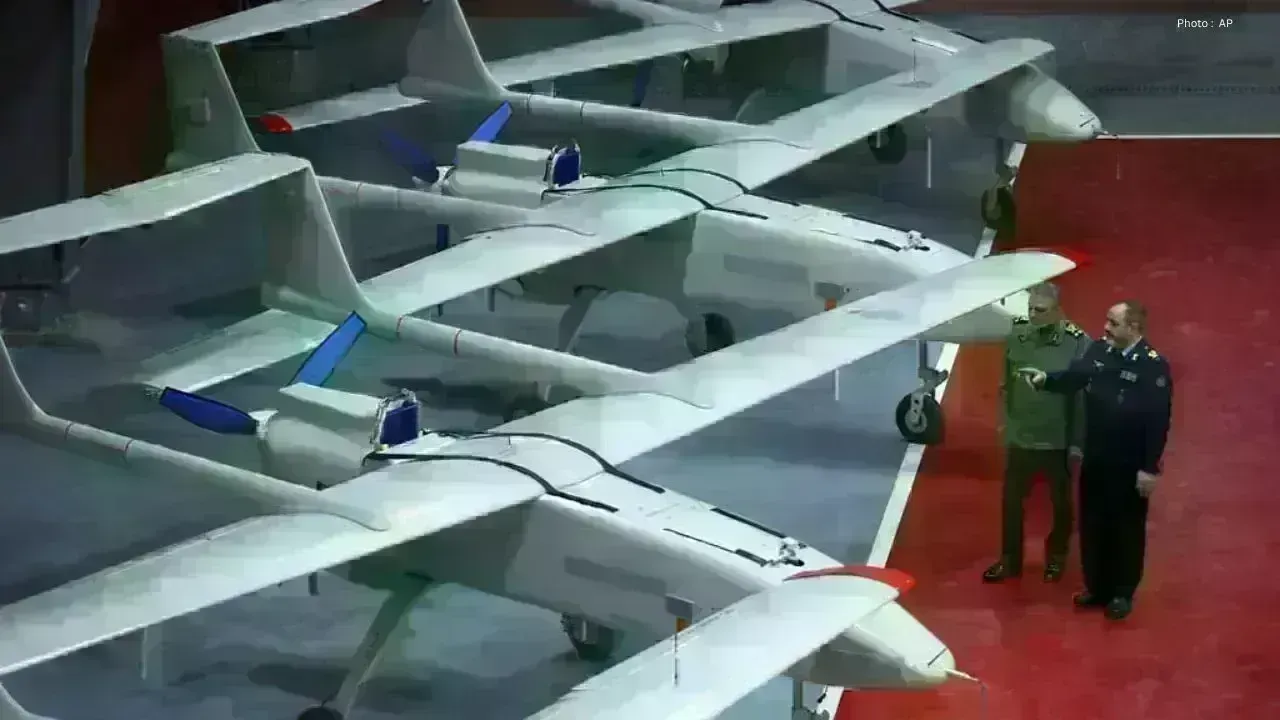
Reports indicate that Iran is back to large-scale drone manufacturing, surprising various officials within the US intelligence community. This resurgence has drawn global scrutiny regarding military technologies and the stability of the Middle East.
Defence monitoring sources highlight that activities linked to unmanned aerial vehicles have resumed unexpectedly swiftly. Analysts suggest this move could enhance Tehran’s surveillance and defense capabilities amid ongoing geopolitical strains.
The term “Iran drone manufacturing” has shifted into a key security discussion as unmanned aerial systems are pivotal in contemporary military engagements and regional disputes.
Some intelligence assessments from American agencies reportedly underestimated how quickly production would bounce back after prior sanctions, cyber interventions, and supply chain limitations.
Military analysts stress that drones have become essential assets in modern warfare, conducting missions such as reconnaissance, surveillance, and precision strikes without putting pilots at risk.
This reported resurgence has alarmed Western security planners who vigilantly observe advancements in missile systems, air technology, and manufacturing in the Middle East.
It is believed that unmanned aircraft allow nations to extend operational reach more economically than conventional air forces. Thus, drone technology is increasingly critical to military strategy among various regional nations.
The US has often voiced concerns regarding the growth of Iranian military capabilities, particularly related to drones, missiles, and security alliances in the region.
This development underscores the rising significance of technological self-sufficiency in defense industries hampered by global sanctions and export bans.
Security experts speculate that the uptick in production could signify enhanced domestic manufacturing capabilities and better logistical coordination within Iran’s defense ecosystem.
This issue has garnered international attention since unmanned systems are being employed increasingly in various Middle Eastern conflicts for intelligence gathering and military strategies.
Political analysts assert that this production revival may shift strategic calculations among current regional adversaries and involved global powers amid ongoing security tensions.
The conversation surrounding drone production reflects a larger trend towards sophisticated military technology in modern warfare, with governments globally investing significantly in AI, autonomous systems, and advanced aerial technologies.
Intelligence experts continue to scrutinize the pace at which Tehran may amplify its output in aerial defense and military technologies.
These findings emerge during a period characterized by persistent diplomatic tensions involving sanctions, nuclear dialogue, and competition for power in the Gulf area.
Military strategists note that drones are regarded as valuable assets due to their adaptability, cost-effectiveness, and capability to operate in challenging environments.
This situation has ignited discussions over intelligence evaluations and the precision with which governments can oversee clandestine military initiatives shrouded in stringent security measures.
Observers in the region caution that the escalating military capabilities of multiple nations may heighten instability and competition for security in the Middle East.
This renewed emphasis on aerial defensive capabilities highlights how modern conflict is increasingly influenced by technology, surveillance, and unmanned operations.
The revival of drone production is set to become a crucial geopolitical topic, with global security agencies expected to keep a close watch on forthcoming developments.


 English