Post by : Saif
Al-Najjar
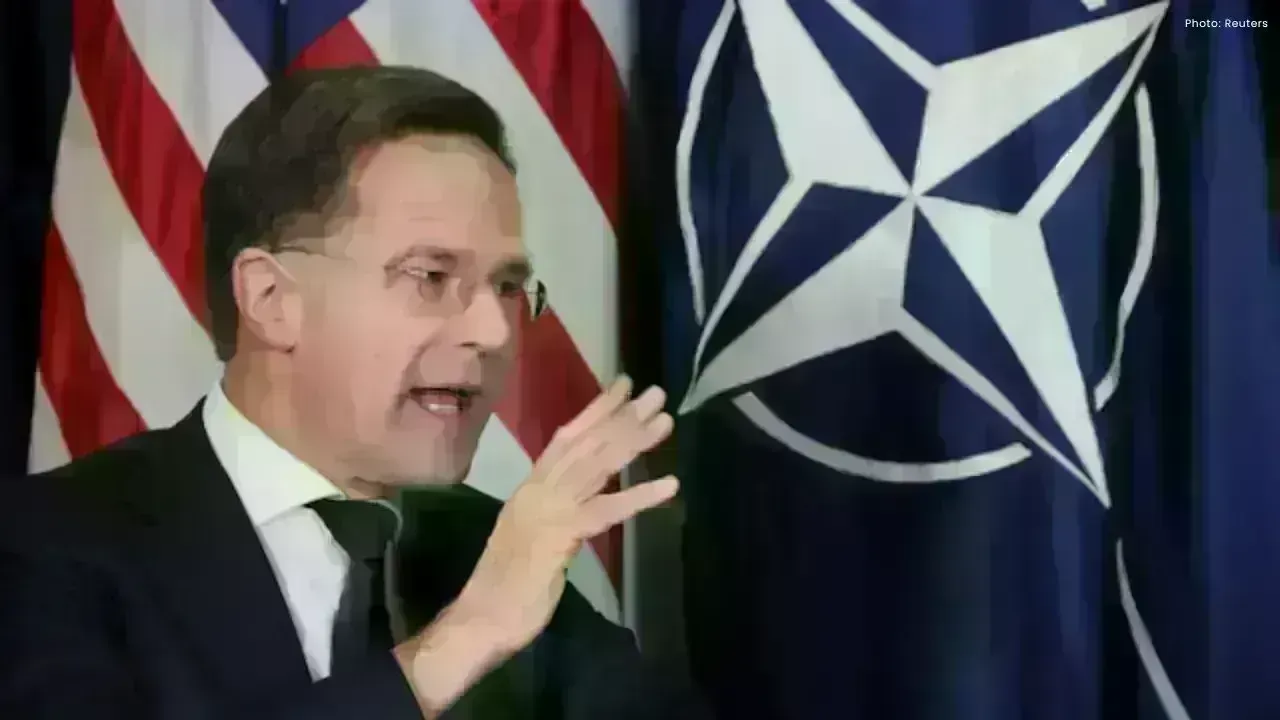
NATO Secretary General Mark Rutte emphasized that recent discussions with U.S. President Donald Trump primarily revolved around safeguarding the Arctic from the increasing dominance of Russia and China. During the World Economic Forum in Davos, Switzerland, Rutte articulated that Arctic security has emerged as a crucial concern for NATO amidst greater global interest in the area’s strategic resources and shipping routes.
As melting ice creates new passages between Asia, Europe, and North America, the Arctic's significance has surged. The region is abundant in minerals and energy, prompting NATO leaders to worry about who holds the keys to influence and access. Rutte noted that their conversation explored collective defense strategies among NATO nations to secure Arctic interests against rival powers.
The dialogue also addressed Greenland, a Danish territory that attracted global scrutiny after President Trump voiced interest in its acquisition for national security. Despite initial tensions within NATO due to his comments, Trump later curtailed the idea of force, suggesting a negotiated pathway instead, which eased concerns from allies like Denmark.
Rutte clarified that NATO’s strategy encompasses more than just Greenland, as seven member countries have territorial claims in the Arctic, all pivotal for maintaining stability. He stated that forthcoming talks would build on previous engagements in Washington with U.S. officials and delegations from Denmark and Greenland.
A primary outcome from the Davos discussions highlighted a unified goal of keeping China and Russia out of Greenland’s military and economic sectors. Rutte confirmed that NATO is keen on preventing any access that poses threats to regional or global stability, which includes curtailing foreign participation in infrastructure and defense sectors.
Chinese officials have strongly denied allegations of creating military threats in the Arctic, asserting that their operations focus on scientific research and adhering to international regulations. They claim Western narratives amplify fears without supporting evidence, maintaining that no military forces have been deployed in the Arctic.
Concurrently, China has amplified its commercial endeavors in the region. A noteworthy event occurred in October when a Chinese container vessel successfully navigated through Arctic routes to Europe, slashing delivery times significantly. Beijing has framed such routes as integral to its global trade initiatives rather than military endeavors.
NATO allies remain vigilant, particularly in light of a July 2024 incident where the U.S. and Canada deployed fighter jets following joint patrolling by Chinese and Russian bombers near Alaska. This raised apprehensions about potential military collaborations between Moscow and Beijing in Arctic waters.
Russia, which has maintained a robust presence in the Arctic, has been amplifying its military infrastructure there. NATO perceives this as a critical factor for enhancing coordination among its members, believing that prompt cooperative measures are essential to avert future conflicts.
Rutte reaffirmed that NATO aims to prevent conflict while promoting peace and stability. Through continuous collaboration among allies and establishing clear demarcations, NATO aspires to ensure the Arctic remains governed by international standards rather than power rivalries.
As the focus shifts towards the Arctic, it is increasingly recognized as a pivotal area for security, trade, and diplomatic initiatives. The discussions between NATO and President Trump reflect a serious acknowledgment of these challenges by Western leaders, preparing for long-term strategic engagement in the region.


 English