Post by : Saif
Al-Najjar
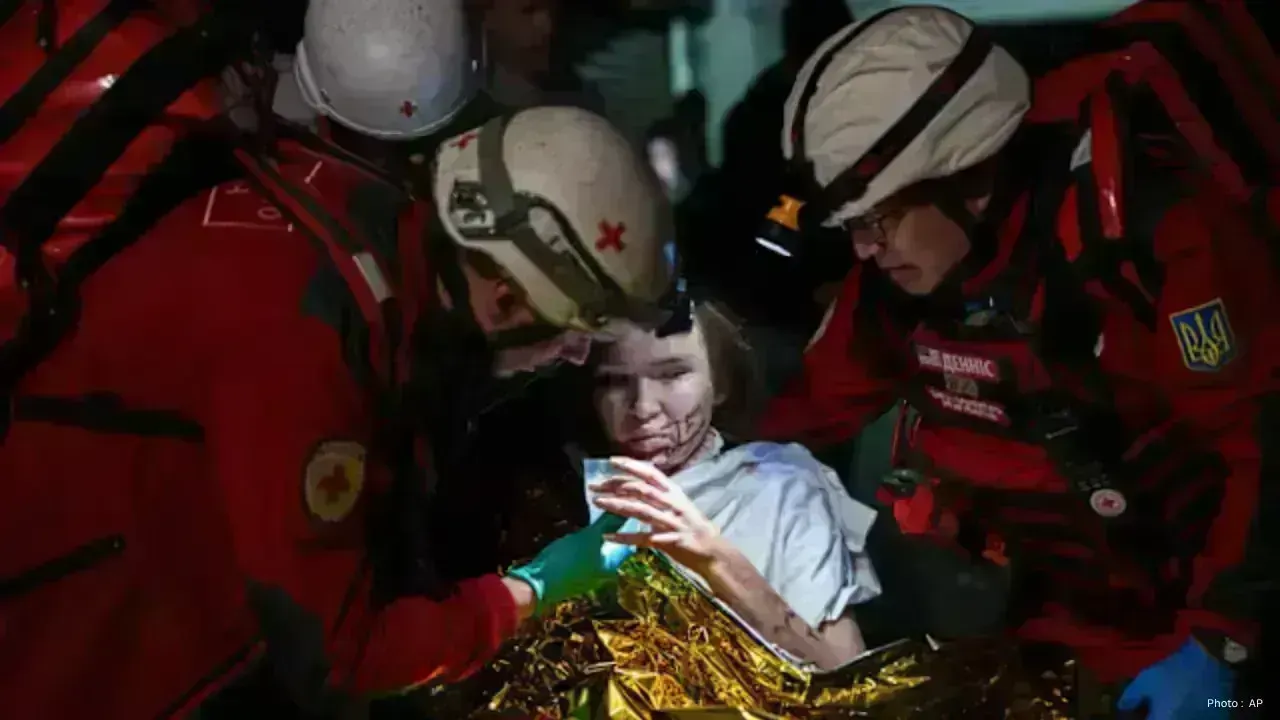
Renewed missile and drone strikes from Russia have further escalated tensions in the ongoing Ukraine conflict, raising alarm across Eastern Europe. Numerous areas in Ukraine suffered aerial bombardment, prompting emergency services and air defense units to respond to imminent threats and explosions.
Local authorities launched damage assessments, while rescue teams were deployed to assist those affected. Reports indicate significant disruptions to public services and infrastructure, as emergency alerts continued to be issued in various regions.
This latest round of attacks underscores the persistent instability stemming from a conflict that has endured for years, inflicting widespread destruction and humanitarian dilemmas. Citizens across several urban centers endured lengthy periods in shelters as air raid sirens and defense operations persisted throughout the night.
Ukrainian officials reiterated their appeals for enhanced military support and advanced air defense systems from global allies. There remains strong emphasis on the necessity to shield critical infrastructure and residential neighborhoods from ongoing missile and drone strikes.
As the conflict dramatically alters Europe’s security landscape, neighboring states have stepped up military vigilance, border oversight, and collaborative defense measures. Worries persist among European governments regarding the risk of escalation and the long-term stability of the region.
European leaders, including Emmanuel Macron, are actively pursuing diplomatic strategies, defense aid, and future security planning in relation to the war. Ongoing discussions emphasize a delicate balance between military assistance, humanitarian aid, and diplomatic initiatives.
Belarus remains under scrutiny due to its close ties with Moscow, with analysts observing military developments and security partnerships that may influence the broader geopolitical landscape.
The humanitarian fallout from the war is severe, characterized by civilian casualties, destroyed infrastructure, and mass displacements. Millions of lives have been impacted, as consistent attacks wreak havoc on neighborhoods, transportation networks, and energy facilities.
Global markets are responding with caution to developments around the war, acknowledging its impact on energy prices, food exports, military spending, and international trade frameworks. The economic uncertainty tied to geopolitical unrest remains a serious issue for both nations and businesses.
Efforts to diminish violence continue to struggle against the backdrop of persistent fighting, political divides, and competing strategic interests. International organizations are urging dialogue and humanitarian safeguards while military activities continue unabated.
Experts in security highlight the growing significance of missile and drone warfare within the conflict, due to their ramifications on logistics, infrastructure, and civilian morale. As such, the advancement of air defense technologies is increasingly crucial for nations confronted with modern aerial threats.
This recent escalation has reignited conversations concerning European military readiness, alliance cooperation, and regional defense strategies. NATO members, along with collaborating nations, are enhancing their coordination amid continuous apprehension about wider instability.
Humanitarian organizations are voicing concerns over the long-term social and economic repercussions of the war, especially for civilians in close proximity to conflict zones. The destruction of public amenities, housing, and vital services is severely hampering recovery efforts in numerous areas.
Political analysts perceive this conflict as one of the most critical geopolitical crises in contemporary Europe, given its far-reaching effects on international diplomacy, security frameworks, and economic resilience. The ongoing hostilities suggest that immediate de-escalation remains elusive as fighting spans multiple regions.
As the conflict persists, international focus remains firmly on military developments, diplomatic dialogues, and the humanitarian landscape, which continue to reshape regional and global security conversations.


 English