Post by : Meena
Hassan
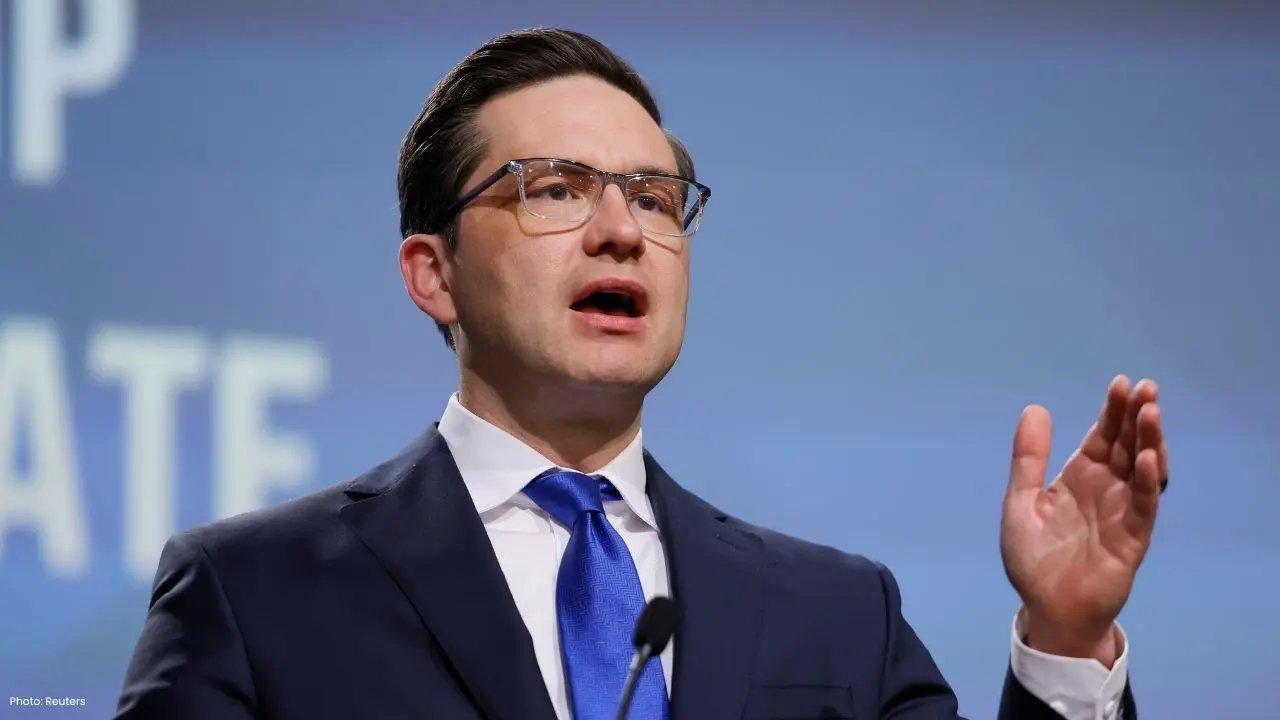
Conservative Leader Pierre Poilievre plans to present a motion in the House of Commons aiming to compel the federal Liberals to clarify their position on a proposed Alberta-to-Pacific oil pipeline. Drawing from the recently established Canada-Alberta energy agreement, the non-binding motion seeks to know if MPs endorse the building of pipelines that could export at least one million barrels of Alberta bitumen per day from a British Columbia port to Asian markets.
Poilievre asserts that the federal government merely needs to “get out of the way” by providing permits so that construction efforts can commence. He highlighted that if all Liberals back the motion, it could lead to “shovels in the ground,” while any dissent would indicate a lack of governmental commitment.
The motion also entails a call to reconsider the Oil Tanker Moratorium Act while honoring Indigenous consultation obligations. In contrast to the federal-provincial energy agreement, Poilievre’s motion does not include conditions that Alberta has consented to, such as refining its industrial carbon pricing system.
Alberta Premier Danielle Smith characterized the federal agreement as “a significant day for Albertans and all Canadians,” portraying it as a chance to boost Canada’s energy sector. However, former cabinet minister Steven Guilbeault raised doubts regarding Alberta’s commitment to environmental standards, referencing recent modifications to the province's carbon pricing policy. Alberta’s Environment Minister Rebecca Schulz defended the revisions, asserting that they fortify the system and incentivize businesses to invest in technologies that lower emissions.
Environment Minister Julie Dabrusin mentioned that the federal administration anticipates Alberta to maintain its climate commitments, which includes raising the effective carbon credit price sixfold to achieve a collective target of net-zero emissions by 2050.
First Nations leaders have collectively shown opposition to the agreement. The Assembly of First Nations chiefs voted unanimously for the withdrawal of the deal, stressing the importance of protecting the northern B.C. waters and acknowledging Indigenous rights. Poilievre accepted the necessity of consultation but criticized the slow progress, arguing that planning for the pipeline should have commenced right after the election.
The forthcoming vote will place Liberal MPs, particularly those from regions impacted by or against the pipeline, in a tricky position, potentially revealing internal party conflicts. Experts indicate that the motion could underline the broader struggles between economic growth, energy exports, and environmental commitments in Canada.


 English