Post by : Meena
Hassan
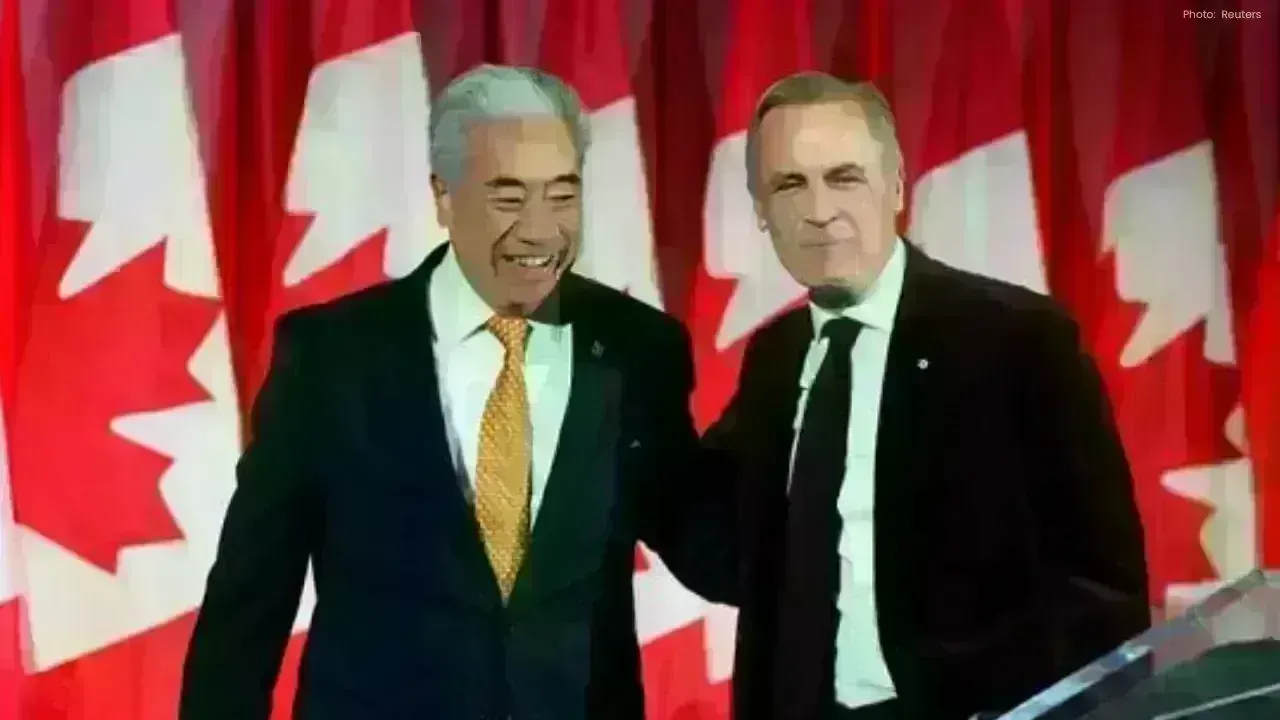
The recent switch of Conservative MP Michael Ma to the Liberal Party has fueled a significant debate regarding the legitimacy of government formation within Canadian parliamentary democracy.
Conservative leader Pierre Poilievre has characterized this move as a sign of political maneuvering, accusing Prime Minister Mark Carney of trying to secure a majority through covert strategies rather than a public mandate. Poilievre argues that only a general election should determine a majority government, not the attraction of MPs from rival parties.
In response, Carney has rejected these allegations, asserting that real legitimacy hinges on the ability to maintain the confidence of the House. He believes that whether that confidence arises through elections, strategic alliances, or individual MPs switching allegiances aligns with parliamentary traditions.
Canada’s electoral system does not empower citizens to directly elect majority or minority governments. Voters select individual MPs, who subsequently determine the governing leadership. A prime minister remains valid under parliamentary regulations as long as they can withstand confidence votes.
Cross-floor movements are not a new phenomenon within Canadian politics; MPs across all major parties have switched sides historically, including notable defections to Conservative administrations before. Efforts to limit this practice, such as proposals mandating byelections following a party switch, have not succeeded.
Critics claim that such defections erode voter trust, particularly when MPs abandon their previously held positions. Conversely, supporters argue that MPs are elected to exercise independent judgment rather than merely act as representatives of a party line.
In the past, minority governments have relied on collaboration for survival. In the last Parliament, the Liberals governed with another party’s support via a confidence-and-supply agreement, effectively securing a functional majority without formal floor-crossings.
What differentiates the present scenario is the fact that individual defections might singularly propel the governing party over the majority line. While unprecedented at the federal tier, it remains entirely permissible.
Ultimately, accountability resides with the electorate. MPs who shift allegiances—and the leaders who endorse them—must clarify their decisions at the next electoral opportunity. In Canada’s parliamentary framework, political ramifications might be postponed, but they are ultimately inevitable.


 English