Post by : Anis
Al-Rashid
A Critical Setback for India's Space Ambitions
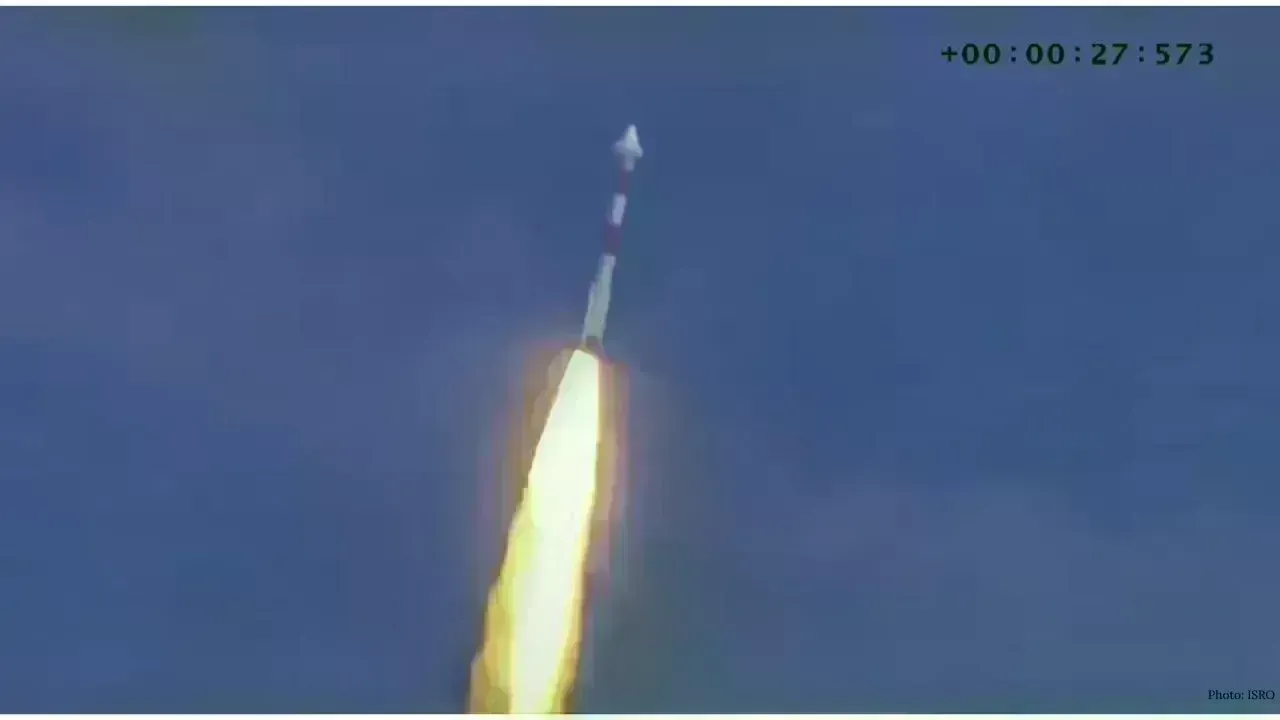
On January 12, 2026, the Indian Space Research Organisation (ISRO) encountered a significant failure during its PSLV-C62 mission. The rocket did not achieve its designated orbit, resulting in the loss of the vital EOS-N1 hyperspectral imaging satellite (also known as Anvesha), as well as 15 other satellites equipped with advanced technologies. Intended as the first launch of the year, the mission faced an abrupt end when an anomaly disrupted the rocket's trajectory during its pivotal third stage.
This failure bears substantial implications, impacting national security capabilities, confidence among international clients, and the thriving Indian private space sector. In this article, we delve into the details of the mission, its significance, and the path forward for ISRO.
Mission Overview
Launch Details and Objectives
Lifted off from the Satish Dhawan Space Centre in Sriharikota, Andhra Pradesh, the PSLV-C62 managed to carry 16 satellites—a mix of strategic and commercial payloads provided by both domestic and international partners.
The primary payload, EOS-N1 (Anvesha), developed collaboratively with the Defence Research and Development Organisation (DRDO), aimed to enhance surveillance capabilities for defence and civilian purposes, including agriculture and environmental monitoring.
In addition to EOS-N1, several co-passenger payloads were included, some designed to showcase groundbreaking technologies in areas such as on-orbit refueling and artificial intelligence.
Rocket Configuration
The PSLV variant employed was the PSLV-DL, featuring solid and liquid propulsion stages and two booster engines. This configuration aimed to ensure safe delivery of payloads into a sun-synchronous orbit at about 505–512 kilometers in altitude.
Understanding the Failure: The Anomaly Diagnosed
Issues During the Third Stage
Initial launch phases were executed without any problems, but complications arose during the third stage (PS3) burn. Telemetry data indicated an unexpected disturbance and pressure drop that led to a deviation from the anticipated trajectory.
ISRO's Chairman Dr. V. Narayanan confirmed a critical anomaly occurred late in the third stage, inhibiting the vehicle from reaching the required velocity for orbital insertion. Consequently, none of the onboard satellites were able to be deployed.
Failures at this stage pose significant challenges, especially as even slight deviations can be detrimental—a reality evident in this mission.
Investigation and Technical Challenges Ahead
ISRO is conducting a thorough investigation to identify the root causes of the anomaly, examining telemetry, system logs, and component data from all rocket stages. The aim is to ascertain if the issue arose from manufacturing inconsistencies, integration errors, propulsion challenges, or other factors.
The agency has committed to transparency and will share detailed findings once the Failure Analysis Committee concludes its work.
Significance of the Lost Payloads
EOS-N1—The 'Super-Eye' Satellite
The EOS-N1 satellite, known as Anvesha, was intended to be a cutting-edge hyperspectral Earth observatory, capable of capturing images across numerous wavelengths beyond standard systems. Its applications included:
The satellite’s loss is a considerable blow to India’s defense space capabilities, as it was set to improve operational intelligence.
Impact on Emerging Technologies
In addition to EOS-N1, 15 satellites from private and international collaborators were aboard. These included innovative payloads from Indian startups like Dhruva Space and Eon Space Labs, aimed at pushing the envelope on various technologies.
Some objectives of these payloads involved:
On-orbit refueling
Artificial intelligence processing in space
Multispectral Earth imaging
University research collaborations
International collaborations with partners from various countries
The loss not only masks their technological progress but also shakes investor confidence and future launch arrangements.
Broader Implications
Impact on India's Private Space Sector
India’s private space landscape has expanded recently, with numerous startups engaged in satellite production and launch operations. The PSLV-C62 mission was envisioned as a landmark partnership between ISRO and private stakeholders.
This failure has raised concerns about launch reliability, particularly for smaller firms that depend on rideshare opportunities. While affected companies are resolved to adapt, there’s a need for re-evaluation of insurance policies and launch agreements moving forward.
Strategic Policy Insights
Beyond commercial ramifications, this mission failure carries significant policy implications. Space assets have become crucial for national security, communication, and scientific endeavors. The EOS-N1 loss underscores the necessity for:
Redundancy in essential space capabilities
Thorough risk assessments for missions
Strengthened quality controls across launch components
The Indian government and ISRO are likely to revise risk management protocols and explore policy adaptations to facilitate quicker satellite recovery and replacement missions.
Reflecting on PSLV's Legacy
A Legacy and Future Challenges
The Polar Satellite Launch Vehicle (PSLV) has been instrumental in India’s space journey, successfully executing various missions since the 1990s, including the Mars Orbiter Mission and Chandrayaan.
Nevertheless, recent consecutive failures—particularly the previous PSLV-C61 mission in 2025—have raised concerns regarding recurring third-stage complications and propulsion reliability. Engineers are currently assessing whether the design, manufacturing practices, or integration processes need reevaluation.
Restoring Confidence and Enhancing Rigor
Despite these challenges, India’s space sector maintains optimism, asserting that failures are part of the journey toward discovery. The PSLV's extensive accomplishments and the lessons learned have fortified its foundation for future endeavors.
Transparent communication about findings and corrective measures will be pivotal in restoring confidence among stakeholders integral to India’s space ambitions.
What Lies Ahead? Recovery Efforts and Preparations
ISRO’s Immediate Actions
Following this mishap, ISRO has embarked on:
A thorough failure analysis involving senior engineers and external experts
Telemetry and component data review from all rocket stages
Independent checks on manufacturing and integration documentation
Strategic evaluations of launch strategies and design parameters
These steps aim to not only ensure a return to successful launches but also bolster India's reputation for precision in space exploration.
Looking Forward: Satellite Replacement Strategies
Mission coordinators and stakeholders, including DRDO and private contributors, are already considering strategies for replacing lost satellites, which may include:
Constructing new satellites with advanced specifications
Identifying alternative launch options
Developing improved risk models and backup payloads
Private firms are also exploring insurance avenues and timeline adjustments, while international partners will monitor developments closely before engaging in future collaborations.
Final Thoughts: A Setback, Not a Conclusion
The PSLV-C62 mission’s failure signifies a notable technical and strategic hurdle for India's aspirations in space, highlighting the intricate nature of orbital missions and the importance of stringent safeguards. Losing the DRDO satellite and diverse payloads illustrates the risks associated with space exploration.
However, history reveals that setbacks in space exploration often lead to renewed innovation and resilience. Armed with a legacy of scientific accomplishments and a burgeoning private sector, India’s space program is well-positioned to learn from these challenges and forge a stronger future.
Disclaimer This article draws upon various news and official sources at the time of writing. Mission specifics and findings may evolve as additional information becomes available and reports are released.


 English