Post by : Anis
Al-Rashid
A Bold Concept, But Flawed Execution
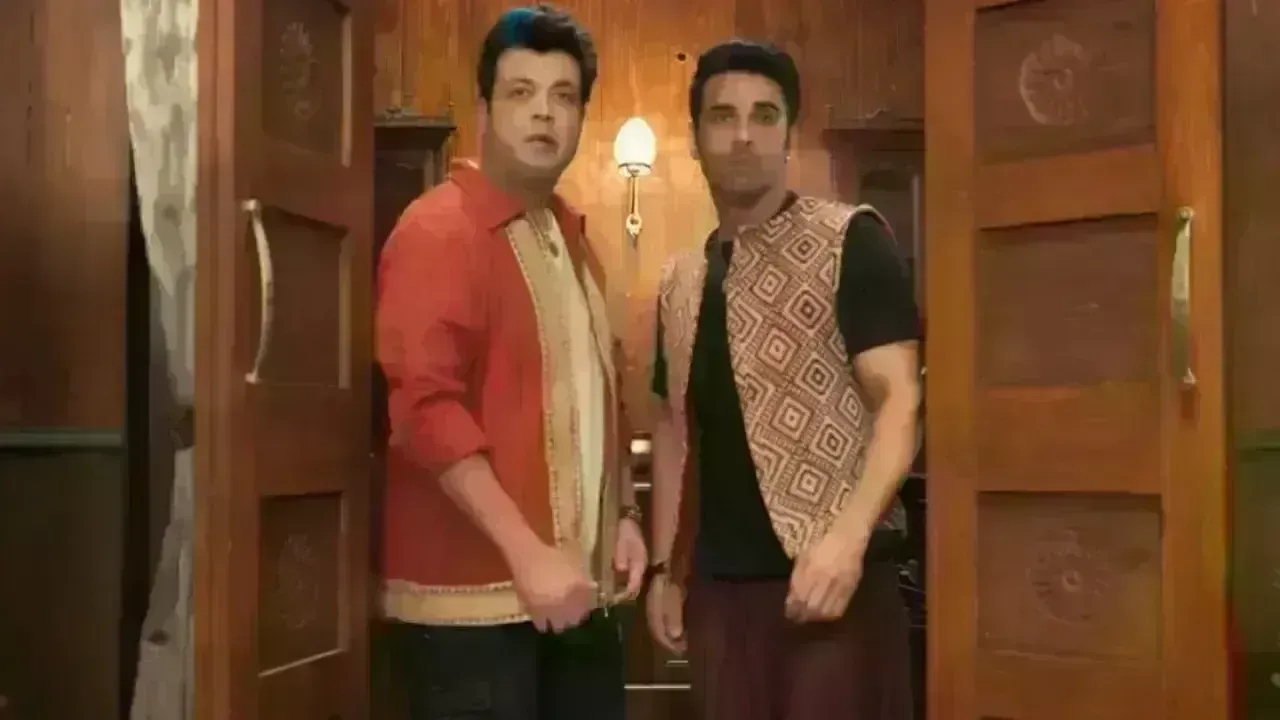
Debuting in theaters on January 16, 2026, Rahu Ketu brings popular comedians Varun Sharma and Pulkit Samrat together in a mythological comedy that promised a mixture of laughter and fantasy.
Directed by Vipul Vig, the film takes cues from Hindu mythology, particularly from the celestial bodies Rahu and Ketu, embedding them into a modern storyline filled with slapstick comedy, social commentary, and outrageous scenes.
However, despite its promising concept and well-known cast, audience reactions have been mixed, with many feeling the humor and story progression were disjointed. This review investigates the reasons behind these polarized responses to Rahu Ketu.
Story Overview: Misguided Mythology
Plot Summary
At its heart, Rahu Ketu features two inept characters — Rahu (Varun Sharma) and Ketu (Pulkit Samrat) — who spring to life from a peculiar magical notebook of a storyteller named Churu Lal.
In mythology, Rahu and Ketu represent cosmic forces, and the film loosely adopts this idea, depicting them as figures endeavored to fix societal wrongs. Rather than succeeding, they embark on chaotic journeys through scenarios rife with corruption and crime.
Their escapade becomes even more wild with the arrival of Meenu Taxi (portrayed by Shalini Pandey), triggering a series of humorous yet chaotic events central to the plot.
Writing and Narrative: Unfulfilled Potential
A Messy Concept
While the premise of celestial beings navigating human mishaps is inherently comedic, critics argue that Rahu Ketu struggles to marry its mythological roots with coherent storytelling. The screenplay juggles multiple subplots — including a farcical drug cartel and ludicrously corrupt officials — ultimately feeling unfocused and erratic.
The Hollywood Reporter India describes the film as a long gag that never quite lands, referring to it as “a mindless attack on the senses” and noting that its protracted runtime feels aimless post-interval.
Moreover, the narrative indulges in self-referential humor that falters, further diluting the sense of momentum.
Acting Performances: Chemistry Amid Script Flaws
Dynamic Duo, Weakened by Script
One consistent highlight across numerous reviews is the chemistry between Varun Sharma and Pulkit Samrat, reminiscent of their earlier comedic outings.
Critics and audiences alike note that even when the writing stumbles, their lively interactions and sincere performances often draw laughs amidst the disarray.
Nonetheless, their efforts are frequently hindered by unfocused writing that fails to provide their characters with strong arcs or maximize comedic influence.
Supporting Cast
Featuring a robust cast including Shalini Pandey, Piyush Mishra, Chunky Panday, Amit Sial, Manu Rishi Chaddha, and Sumit Gulati, the film’s exaggerated tone is clear, yet many reviewers suggest these performances suffer from a lack of sharp direction and depth.
Several roles become caricatures, particularly that of Chunky Panday’s quirky villain, leading to one-dimensional portrayals in a broader comedic spectacle.
Directorial Choices: Challenges in Tone
Vipul Vig’s Attempts
As both director and writer, Vipul Vig aims to create an exciting comedy combining mythological fantasy with slapstick but relatively few reviewers find it nuanced or well-organized.
Scenes meant to be hilarious often feel forced or redundant, with humor—from physical gags to social commentary—lacking sustainability throughout its lengthy duration.
Visual aspects like exaggerated special effects and retro stylistic choices sometimes feel disconnected instead of innovative, leading to a tone that could confuse audiences.
Reception: Reactions Varied
Perspectives from Critics
The critical reception to Rahu Ketu has been sharply split, with many critics voicing disappointment despite commending its unique comedic endeavors:
The Hollywood Reporter India characterized the film as “mindless and severely limited,” criticizing its humor and coherence.
Hindustan Times highlighted the film’s erratic execution and lack of impactful laughs, giving a 2-star rating and stating it “contains excessive noise, few genuine laughs.”
Conversely, Times of India provided a somewhat favorable impression, rating it 3.0/5 stars and mentioning that it offers genuine amusement for those desiring a unique comedic experience.
Other reviews attribute the film as a mythological misfire that fails to validate its premise, entangling multiple narrative strands without delivering clarity.
Viewer Responses: Diverse Opinions
Contrasting Audience Reactions
Viewer feedback reflects the divide seen in critiques; some commend Rahu Ketu for its lively nature and occasional witty moments, particularly when the lead actors are involved.
Others resonate with critic sentiments, seeing it as an ambitious film that attempts too much, merging mythology, comedy, and slapstick in a muddled manner.
Online conversations suggest that Rahu Ketu might appeal more to those who appreciate broad, chaotic humor than those in search of intelligent storytelling.
Themes and Social Commentary
Exploring Cultural Threads
Rahu Ketu endeavors to incorporate cultural and mythological ideas into a contemporary setting. The central premise of celestial beings tackling human absurdities provides fertile ground for sociocultural commentary.
However, many critics think the thematic aspirations are undermined by superficial writing and clumsy sequences, reducing the potential satire to a spectacle that lacks depth.
Themes like social corruption and divine missions emerge but often appear disjointed, making meaningful exploration difficult.
Technical Aspects: Visual and Editing Choices
Visual Execution
Technically, Rahu Ketu combines traditional Bollywood visuals with stylized segments aimed at evoking fantasy and parody. Critics have placed less emphasis on cinematography, yet many noticed that subpar special effects and uneven pacing detract from the audience experience.
Editing issues, particularly the film’s pacing and transitions between chaotic scenes, have been blamed for contributing to a jarring narrative rather than enhancing its flow.
Future Implications for Bollywood Comedy
Innovation Meets Realization
Rahu Ketu seeks to pioneer Bollywood comedy into the realm of mythological fantasy and surreal humor, a blend not frequently encountered in mainstream Indian cinema.
Nonetheless, its execution reveals that being innovative alone is insufficient; coherent writing and structured narratives are vital for comedic success in both audience and critical reception.
Whether Rahu Ketu will motivate filmmakers to refine such blends or serve as a warning against excessive ambition is still in question.
In Conclusion: A Mixed Outcome
In summary, Rahu Ketu presents itself as a film with good intentions but lacking execution. Its creative premise and charismatic cast provide moments of joy, yet these are shadowed by scripting and structural flaws that inhibit its comedic success. The film’s divisive reception underscores this complexity — hailed in some quarters for its humor while panned in others for its scattered focus.
Fans of Varun Sharma and Pulkit Samrat may find enjoyment in Rahu Ketu, but those looking for tightly woven storytelling or consistently laugh-out-loud moments might be left wanting.
Disclaimer:
This review is based on critical insights and audience feedback available at the time of writing and is intended solely for informational purposes. The views expressed here reflect a spectrum of reactions to the film and may differ among viewers.


 English