Post by : Saif
Al-Najjar
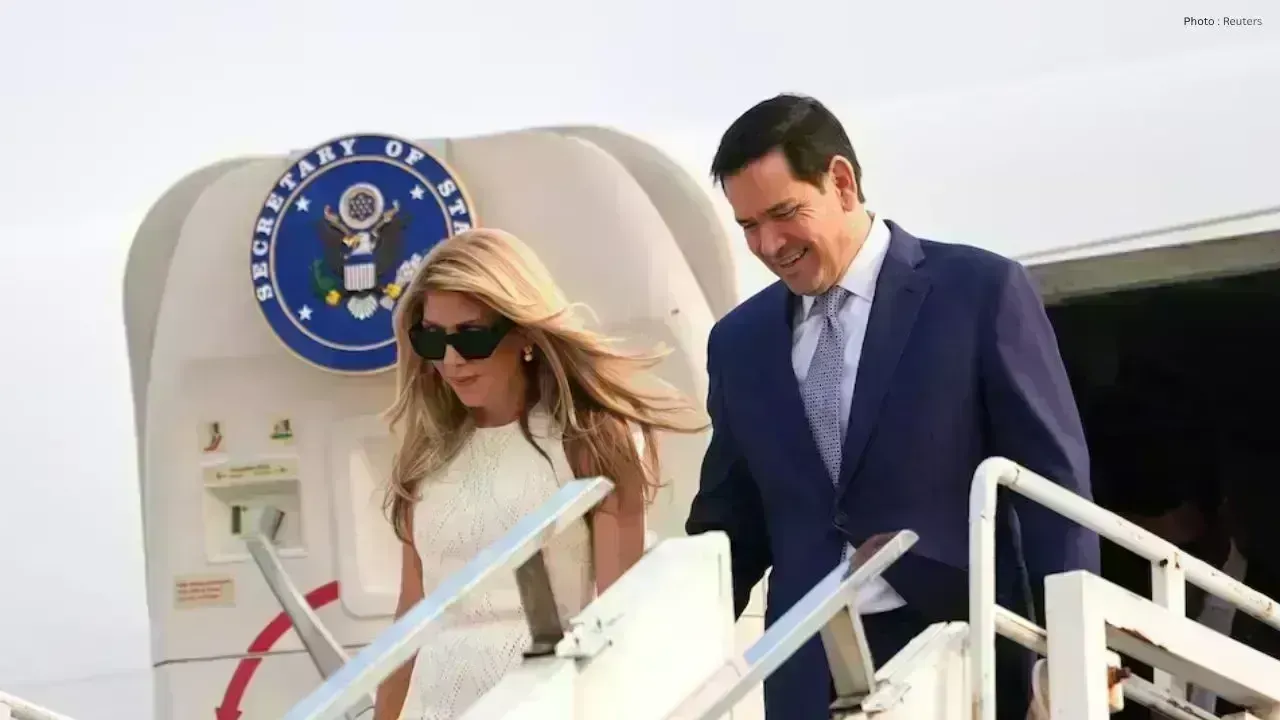
The recent visit by US Senator Marco Rubio to India has been interpreted as a significant diplomatic initiative aimed at bolstering relations between Washington and New Delhi in light of current global tensions and shifting alliances.
Experts suggest this trip reflects the United States’ growing acknowledgment of India’s vital role in trade, security, and regional stability on the world stage. The visit also emphasizes the need for better communication and a repair of recent rifts between the two nations.
Over the past two decades, India and the US have broadened their collaboration in defense, technology, trade, energy, and strategic planning. They now cooperate on various international issues, particularly concerning Indo-Pacific security and economic interests.
Nevertheless, certain differences remain regarding trade policies and geopolitical stances, especially with regards to Russia and China. Analysts believe Rubio’s diplomatic engagement aims to fortify trust and ensure ongoing collaboration despite these divergences.
As one of the most significant partners for the US in Asia, India is recognized for its rapid economic progress and influential geopolitical position. The nation plays a crucial role in maintaining balance and stability in the Indo-Pacific, an area marked by intense strategic rivalry.
Scheduled discussions during Rubio’s visit will likely center on defense relations, economic collaborations, technology advancements, and diplomatic strategies. Additional topics may include security of supply chains, energy independence, cybersecurity, and cutting-edge technologies.
India’s rise as a major global player has not gone unnoticed, leading to intensified interest from leading powers. It stands as one of the fastest-growing economies and plays a pivotal role in international forums.
The US has been working on strengthening ties with India through defense agreements, military training programs, and technological collaborations. Areas of cooperation have surged, particularly in domains like AI, semiconductor industries, renewable energy, and digital networks.
Despite this, India continues to adhere to an independent foreign policy, balancing ties with various powers based on its interests, which sometimes results in policy discrepancies with Western nations.
A key issue influencing international diplomacy remains India’s ongoing relationship with Russia. Despite pressures from some Western entities, India has sustained its economic and defense connections with Moscow while fostering ties with the US and European nations.
Political analysts highlight that understanding India's strategic significance is crucial for Washington, advocating for stable dialogues to avoid allowing disagreements to hinder broader partnership. Rubio’s visit is seen as part of this strategic diplomatic agenda.
Trade relations will likely be a critical point of discussion. While strong business ties exist between the US and India, past disagreements over tariffs and market access may emerge during high-level talks, ensuring economic collaboration remains prominent.
Recent years have seen a surge in defense collaboration between the US and India, with increased military exercises and defense technology agreements enhancing strategic alignment. Experts anticipate that this partnership will continue to evolve, especially with growing regional rapport.
China's burgeoning influence in Asia also complicates US-India relations, as both nations express concerns about maritime security and economic competition in the Indo-Pacific.
Stronger US-India cooperation could shift the regional political equilibrium in the future. As global power dynamics shift, partnerships among democratic nations are drawing more interest from global policymakers.
The visit also holds symbolic value, as senior diplomatic engagement often fosters trust and enhances communications during turbulent times. Such high-profile visits are vital for leaders to address pressing issues directly and nurture enduring relationships.
Given its economic scale, population, technological prowess, and strategic positioning, India’s influence on the global diplomatic stage has reached new heights, prompting major powers to vie for closer ties.
Business advocates in both nations hope that enhanced political rapport may yield a rise in investments, trade advancements, and technological synergies, further cementing economic ties between India and the United States.
Thus, Rubio’s visit transcends ordinary diplomacy. It embodies a broader strategy by the US to maintain robust connections with India amid shifting political landscapes and intensifying geopolitical rivalries.
As dialogues unfold, global observers will be keen to monitor how both countries navigate their cooperation, differences, and mutual strategic interests in the ensuing years.


 English