Post by : Bianca
Haleem
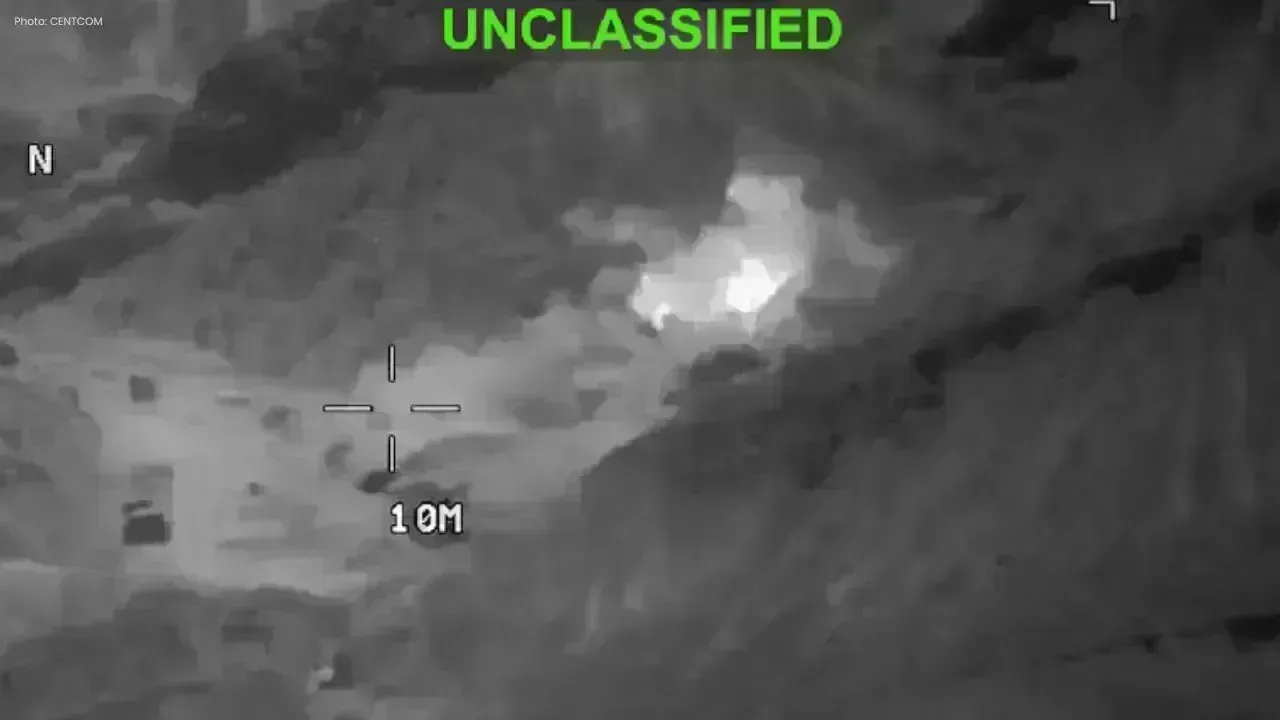
The United States executed its ninth consecutive night of airstrikes on Iran on Monday, focusing on military sites spread throughout the nation amidst escalating tensions in the Middle East. These latest military initiatives were amplified by intensifying clashes near the Strait of Hormuz, as Iran responded with its own missile and drone assaults on US-connected military establishments in adjacent countries.
Reports from Iranian state media noted explosions in various cities, such as Sirik, Jask, Tabriz, Chabahar, Bandar Mahshahr, Bandar Imam Khomeini, Konarak, Khvormuj, and additional areas. Air defense systems were activated across numerous regions as residents recounted loud explosions throughout the night.
US Targets Iranian Military Installations
US military officials indicated that the primary objective of the recent airstrikes was to diminish Iran’s military prowess, which they assert has been leveraged to endanger commercial vessels and international maritime routes navigating through the Strait of Hormuz, a critical artery for the world's oil supplies.
The targeted military operations included:
- Command and control centers
- Air defense systems
- Coastal surveillance units
- Maritime military resources
- Missile launching platforms
- Drone launching bases
- Military communications networks
Officials have asserted that these operations are crucial for curbing Iran's capabilities to launch attacks on commercial shipping in Gulf waters.
Explosions Documented Throughout Iran
Iranian state broadcaster IRIB reported a series of explosions across several southern coastal cities like Bandar Mahshahr, Bandar Imam Khomeini, Jask, and Sirik.
The Fars News Agency disclosed that air defense systems were activated in southeastern areas including Konarak and Chabahar following various explosions.
Read More: Drone Threat Neutralized Near US Consulate in Erbil, Iraq
Additional blasts were noted near Khvormuj in Bushehr Province and in Tabriz in the northwest, marking the first incident reported in Tabriz since the onset of this latest conflict phase.
Iran Claims Missile and Drone Counterattacks
As reported by Iranian state media, Tehran commenced a fresh wave of missile assaults from Lorestan Province, targeting US military assets in the region.
The Islamic Revolutionary Guard Corps (IRGC) announced that it carried out missile and drone strikes targeting military installations in Jordan and Kuwait.
The IRGC specified its targets included:
- US aircraft at Aqaba Airport in Jordan
- Hangars at Muwaffaq Salti Air Base in Jordan
- US military facilities at Ali Al Salem Air Base in Kuwait
Warnings were also reported in Bahrain, although no official updates concerning damage or casualties were available.
Conflict Escalation: Third US Service Member Confirmed Deceased
This military campaign comes on the heels of the US confirming a third service member's death amid ongoing hostilities.
The US has attributed these fatalities to assaults linked to Iran, intensifying the pressure on Washington to maintain military operations.
Trump Indicates Significant Strikes on Iran
Upon returning to Washington after the FIFA World Cup final, US President Donald Trump told reporters that the military had dealt a significant blow to Iran.
He stated that these strikes were a tribute to the three US service members recently killed and reiterated the administration's stance against allowing Iran to develop nuclear capabilities.
US Remains Open to Diplomacy
During a visit to the Philippines, US Secretary of State Marco Rubio expressed that Washington is still willing to engage in diplomatic discussions with Iran, emphasizing the need for substantive negotiations.
Rubio also urged allies to assist in safeguarding international shipping lanes in the Strait of Hormuz, advocating for financial, military, and other support to protect maritime commerce.
Strait of Hormuz: Central to International Tensions
The conflict has centered around the Strait of Hormuz, a vital maritime route for a significant portion of global oil traffic.
The United States claims it is imposing a naval blockade around Iranian ports, while Iran has warned that any vessels using what it deems unsafe routes could face severe consequences.
Iran claimed that two oil tankers detonated while navigating what it described as a perilous shipping channel established under US military pressure.
Iran has cautioned that maritime routes in the region will remain hazardous as long as US military activities persist.
Meanwhile, US Central Command (CENTCOM) stated it had redirected six commercial vessels and disabled another to ensure adherence to its naval security protocols.
Global Concerns Amplified by Ongoing Conflict
This ongoing conflict, which ignited after the US and Israel's offensive on Iran on February 28, has unfolded across numerous Middle Eastern nations.
The fighting has led to thousands of casualties, predominantly in Iran and Lebanon, disrupting energy supplies in the region while escalating fears of rising oil prices and global inflation.
As military actions persist on both sides, there is increasing anxiety that the conflict could expand further, jeopardizing regional stability and international trade routes.


 English