Post by : Sami
Al-Rahmani
US Job Market and Inflation Under Pressure from War Tensions
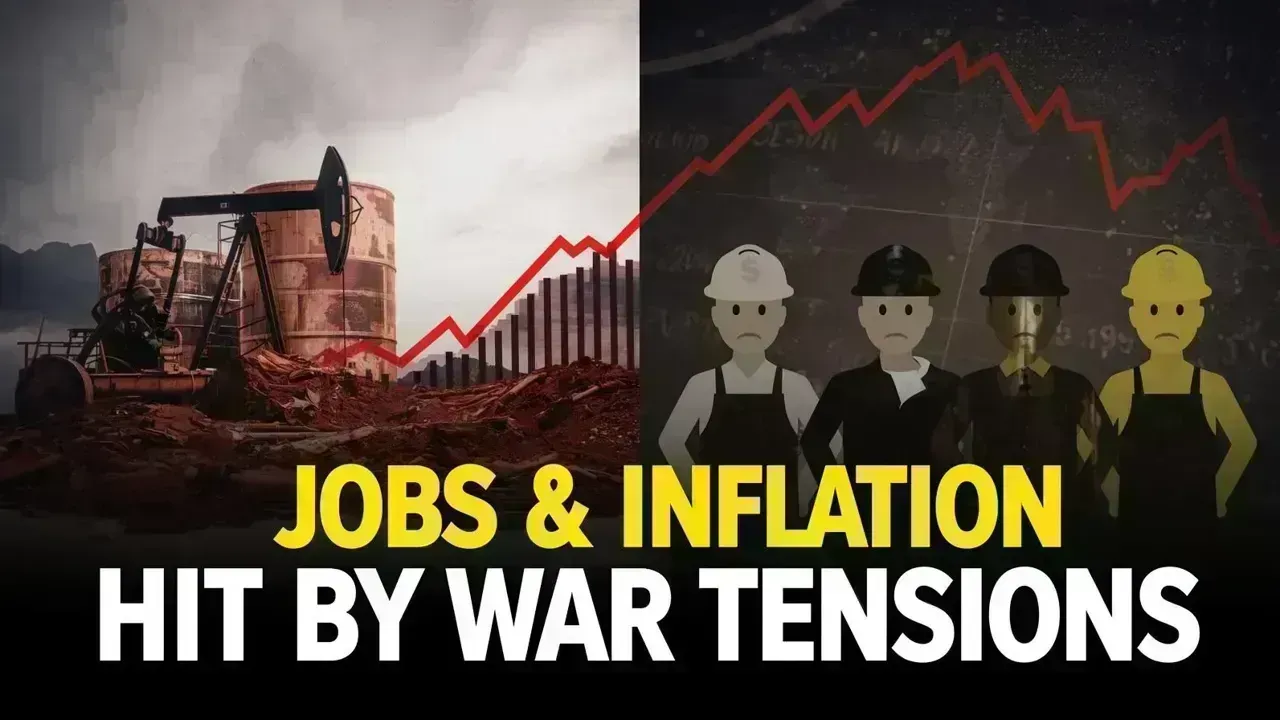
The conflict involving the United States and Iran is transcending geopolitical boundaries, now posing a serious threat to the US economy, job market, and living costs. What once seemed like a distant skirmish is impacting fuel costs, hiring practices, business confidence, and inflation rates across the United States.
At the heart of this economic turbulence is the Strait of Hormuz, a pivotal oil route. As tensions escalate in this area, immediate repercussions ripple through the US economy, primarily because energy prices have a cascading effect across various sectors.
Initiating the Oil Shock
The economic domino effect begins with oil prices.
Due to the ongoing conflict, there has been a disruption in the global oil supply, causing crude prices to climb steeply. At one point, oil prices surged above $110 per barrel, leading to a noticeable increase in US fuel prices.
This occurs for several reasons:
- The Strait of Hormuz accounts for nearly 20% of the world’s oil supply
- Disruptions lead to shortages in supply
- Market reactions trigger price hikes
Oil is more than a mere commodity; it serves as the bedrock of contemporary economies. When oil prices increase, the costs of almost every other product subsequently rise.
The Inflation Catalyst: Rising Oil Prices
Increased oil prices are directly correlated to inflation rates, and this correlation is already evident in the US economy.
Here’s how the chain reaction unfolds:
- Fuel costs skyrocket
- Transportation expenses soar
- Businesses raise prices to accommodate higher costs
- Consumers are left to pay more for everyday goods and services
This has resulted in:
- Soaring gas prices
- Increased airfare and shipping costs
- Higher prices for groceries and essentials
Even sectors like agriculture are feeling the heat as operational costs for fuel and fertilizers rise.
Economists caution that this could usher in lasting inflation, with elevated prices persisting longer than anticipated.
Tackling Persistent Inflation
The current scenario poses unique challenges for policymakers.
While interest rates have historically been a tool for managing inflation, the inflation driven by war is a consequence of disruptions in supply, rather than consumer demand.
This leads to a precarious situation:
- Raising interest rates could stifle job growth
- Lowering rates might exacerbate inflation
This worry evokes thoughts of stagflation, defined by:
- Persistently high inflation
- Slowing economic growth
- Decline in job opportunities
Effects on Hiring: A Slowing Job Market
One of the most apparent effects of rising costs and economic uncertainty lies in the job market.
Businesses are exercising caution due to:
- Rising operational expenses
- Uncertain economic forecasts
- Stressed profit margins
- Hiring initiatives
- Delays in expansion projects
- A slowdown in overall job growth
Industries that primarily deliver services, encompassing a large portion of the workforce, are particularly feeling the backlash.
Sector Performance: Job Losses vs Gains
The fallout is uneven across different industries.
Industries encountering difficulties include:
- Airlines and travel (due to fuel prices)
- Logistics and transportation
- Retail and consumer goods
- Manufacturing
The reliance on stable fuel and supply chains amplifies their vulnerability to cost increases.
Industries experiencing gains:
- Energy companies
- Defense-related sectors
While energy firms benefit from climbing oil prices, defense contractors witness growing demand amid heightened geopolitical tensions.
Corporate Strategies in Response to Rising Costs
US companies are revising their strategies to cope with the prevailing situation.
Common adjustments include:
- Delayed hiring
- Increased pricing of products and services
- Reduction in operational costs
- Transferring extra costs to consumers
For instance, transportation companies are instituting fuel surcharges, ultimately passing on higher expenses to consumers.
This creates a vicious cycle, where increased costs perpetuate further inflation.
Everyday Americans Feeling the Pinch
For regular Americans, the impact is becoming increasingly palpable.
Individuals are encountering:
- Soaring fuel prices
- Heightened grocery costs
- Increasing travel expenses
- More expensive everyday services
Simultaneously, job prospects may grow more uncertain, complicating financial management amid rising costs.
This blend of increased expenses and stagnating income growth exerts strain on living standards.
Investor Sentiment and Financial Markets
The anxiety stirred by wartime tensions is also influencing financial markets.
- Some sectors, particularly energy, are thriving
- Overall markets are exhibiting volatility
- Investor sentiment is dampening
Reduced confidence among investors could yield:
- Declining business investments
- Sluggish economic progress
- Restricted job opportunities
This adds additional strain to the economic landscape.
The Potential for an Economic Slowdown
Should tensions persist, the threat of a widespread economic slowdown looms.
Possible repercussions include:
- Sluggish economic growth
- Rising unemployment rates
- Persistent high inflation
Prolonged disruptions to the global oil supply could intensify these outcomes.
Conflict Duration: A Critical Factor
The longevity of the conflict is a pivotal element.
- Short-lived tensions → temporary price spikes
- Enduring conflict → ongoing economic challenges
If disruptions in the Strait of Hormuz persist, the repercussions for inflation and employment could deepen significantly.
The Broad Economic Spectrum
The US economy, while robust, remains intricately linked to global dynamics.
Despite domestic energy production capabilities, the nation continues to be susceptible to:
- Global oil price shifts
- International trade routes
- Supply chain challenges
This reality implies that external conflicts can significantly impact the US economic framework.
Concluding Thoughts
The small-scale war tensions between the United States and Iran are creating a notable economic ripple effect, impacting both inflation and employment growth.
The elevation in energy prices stands at the core, pushing costs higher across sectors and necessitating business adaptations.
The US currently faces a delicate challenge:
- Inflation is being spurred by global supply interruptions
- Job growth is waning due to increased expenses and uncertainty
With ongoing tensions, the potential for a deeper economic downturn cannot be overlooked.
The forthcoming weeks will be critical in assessing whether the conditions stabilize or escalate into more severe economic ramifications.
Disclaimer
This information is intended for informational purposes only and reflects current economic trends. Future economic conditions may vary based on external developments.


 English