Post by : Saif
Al-Najjar
The U.S. government has altered its stance, permitting Venezuela to cover legal expenses for former president Nicolás Maduro amid an ongoing drug trafficking trial. This measure addresses concerns that previous sanctions jeopardized Maduro's right to a fair legal process.
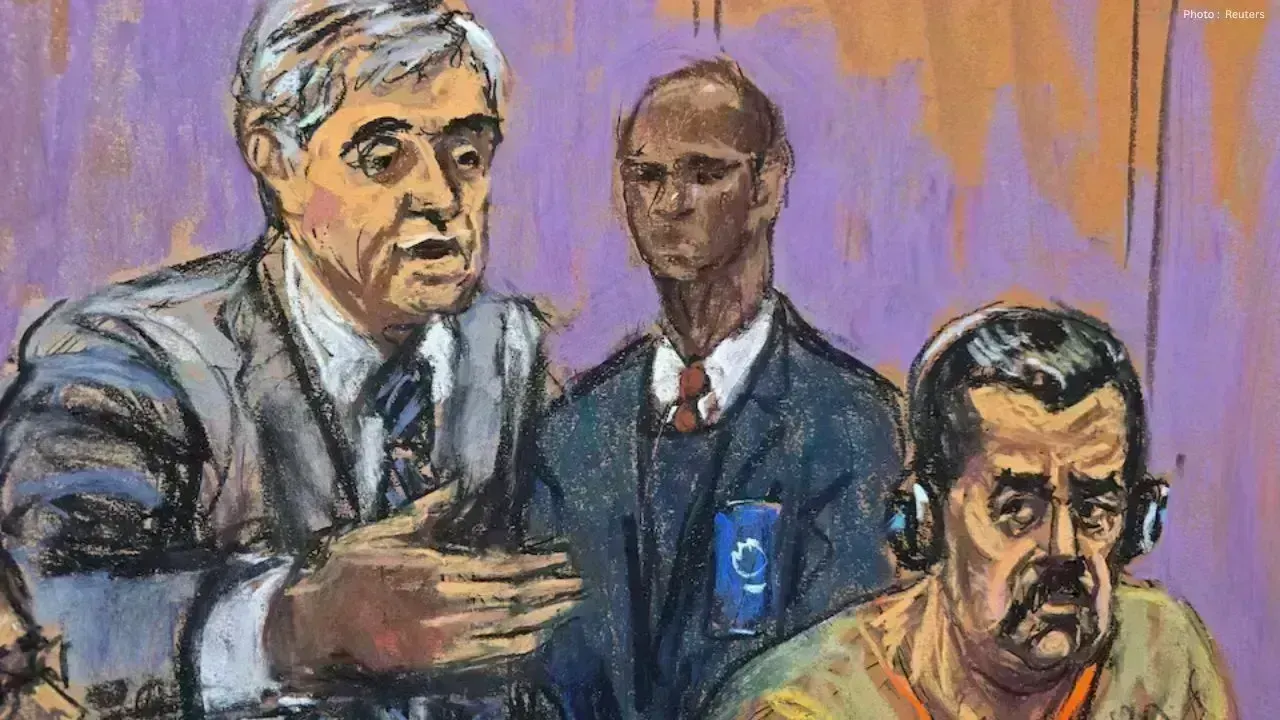
Earlier this year, Maduro and his wife were apprehended in the United States and currently face serious allegations, including drug trafficking. Both have denied the charges and entered pleas of not guilty.
The limitation on legal fees emerged as a pivotal concern in the proceedings. Due to stringent U.S. sanctions, the Venezuelan government was barred from funding Maduro's legal representation. His attorneys contended that this restriction undermined his ability to defend himself adequately. They emphasized that every individual deserves the right to choose their legal counsel and receive fair legal assistance.
A judge in the U.S. also commented on the matter, underscoring the critical importance of legal representation, even in severe cases. Preventing payments for a defense attorney could compromise that right and impact trial fairness.
Consequently, U.S. authorities decided to relax certain sanctions, allowing Venezuela to finance Maduro's legal representation. This action aims to ensure that the judicial process upholds fundamental legal rights and demonstrates how the legal framework strives to balance justice and fairness, even within politically charged cases.
This development coincides with slowly thawing relations between Venezuela and the United States. Following Maduro's ousting, the new administration, led by Delcy Rodríguez, has made efforts to mend ties with the U.S., including easing some restrictions as a reflection of this diplomatic shift.
However, the decision has sparked discussions. Some believe that easing sanctions is necessary to safeguard legal rights, while others argue it might convey unintended implications, particularly in a case involving severe accusations.
This trial is closely monitored on a global scale. It is unusual for a former head of state to face trial in a foreign court, and the outcome could significantly influence international law and future cases related to political figures.
Legal experts note that this decision underscores an essential tenet: regardless of the accused's identity, the right to a fair trial must be preserved, including access to competent legal representation.
At the same time, it illustrates the intersection of law and politics. Sanctions, often wielded as political instruments, can complicate legal procedures, forcing governments to navigate difficult scenarios in maintaining a balance between differing priorities.
The ongoing trial of Nicolás Maduro is anticipated to proceed in the following months. With the funding issue resolved, attention will shift to the trial proceedings and the evidence to be presented.
This U.S. decision signals a broader initiative to uphold justice. Even in intricate international matters, the fundamental principles of law remain paramount.


 English