Post by : Saif
Al-Najjar
A severe emergency unfolds in northern Japan as wildfires rage through Iwate Prefecture, compelling thousands to abandon their homes while firefighters strive to control the unrelenting blazes.
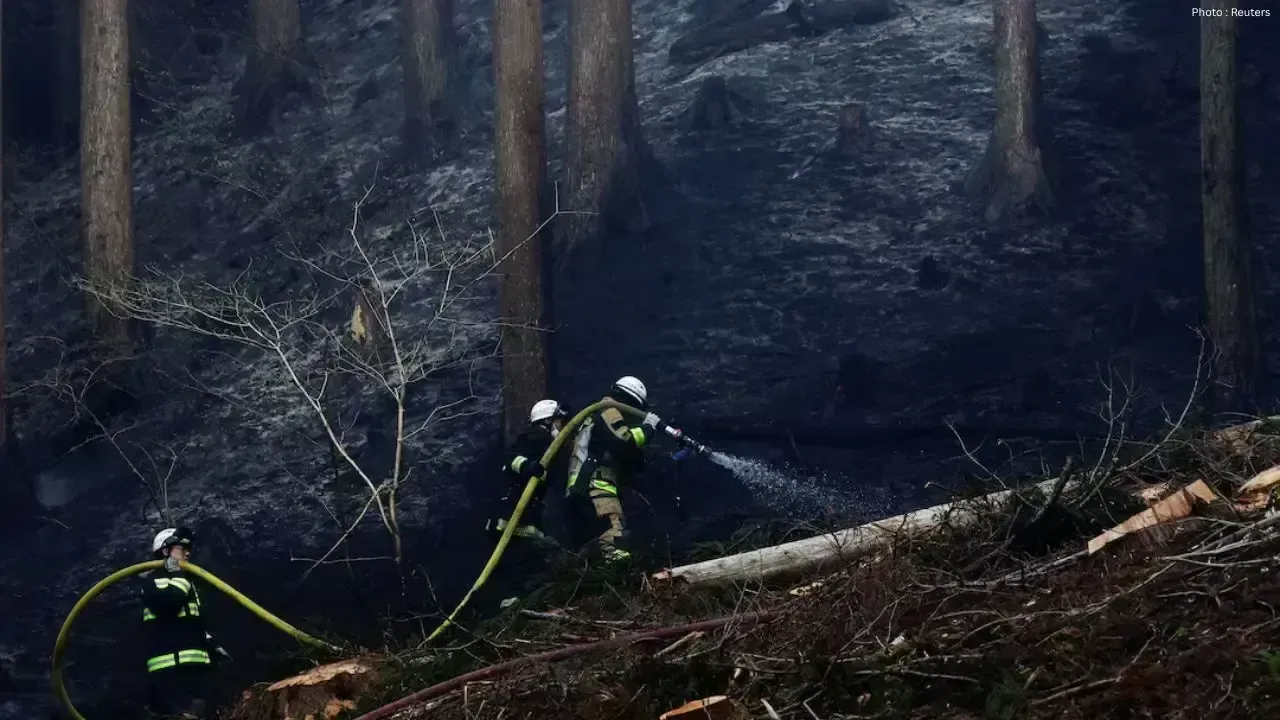
These fires have persisted for several days without full containment. Reports indicate that over 1,000 firefighters, alongside helicopters and emergency units, are actively involved. Nevertheless, fierce winds and dry weather hinder fire suppression efforts.
The town of Otsuchi is among the worst affected, with flames encroaching dangerously close to residential areas. Authorities have mandated that about a third of the town's residents evacuate. In total, over 3,000 individuals have sought refuge in safer zones as a protective measure.
The fire is thought to have ignited in forested, mountainous areas, swiftly spreading due to adverse weather conditions. Strong winds coupled with dry vegetation have enabled rapid flame movement, complicating containment strategies for emergency responders.
Helicopters are deployed to douse the flames, while ground crews aim to prevent the fire from encroaching on homes and critical infrastructure. However, challenging terrain presents significant obstacles for firefighters.
The situation remains tense for local families, many of whom have evacuated with minimal belongings. Evacuation centers are providing essential shelter, sustenance, and support. Authorities urge residents to heed safety instructions and refrain from re-entering hazardous areas.
Environmental concerns are also at play, as critical forest regions are being destroyed, with wildlife habitats in jeopardy. Smoke has infiltrated surrounding areas, compromising air quality and disrupting daily life.
Historical context reveals that Japan has grappled with similar wildfires, but experts suggest that shifting weather patterns may be increasing the frequency and severity of such incidents. Lengthier dry spells and elevated temperatures pose heightened risks for forest fires.
The current events underscore the crucial need for disaster readiness. The prompt actions by emergency services have mitigated additional damage, yet the magnitude of the fires illustrates the inherent challenges posed by natural disasters.
Authorities remain focused on containing the wildfires and safeguarding impacted communities. The upcoming days are pivotal in assessing how swiftly the situation can stabilize and when evacuees may safely return home.
This wildfire crisis in Iwate serves as a harrowing reminder of the unpredictable nature of disasters and underscores the necessity for robust emergency preparedness, public awareness, and commitment to environmental challenges.


 English