Post by : Saif
Al-Najjar
The U.S. Coast Guard has officially ended its search for survivors after a military operation targeted vessels believed to be involved in drug trafficking in the Pacific Ocean. The decision came after rigorous search efforts failed to uncover any signs of life or debris in the area.
Over the course of more than 65 hours, the search covered a vast area of over 1,090 nautical miles, conducted under optimal weather and visibility conditions. Search teams had high hopes of locating potential survivors or wreckage, yet no evidence was discovered, resulting in the halt of the search.
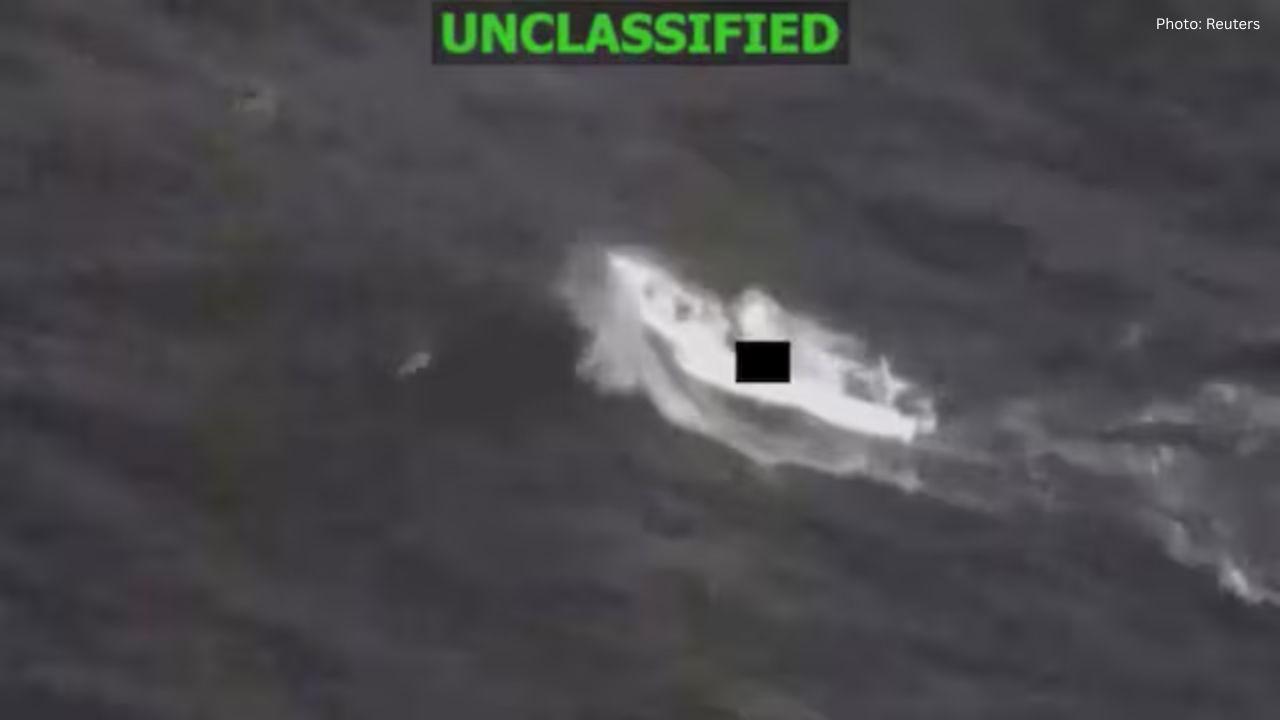
This operation followed a military strike earlier aimed at a convoy suspected of narcotics transport. Images circulated by U.S. Southern Command displayed vessels linked to illegal drug transportation, although details regarding the number of individuals on board at the time of the strike remain undisclosed.
Maritime drug trafficking poses substantial challenges for U.S. authorities. Smugglers frequently employ swift boats and obscure ocean pathways to deliver illicit drugs to North America. These operations are perilous, threatening both law enforcement officials and traffickers, who often risk much to evade capture.
The statement from the Coast Guard highlights the harsh realities faced during maritime search and rescue operations. Despite exhaustive efforts to save lives, there comes a moment when continuing the search no longer alters the likely outcome. The choice to end such searches is never simple, especially when lives hang in the balance, but is based on expert judgment and the evidence available.
This incident further illuminates broader issues in the international fight against drug trafficking. While military actions and law enforcement efforts aim to dismantle criminal syndicates, they may also incur loss of life. Balancing security measures with humanitarian considerations presents ongoing difficulties for governments.
For the families of those potentially on the vessels, the suspension of the search creates a cloud of sorrowful uncertainty. Absent confirmation of survivors or remains, achieving closure becomes a formidable challenge. This situation starkly reveals the hidden human toll connected to illicit drug trafficking that spans oceans and borders.
As the U.S. continues to combat maritime drug trafficking, this episode serves as a poignant reminder of the perils and serious ramifications involved. While stringent enforcement can impede criminal operations, it accentuates the necessity for long-term solutions targeting the foundational causes of drug trafficking.


 English