Post by : Anis
Al-Rashid
Transforming Storyboard to Screen in Record Time
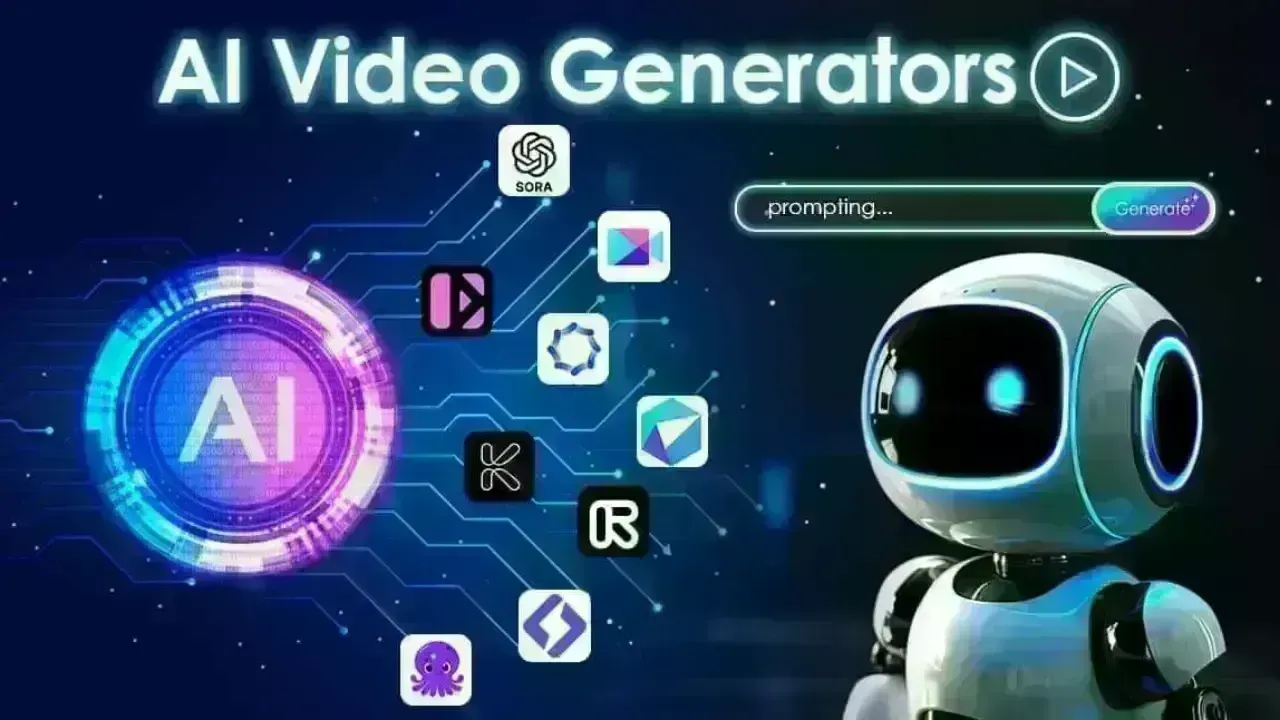
Video production has long been characterized by a traditional hierarchy: conception, scripting, filming, editing, and distribution. This conventional process, often requiring seasoned professionals and substantial financial resources, is rapidly becoming obsolete. AI video generators now enable the swift transformation of text, images, or footage into sleek videos almost instantaneously. Tasks that previously took weeks can now be completed overnight, democratizing video creation and redefining quality standards.
This shift is not merely an evolution; it's a paradigm shift. As generative technologies become increasingly sophisticated in terms of realism and coherence, video production is evolving into a software-centric process. This leads to reduced costs, expedited experimentation, and greater personalization, characterized by a fresh creative approach that combines human input with automated output.
Understanding AI Video Generators: Mechanisms at Play
AI video generators utilize advanced machine learning algorithms trained on expansive datasets encompassing images, audio, and narrative styles. Key components include:
-
Text-to-Video & Image-to-Video Models: These convert written prompts or images into dynamic video sequences by learning motion patterns, lighting, and scene transitions.
-
Diffusion and Transformer Frameworks: Diffusion methods systematically convert random noise into coherent visuals, while transformers ensure narrative consistency.
-
Neural Rendering & Motion Synthesis: These simulate camera movements and animations for realistic portrayal.
-
Voice & Audio Synthesis: They incorporate text-to-speech and sound effects for complete audio-visual presentations.
-
Editing Controls: Users can refine styles, pacing, and branding for consistent video outputs.
The overarching message: creators articulate what they envision while the AI handles much of the how.
Why This Transformation is Timely
A host of factors converged to propel this shift:
-
Computational Advancements: Accelerated developments in model architecture and efficiency have validated video generation on a commercial level.
-
Demands of the Creator Economy: Social media incentivizes quick content production, making traditional processes untenable for brands.
-
Globalization and Localized Messaging: Businesses require rapid localization of content across numerous markets.
-
Integration within Workflow Tools: AI solutions seamlessly fit into current design and marketing platforms, simplifying their adoption.
-
Heightened Visual Expectations: In today’s world, audience demand for video content is ubiquitous—exceedingly beyond the capability of human-only teams.
What Changes Instantly: Speed, Cost, Access
1) Speed of Production
Scripts are rapidly turned into visuals. A/B tests can now be executed within the same day as opposed to weeks. Campaigns can pivot in real-time based on live performance metrics.
2) Cost Implications
Financial planning shifts from production costs to strategic insights. Rather than incurring charges per project, teams now invest for each iteration, facilitating experimentation.
3) Accessibility of Resources
Both independent creators and smaller teams can now produce high-caliber video content. The focus has transitioned from mastering equipment to mastering storytelling and prompt crafting.
4) Personalized Content at Scale
Content can be tailored for viewers based on their preferences and demographics, while tutorials adapt to individual learning trajectories. Advertisements can interchange scenes dynamically according to audience interactions.
Emerging Use Cases
Marketing & Advertising
-
Quickly generated social media advertisements and engaging visual content.
-
Localized marketing efforts featuring native language voiceovers.
-
Product demonstrations tailored to specific customer demographics.
Education & Training
-
On-demand training modules and succinct educational videos.
-
Corporate materials tailored to regional language and cultural contexts.
-
Multilingual course offerings without the need for additional shooting.
Entertainment and Media
-
Trailers and early sketches for movies and video games.
-
Serialized content tailored for social platforms.
-
Music visuals generated from user prompts.
E-commerce & Sales
-
Product videos generated directly from inventories.
-
Dynamic shopping clips that update automatically with new details.
-
Sales training videos customized for particular clients.
Internal Company Communications
-
Localized communications from company executives across regions.
-
Key policy updates transformed into concise videos.
-
Fast-paced storytelling for managing organizational changes.
Evolving Creative Roles
The rise of AI video tools redistributes rather than eliminates creative opportunities.
-
Directorial Prompt Creators: Expertly craft specific, repeatable prompts reflecting brand intentions.
-
Style Designers: Establish cohesive visual aesthetics—colors, movement, and pacing.
-
Narrative Curators: Concentrate on storytelling and emotional resonance.
-
AI Quality Checkers: Ensure outputs are refined and integrate human footage as needed.
-
Ethics Guardians: Ensure compliance and transparency in AI usage.
These positions underscore the continuing importance of human insight in creative processes.
Quality Evolution: From Acceptable to Ideal
Initially, AI videos raised eyebrows; however, advancements in realism and coherence are accelerating. Quality hinges on directorial steering. Optimal results can be achieved through:
-
Detailed Scene Selection: Clearly delineate prompts into sequences with specified camera movement.
-
Referential Visual Aids: Ground outputs in defined examples or mood boards.
-
Iterative Feedback Loops: Treat generation as a refining process—create, adjust, and refine.
-
Combined Approaches: Merge AI-generated sequences with traditional footage for standout moments.
Brands that articulate early on visual guidelines achieve coherence more swiftly than those in pursuit of originality.
Ethical and Legal Considerations
The rapid pace of AI video innovation brings forward critical ethical questions:
-
Consent and Identity Protection: Synthesis of voice and image should be opt-in and revocable.
-
Transparency: Audiences deserve clarity regarding AI-generated content, particularly in journalistic or political formats.
-
Bias and Equity: AI systems can perpetuate stereotypes; hence human oversight is vital.
-
Deepfake Concerns: Essential measures include watermarking and provenance tracking.
Responsible implementation is imperative—it's a necessary cost of scale.
Effect on Agencies and Production Brands
Agencies are not vanishing; they are metamorphosing, shifting focus to:
-
Strategic Engagements: Prioritizing messaging and positioning over mere execution.
-
Continuous Content Operations: Ongoing collaborations instead of one-off projects.
-
IP Creation & Narrative Worlds: Designing reusable elements for consistent brand deployment.
Production companies embracing AI as an enhancer, rather than a competitor, see growth in efficiency and profitability.
Key Performance Metrics in an AI-Driven Video Ecosystem
While traditional performance indicators still apply, new metrics gain importance:
-
Speed of Iteration: How rapidly can teams adapt and learn?
-
Personalization Impact: Benefits derived from targeted content variations.
-
Cost per Insight: Expenditures divided by actionable knowledge gained.
-
Consistency Scores: Visual and tonal coherence across content.
-
Time to Launch: Duration from concept to distribution.
Successful teams focus on learning agility rather than perfection.
Navigating Common Challenges
-
Over-Directing: Excessive guidance can confuse AI models. Begin with simple prompts and gradually increase complexity.
-
Style Consistency: Stabilize templates and references early in the process.
-
Artifact Awareness: Manual reviewing can identify issues that models may overlook.
-
Reducing Tool Variation: Standardize to a select few tools to minimize complications.
-
Context Ignorance: AI may accelerate creation but cannot replace strategic relevance.
Future Outlook: Immediate Steps to Consider
Anticipate swift advancements along these lines:
-
Longer Narratives: Crafting extended, multi-segment stories with stable character arcs.
-
Interactive Experiences: Narratives that adapt based on viewer interaction.
-
Real-Time Personalization: Customizing content during live interactions.
-
Realistic Physics in Animation: Enhancing the believability of transitions and environments.
-
Built-In Authenticity Signals: Default watermarking for traceability and trust.
As these advancements take place, AI video will evolve from merely being a tool to becoming a complete medium.
Getting Started Today
-
Identify Opportunities: Choose a workflow that will have the most impact (e.g., social media ads).
-
Establish Style Guidelines: Define your brand’s visual elements and voice.
-
Educate Your Team: Cover the essentials of prompt crafting, quality assessment, and ethics.
-
Launch & Learn: Implement small initiatives, gather insights, and adjust weekly.
-
Scale with Intention: Introduce personalized content gradually as frameworks are established.
Conclusion: Creativity at Unprecedented Speed
AI video tools are bridging the gap between creativity and execution. This rapid evolution isn't about replacing creatives; it’s about minimizing barriers, allowing ideas to flourish more quickly than ever. Teams that harness both human creativity and machine efficiency are likely to lead the charge in a rapidly evolving landscape, where attention spans reset daily.


 English