Photo: AFP
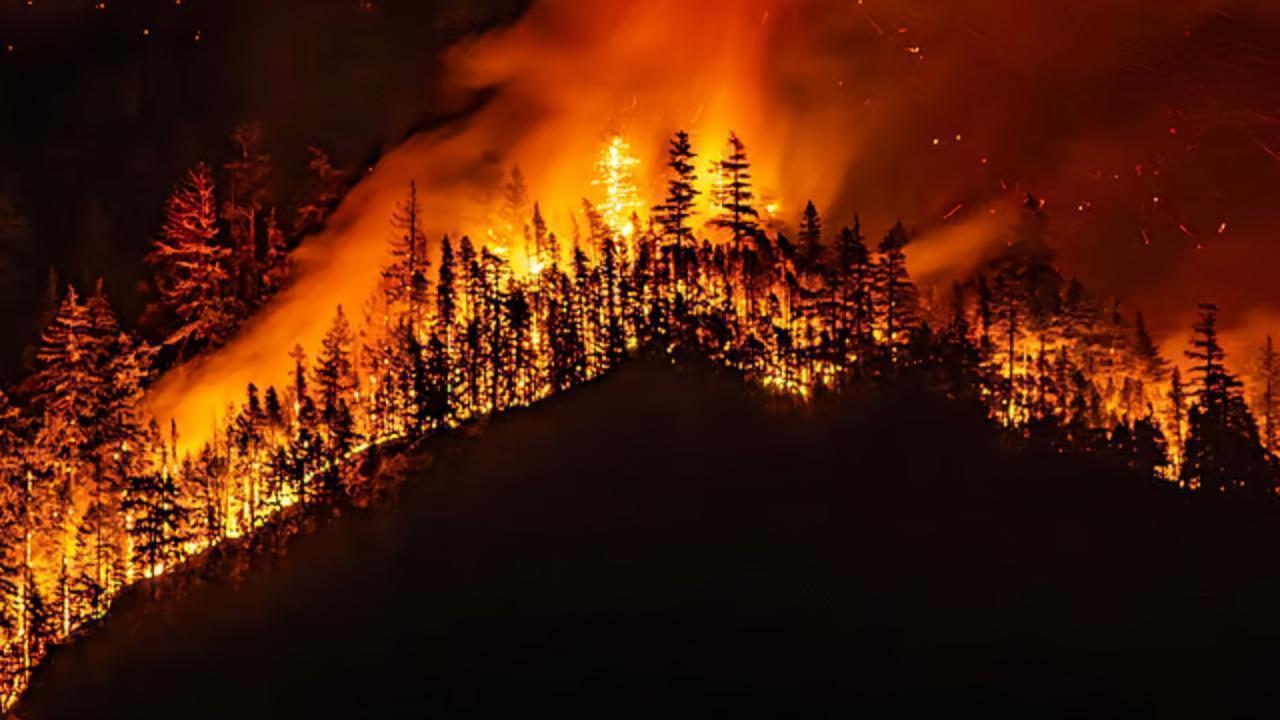
Nearly twenty thousand people live close to Mount Underwood, a mountain just north of Port Alberni, a small city on Vancouver Island in British Columbia, Canada. Right now, a large wildfire is burning across the mountain. Thick, grey smoke fills the sky above the town, and many residents are feeling scared and unsure of what might happen next.
One local resident, Russ Wetas, is 69 years old. He has lived in Port Alberni since 1956 and says he has never seen a fire like this before. The wildfire service in British Columbia has called the fire “out of control.” That means it is still spreading, and they do not know how far it might go or how long it will take to stop it.
What makes this fire even more surprising is where it is burning. Wildfires usually happen far inland, not near the coast. But this fire is happening in a coastal area, which experts say used to be very rare. In the past, places close to the ocean were cooler and wetter, so fires were unlikely. But now, that seems to be changing. Fires are reaching areas they never used to affect.
This year, 2025, has become one of Canada’s worst wildfire seasons in history. It is the second-worst ever recorded. So far, about 7.4 million hectares of land have burned across the country. To give you an idea, that’s nearly the same size as the entire country of Panama. Although 2025 has not yet passed the record-breaking fires of 2023—when over 17 million hectares burned—it is still an incredibly dangerous and damaging season.
While Mount Underwood burns in the west, fires are also starting in the east. In Newfoundland and Labrador, people in parts of the capital city, St. John’s, have been told to evacuate their homes. That means they were asked to leave for their safety. Farther south, near the city of Halifax in Nova Scotia, another wildfire has started just outside the city. Halifax is home to nearly half a million people, so any fire nearby is a serious concern.
Back in Port Alberni, city officials are preparing for the worst. So far, they have not ordered any evacuations, but they are staying alert. Residents have been told to be ready to leave at any moment. Many families are packing bags, planning where they might go, and making sure they have important things like medicine and documents ready to take with them.
So, why are these wildfires happening more often and in more places? Experts say the answer lies in climate change and how it has affected the weather in Canada. Over the past several years, winters have become shorter, and less snow falls. Summers are arriving earlier and are drier and hotter than before. These new conditions make forests and grasslands dry out quickly, turning them into perfect fuel for fires. Even coastal areas that were once safe from flames are now at risk.
Another big problem caused by the fires is smoke. Smoke from the fires in Canada has spread far and wide. It has caused air quality alerts across Canada and in parts of the United States. In some places, the air became so dangerous that people were told to stay indoors and avoid heavy activity. Incredibly, some of the smoke even traveled across the Atlantic Ocean and reached parts of Europe, making skies hazy and orange in color.
The effects of these wildfires are not just local. Even people far away are feeling the impact, whether through smoke, poor air quality, or changing weather patterns.
Port Alberni is a small, close-knit community. Many people have lived there their entire lives, and neighbors know each other well. To see a massive fire climbing the mountains near their homes is something most of them never imagined. The view of the smoke filling the sky is a scary reminder of how quickly things can change in today’s world.
Even though the fire hasn’t reached the town yet, the danger is very real. Firefighters and emergency teams are keeping a close eye on the blaze. If it starts moving toward homes, they are ready to act fast. Everyone knows that fires can grow quickly, especially when the weather is hot, dry, and windy.
People in other parts of Canada are feeling the same fear. In St. John’s, thousands of people are getting ready to leave their homes just in case. They know that even a small fire, if not stopped early, can turn into a huge and dangerous situation.
All of this shows how strong nature can be—and how it can become even more powerful when mixed with changing weather and climate. From small island towns to large cities, wildfires are becoming a bigger part of life in Canada.
The fire on Mount Underwood is an important example. A fire like this—on a mountain near the coast, close to people’s homes—used to be very rare. But now, it is a sign of what’s changing. Fires are no longer just a problem for forests far away. They’re happening near homes, cities, and places that were once considered safe.
Some people are asking questions about the future. Will wildfires become even more common? Will they keep spreading to new areas? And what can be done to stop them?
Firefighters, scientists, and government leaders are working on answers. They’re studying how to manage forests better, how to prepare cities and towns, and how to fight fires more quickly. But one thing is clear: people will need to work together to stay safe and protect their communities.
As of now, the fire on Mount Underwood continues to burn. Emergency teams are doing everything they can to keep it from reaching homes. Residents are staying alert, and many are preparing for what could come next.


 English