Post by : Bianca
Haleem
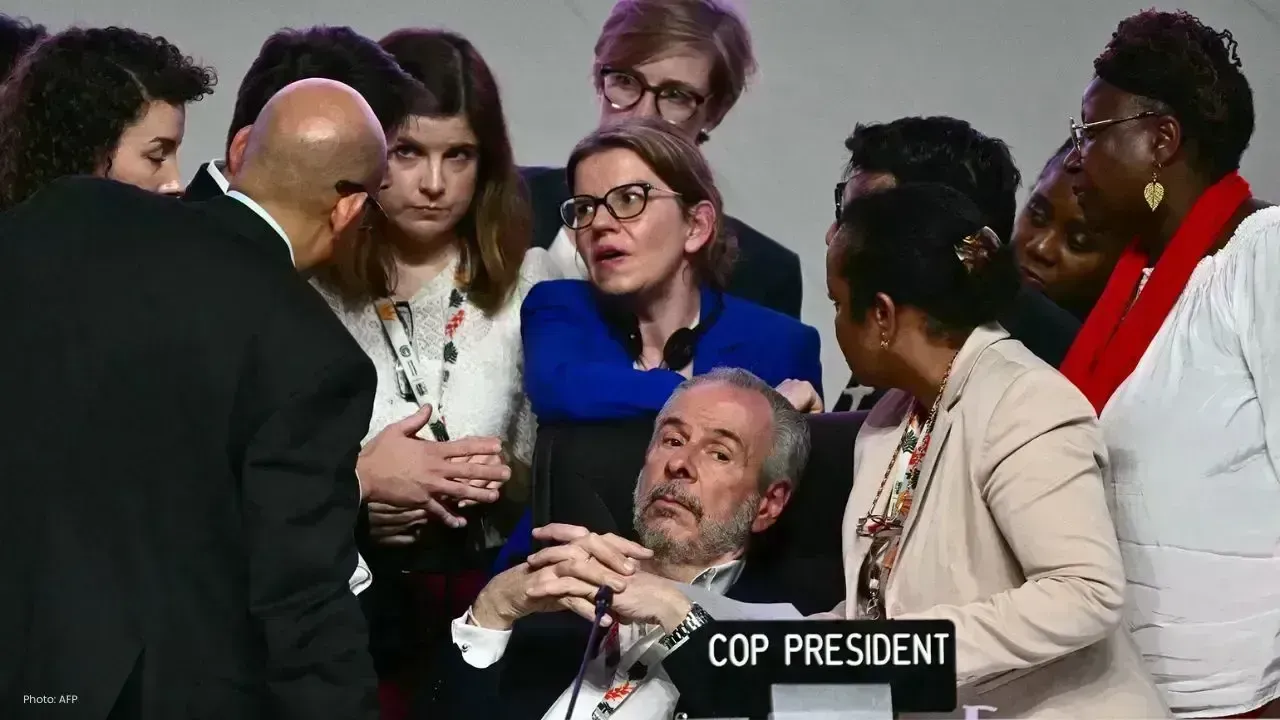
Amidst the tropical warmth of Belém, Brazil, COP30 has wrapped up after two weeks of rigorous negotiations, testing global resolve to combat climate change. Central to the summit was a renewed focus on moving away from fossil fuels, echoing commitments made during COP28 in Dubai.
Nations from the European Union, the UK, and various allies established a firm position, emphasizing they would reject any agreements that did not acknowledge the need to transition from oil, gas, and coal. This stance was bolstered by Brazilian President Luiz Inácio Lula da Silva's call for countries to formulate “road maps” aimed at reducing fossil fuel reliance and combating deforestation.
Resistance came from major oil-producing nations, such as Saudi Arabia and Russia, complicating negotiations as diplomats sought to balance the aspirations of progressive countries with the needs of fossil-fuel-reliant economies. Adding to the disorder, a fire incident at the venue led to evacuations, shifting negotiations to various hotels throughout the city.
Ultimately, a compromise was reached as the summit concluded, with a final agreement that acknowledged previous commitments on fossil fuels and explored the formulation of energy transition road maps, albeit without formal legal obligations under the Paris Agreement. Additionally, there was consensus on tripling climate adaptation financing by 2035, underscoring a sustained commitment to aiding vulnerable regions.
Outside the negotiation venues, a vibrant display of activism unfolded as environmentalists, Indigenous communities, and advocates rallied for urgent climate action, emphasizing the need for immediate and effective solutions to the climate crisis alongside diplomatic talks.
The outcome of the summit underscores ongoing tensions in international climate diplomacy—striking a balance between ambitious goals and practical realities, coupled with the imperative of multilateral cooperation in a complicated geopolitical environment. While progress is being made toward climate targets, substantial challenges linger, necessitating ongoing commitment and collaborative political resolve.


 English