Post by : Shweta
A notable number of Canadians are choosing not to fill out and submit their national census forms, despite federal laws that impose penalties of up to 1,000 Canadian dollars on non-compliance. This growing dissent has ignited discussions surrounding privacy, trust in governmental institutions, and the necessity of national data collection.
Recently, Statistics Canada commenced the distribution of census forms as part of a nation-wide population count carried out every five years. The census gathers critical information on population size, housing conditions, employment, language, education, immigration, and household situations. Officials emphasize that this data is essential for governmental planning and support of public services.
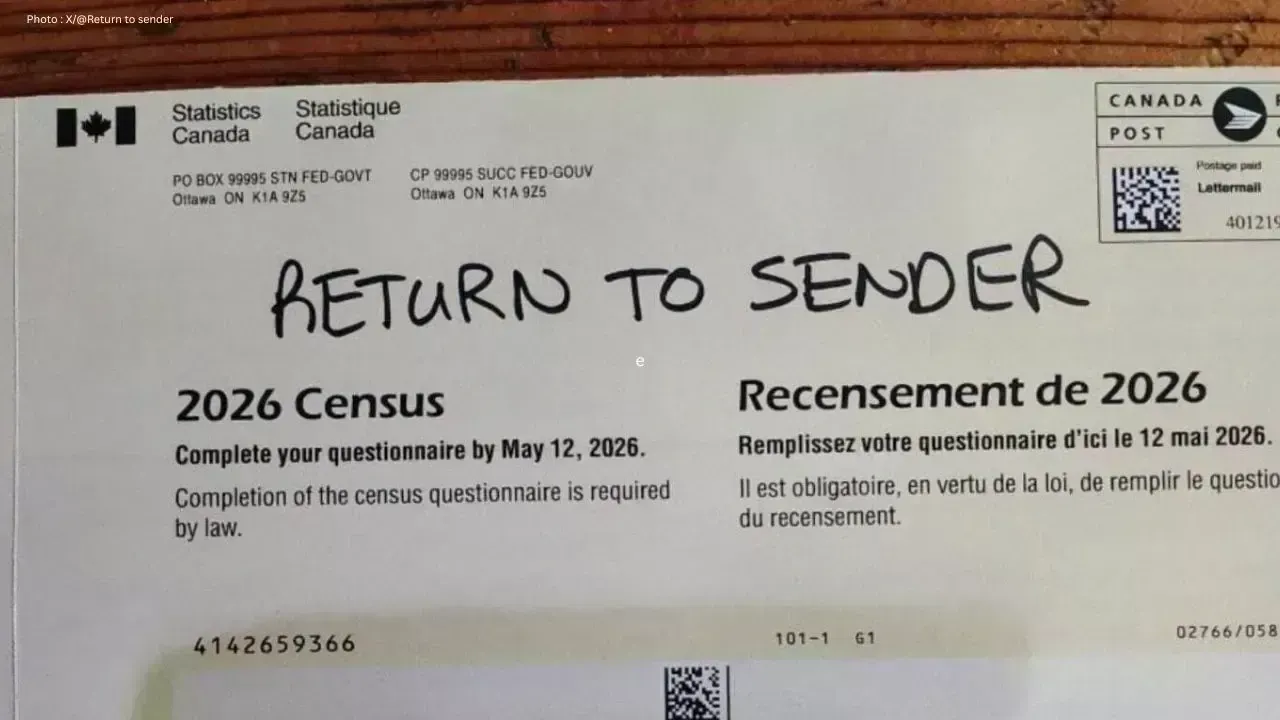
Nevertheless, some citizens have publicly declared their intentions to abstain from filling out the forms and have advocated for others to “return to sender” rather than participating. Detractors of the census contend that the government collects excessive personal information and voice fears regarding privacy and the potential future use of such data.
According to Canada’s Statistics Act, most residents are legally obligated to complete the census. Individuals who refuse or knowingly provide false information risk penalties, including fines that can amount to 1,000 dollars. In unusual situations, authorities might even pursue legal repercussions for ongoing non-cooperation.
In defense of the census, Statistics Canada emphasizes that all personal information obtained is held in confidence and safeguarded by stringent privacy regulations. Officials assert that the data is primarily utilized for statistical analyses and policy development, rather than for monitoring individuals.
Government entities heavily rely on census data to inform their decisions regarding healthcare, education, transportation, housing, infrastructure, and community funding. Experts warn that inaccurate or incomplete census participation can have significant ramifications on public services and funding allocations for local communities throughout Canada.
While the movement opposing the census remains relatively small, conversations concerning its implications have surged online via social media and public discussion forums. Some participants voiced their dissatisfaction with government entities, whereas others contended that engaging in the census is vital for ensuring communities receive adequate representation and necessary resources.
Privacy advocates have observed a rise in concerns about personal data on a global scale, intensified by data breaches, debates on digital surveillance, and increasing mistrust towards institutions. Nonetheless, they clarified that Canada’s census framework incorporates legal measures aimed at preventing the public disclosure of personal information.
Political analysts indicate that public resistance towards governmental programs tends to amplify during times of economic hardship and political division. Escalating living costs and general dissatisfaction with institutions may also play a role in the unfavorable reactions to compulsory census participation among certain groups.
Meanwhile, Statistics Canada is actively urging citizens to fulfill their census obligations online or by mail prior to the official deadlines. The agency has stated that achieving high participation rates is vital for ensuring precise national statistics and fair service distribution across provinces and municipalities.
Officials have also reminded Canadians that census workers may reach out to households that fail to respond. While legal fines are a possibility, authorities have seldom applied strict penalties in recent years, preferring to first focus on promoting voluntary compliance.
As Canada navigates another census cycle, the discourse continues, attempting to strike a balance between privacy concerns and trust in government against the necessity of accurate national data collection.


 English