Post by : Saif
Al-Najjar
The escalating strain between China and Japan has attracted significant global focus on the precarious peace in East Asia. Recent remarks from China’s Foreign Minister Wang Yi coupled with Japan’s assertive responses illustrate how rapidly dialogue and military maneuvers can heighten the likelihood of conflict in this sensitive area.
The confrontation began after Japan alleged that Chinese fighter jets had locked radar onto its military aircraft, citing this as an alarming and unsafe maneuver. China countered that Japanese planes were encroaching upon its naval drills and were attempting to disrupt their military activities.
This verbal exchange may seem like a typical political dispute, but it harbors considerable risks. When military assets from influential nations approach one another too closely, even the slightest error could escalate into a perilous scenario.
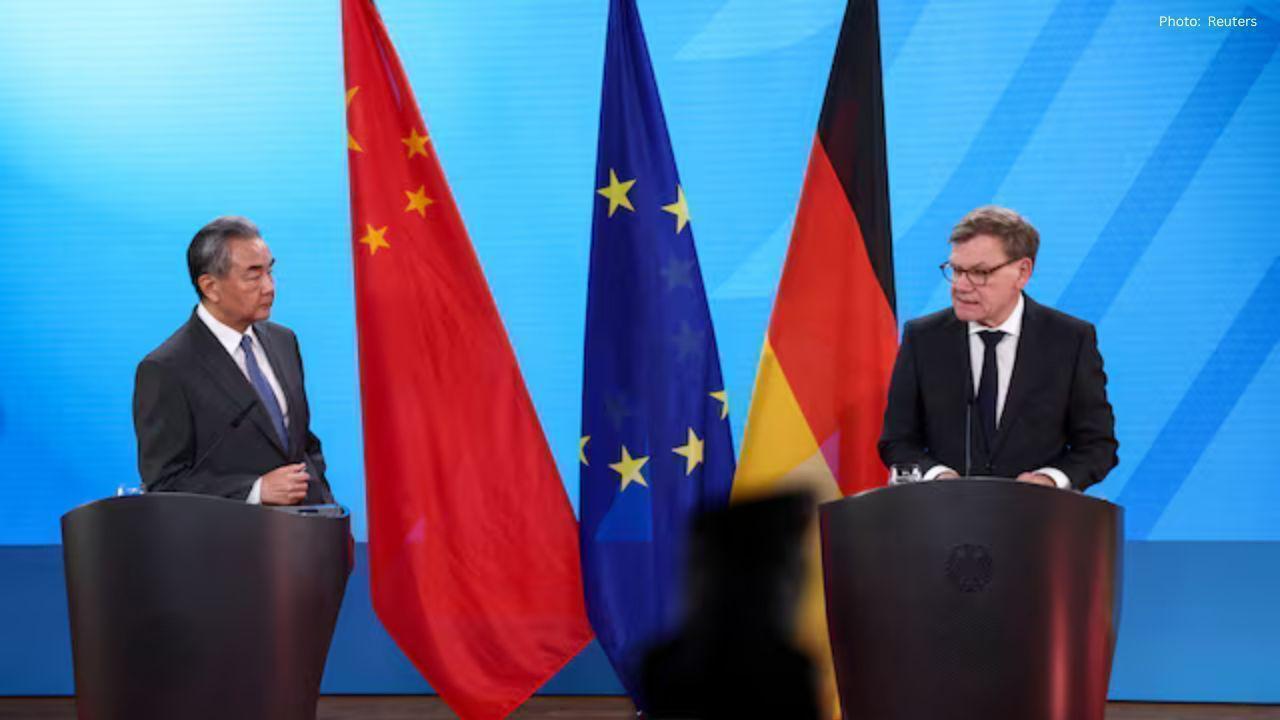
China’s foreign minister conveyed to his German counterpart that Japan’s actions amounted to a military threat against China. He harshly criticized Japan's stance regarding Taiwan, drawing parallels to Japan's wartime conduct. Notably, he stressed the importance of exercising more prudence and responsibility this year, marking 80 years since the conclusion of the war.
China maintains that Taiwan is an integral part of its sovereignty, a claim reiterated on multiple occasions. Conversely, Taiwan operates with its own governance, military, and electoral process, firmly dismissing China's assertions. Taiwan’s leadership has unequivocally stated that its destiny should be determined solely by its residents.
This disagreement extends beyond mere historical narratives; it embodies apprehensions about power dynamics and future relations. Japan, increasingly wary of China’s military capabilities, has seen its Prime Minister caution that any aggression toward Taiwan threatening Japanese interests could provoke a response, intensifying China's ire.
From an editorial perspective, this development is profoundly troubling. Asia houses some of the planet’s largest economies and busiest maritime routes. Stability in this region is vital not just for China and Japan, but for global interests. Conflict here could ripple outwards, impacting trade, travel, and overall security.
Moreover, it is crucial to acknowledge that military force should not serve as a method for political communication. Engaging in acts like targeting aircraft with radar or encroaching on naval vessels is fraught with risk, sowing fear and mistrust that impede peaceful negotiations.
Prioritizing diplomacy is imperative. Nations should lean towards dialogue, respect, and patience rather than threats and military coercion. History has shown that wars frequently ignite from seemingly trivial incidents that are overlooked or underestimated.
Germany’s role as a concerned observer reinforces that the global community is closely monitoring the situation. Major world powers recognize that any developments in East Asia have far-reaching implications. Therefore, calm and constructive actions are more crucial than ever.
In straightforward terms, no nation emerges victorious from war. The toll on soldiers, families, and economies is profound. While technology might have advanced, the anguish of conflict remains constant. Leaders must exercise caution before allowing tensions to spiral out of control.
The ongoing friction between China and Japan serves as a stark warning. Combative rhetoric and perilous military engagements could lead to dire repercussions. The world must seek wisdom, patience, and peace over ego or power struggles.
Ultimately, only through candid dialogue and adherence to international norms can the future of this region be safeguarded. Peace should be seen not as a vulnerability, but as the most powerful path forward.


 English