Post by : Mikhael
Al-Saeed
Declining Aravalli Hills Bring Heightened Environmental Warnings
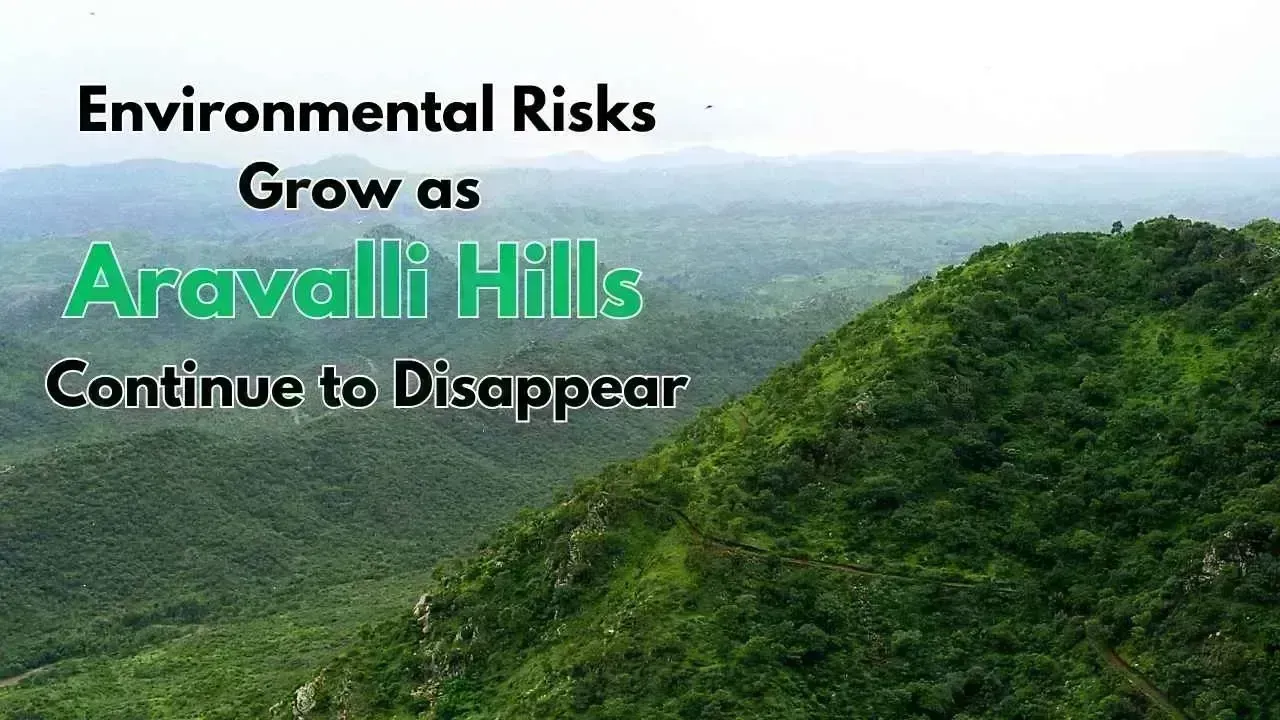
The Aravalli hills stand as one of North India's most vital natural assets. They hold the title of one of the world's oldest mountain ranges, with an estimated age of around 1.5 to 2 billion years, far outdating even the Himalayas. This mountain chain extends across Rajasthan, Haryana, Delhi, and Gujarat, having safeguarded the region for millennia.
Sadly, this protective natural structure is facing severe challenges. Extensive destruction from human activities has led to significant erosion of the Aravalli hills. Environmental specialists assert that if these practices persist, the repercussions could extend beyond Rajasthan, affecting Delhi, Haryana, and surrounding areas with imminent ecological crises.
Historical Significance of the Aravalli Hills
The formation of the Aravalli hills occurred millions of years ago due to geological movements beneath the surface. Erosion from weather elements like wind and rain has sculpted them over time into the landscapes we see today. Historically, they have acted as a natural barrier, preventing desert sands from overtaking greener areas in North India.
For ages, the Aravalli region was abundant in forests and wildlife. Several ancient civilizations thrived in its proximity, relying on the hills for essential resources such as water, timber, and minerals. Ancient trade routes also traversed this landscape, and their legacy continues with underground aquifers and seasonal rivers linked to this mountain range.
The Importance of the Aravalli Hills for the Environment
The Aravalli hills are crucial for maintaining ecological equilibrium in North India. Their historical and practical value cannot be overstated.
The benefits of the Aravallis include:
-
Preventing the encroachment of desert land
-
Minimizing air pollution and dust storms
-
Accruing rainwater and enhancing groundwater recharge
-
Supporting biodiversity and natural habitats
-
Regulating local climatic conditions and precipitation
Urban centers like Delhi, Gurugram, Faridabad, and various parts of Haryana rely heavily on the Aravalli hills for improved air quality and climate regulation. These forests are often referred to as the “green lungs”, vital for diminishing pollution and heat.
Human Impacts on the Aravalli Hills
Unfortunately, despite their significance, the Aravalli hills have faced extensive degradation over recent decades due to:
-
Unlawful mining of minerals and stones
-
Deforestation for urban expansion
-
Chaotic urban development
-
Extension of highways, residential areas, and industrial zones
In several places, hills have been decimated. Trees have been cut, and watercourses have been obstructed. As a result, the Aravalli landscape is increasingly unable to shield the adjoining regions.
Escalating Environmental Threats
With the ongoing vanishing of the Aravalli hills, experts are sounding alarms about escalating environmental threats.
Increased Air Pollution:
The reduction in greenery is leading to heightened dust and pollution levels. Dust storms are becoming increasingly frequent in Delhi and surrounding areas.
Desert Encroachment:
The Thar Desert is steadily nudging closer to Haryana and Delhi, threatening fertile lands with transformation into arid terrain.
Decreasing Groundwater Levels:
The Aravallis perform a critical role in rainwater retention. Their devastation has hastened groundwater depletion, exacerbating water scarcity.
Rising Temperatures and Heatwaves:
The loss of vegetation results in higher temperatures, intensifying the perilous summer climate.
Wildlife Depletion:
The destruction of habitats is triggering the decline of various animal and plant species, jeopardizing biodiversity.
Further damage could set off long-term ecological issues that may require years to mend, warn experts.
Consequences for Delhi and Haryana
Regions like Delhi and Haryana are grappling with issues such as pollution, water scarcity, and climate extremes. The erosion of the Aravalli hills exacerbates these challenges.
-
Air quality in Delhi could further deteriorate
-
Water scarcity may worsen
-
Agricultural land in Haryana risks becoming parched
-
Flood risks may increase during heavy rainfall due to poor water absorption
Scientists stress that the Aravallis are essential in acting as a protective barrier. Their removal threatens millions with increased climate-related and health hazards.
Urgency of Aravalli Protection
The preservation of the remaining Aravalli hills is critical. The following steps are recommended:
-
Enforce stringent measures against illegal mining
-
Initiate extensive afforestation projects
-
Restrict construction in sensitive zones
-
Implement strict enforcement of environmental regulations
Public education plays a vital role too. Communities must realize that the Aravallis should not be viewed as open land for development but instead as a critical lifeline for North India.
For billions of years, the Aravalli hills have been a priceless natural legacy, safeguarding Rajasthan, Delhi, and Haryana. Their extensive history highlights their significance in climate stability, water provision, and environmental welfare.
The persistent degradation of this ancient mountain range transcends local concerns. It serves as a serious alert for the future. Immediate action is essential; without it, the damage may become irreversible.
Protecting the Aravallis equates to safeguarding public health, the environment, and the futures of millions. Urgent measures must be taken to preserve what remains before it's too late.
Disclaimer
This article is published for general awareness and informational purposes only. The content is based on publicly available reports, environmental studies, and expert opinions available at the time of writing. Environmental conditions, policies, and conservation efforts may change over time. Readers are advised to follow official government sources and verified environmental authorities for the most accurate and updated information. The article does not intend to create fear or misinterpretation but aims to responsibly highlight environmental concerns.


 English