Post by : Saif
Al-Najjar
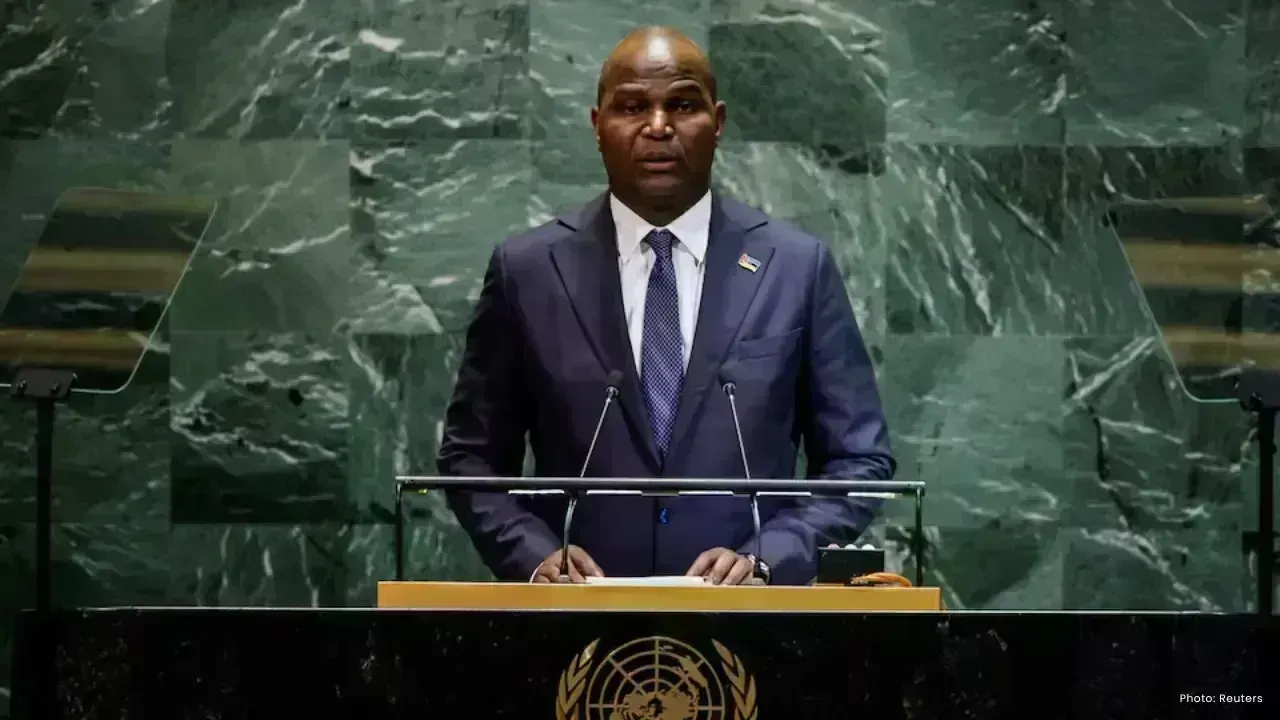
Mozambique is currently grappling with a severe national crisis as extensive flooding wreaks havoc across the nation, compelling President Daniel Chapo to abandon his planned trip to the World Economic Forum in Davos. The president emphasized that prioritizing life-saving efforts and supporting those affected is paramount.
In a message broadcasted via social media, President Chapo articulated that his country is enduring an extraordinarily challenging episode. With countless families in peril alongside widespread destruction of critical infrastructure, he deemed it inappropriate to journey abroad during this crisis. His choice underscores the increasing urgency of the disaster and the essential need for local leadership.
Since mid-December, relentless rain has pummeled Mozambique, leading to floods that have struck several provinces, including Gaza, Maputo, and Sofala. Overwhelmed rivers in these areas have submerged roads, devastated homes, and severed access to essential services, leaving entire communities isolated as water levels continue to rise.
Humanitarian agencies estimate that more than 400,000 individuals have been impacted by the floods. Many residents have lost their homes, agricultural produce, and livestock. Emergency shelters are quickly reaching capacity, and aid personnel caution that the number of affected individuals may escalate if rainfall persists.
The crisis has garnered regional attention, prompting neighboring South Africa to dispatch a military helicopter to assist in search and rescue missions in Mozambique. This aid has been vital in accessing remote areas where individuals are stranded by floodwaters.
Flooding has not only compromised Mozambique; portions of South Africa have also been battered by heavy precipitation, including regions adjacent to the renowned Kruger National Park. Some parts of the park were temporarily closed for safety reasons, but authorities have since reopened it to visitors.
Experts indicate that flooding events in southeastern Africa are becoming increasingly frequent and severe, with climate change exacerbating the situation. The warmer waters of the Indian Ocean are conducive to more intense storms and considerable rainfall, placing immense pressure on vulnerable and developing nations with fragile infrastructures.
For Mozambique, the floods represent not merely a natural calamity but a profound social and economic upheaval. Schools are shuttered, health services are strained, and food security is jeopardized. The government now faces the dual challenge of immediate disaster response and planning for long-term recovery.
President Chapo’s choice to remain in-country sends a powerful message about accountability in times of crisis. As Mozambique strives to overcome rising waters and escalating human suffering, the country's focus has shifted from international gatherings to local survival needs.


 English