Post by : Meena
Hassan
On Monday, hundreds of senior delegates from Vietnam’s ruling Communist Party gathered under heightened security to commence the national party congress, marking a crucial political event in its five-year schedule. This prominent assembly aims to select the nation's top leadership and chart the economic and political course for Vietnam through the decade.
Taking place over one week, the congress is held every five years and is largely inaccessible to the public. Decision-making and discussions occur privately, adhering to a meticulously managed and non-transparent internal process. Despite the lack of public insight, the congress's outcomes are traditionally significant, influencing Vietnam’s governance, policy direction, and key economic priorities.
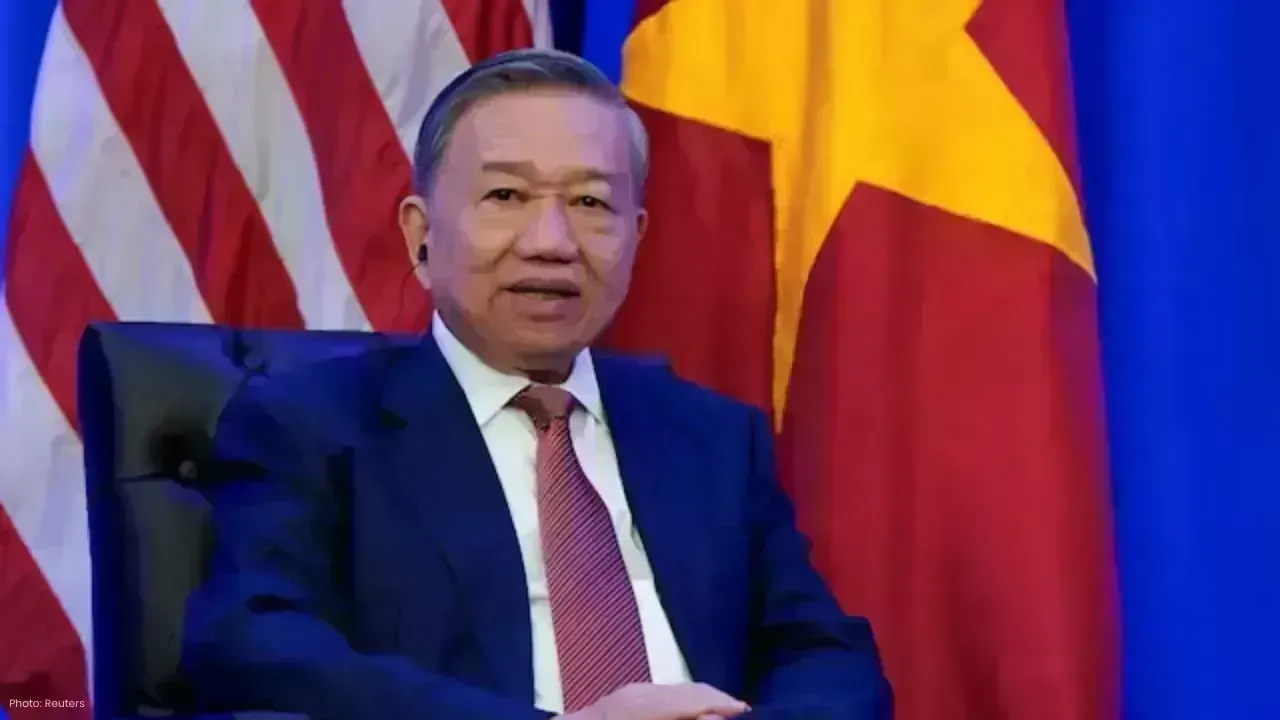
Political analysts are keenly observing this congress as it may further consolidate the authority of General Secretary To Lam, regarded as the most influential figure within the party. Since his tenure began, To Lam has launched considerable bureaucratic reforms aimed at increasing efficiency, enforcing discipline within state systems, and strengthening centralized oversight.
Under his leadership, there has been a noticeable shift towards more assertive governance, focusing on streamlining the party-state framework and enhancing accountability across various ministries and local governments. These adjustments are viewed as part of a wider initiative to modernize Vietnam’s political landscape while preserving the Communist Party's prominent role.
Globally, To Lam has emerged as Vietnam’s most recognized political figure. He has actively represented the nation in significant diplomatic discussions, forged stronger ties with key international partners, and positioned Vietnam as a dependable manufacturing hub and an appealing locale for foreign investments in Southeast Asia. His rising international profile aligns with Vietnam’s increasing economic significance amidst changing global supply chains.
Throughout the congress, delegates are anticipated to affirm crucial leadership appointments, validate the party’s highest positions, and endorse long-term policy agendas. Expected topics include targets for economic growth, plans for industrial development, and strategies to harmonize domestic reforms with global engagements.
As deliberations progress, analysts predict the decisions reached during this congress will have enduring effects on Vietnam's political stability, economic path, and international role. The results are projected to not only shape the leadership framework but also define Vietnam’s approach to managing both internal challenges and global opportunities in the coming years.


 English