Post by : Saif
Al-Najjar
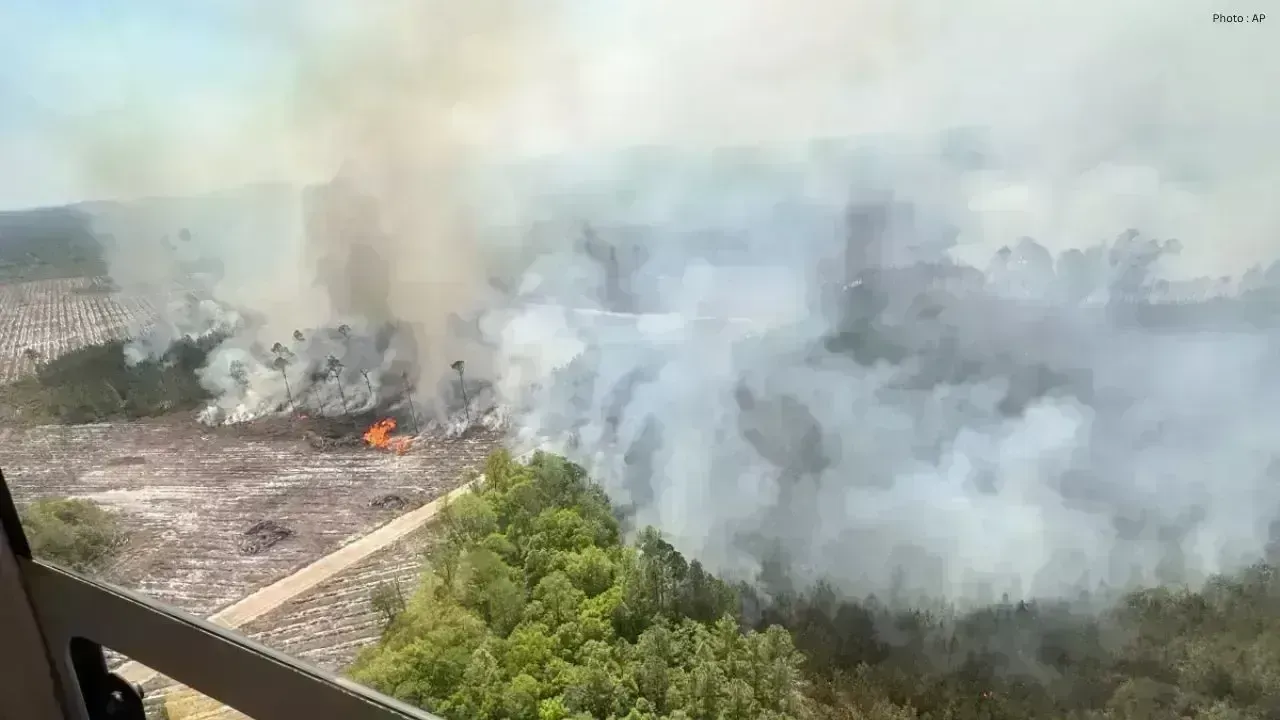
Severe wildfires are currently devastating parts of the United States, particularly in Georgia and Florida, exacerbated by arid weather and potent winds. Homes have been destroyed, residents evacuated, and there are rising worries about safety and climate impacts.
In southeastern Georgia, one of the largest fires continues to burn an extensive area, remaining only partly contained. Officials warn of the fire's rapid potential growth, with strong winds complicating firefighting efforts. Should conditions not improve, further evacuations may be necessary.
Multiple wildfires are ablaze across Georgia and Florida, underscoring the gravity of the situation. Emergency responders are tirelessly working around the clock to manage the fires, yet unfavorable weather conditions are hindering their progress.
The root cause of these wildfires lies in extreme drought. The region has experienced prolonged dry spells, leading to parched land that is highly susceptible to catching fire. Elevated temperatures alongside strong winds facilitate even quicker fire spread.
Many families have had to evacuate to ensure their safety, with some losing homes and personal possessions. The rampant fires are also deteriorating air quality, causing smoke to drift into surrounding towns and cities, making it particularly challenging for vulnerable groups like children and the elderly.
Firefighters are contending with harsh conditions, as dehydrated vegetation, fallen trees, and shifting wind patterns exacerbate the challenges. These factors enhance the fire's unpredictable behavior, posing increased threats to both residents and rescue teams.
The escalating crisis has proven deadly, exposing the hazards faced by emergency personnel. Firefighters persist in their efforts to safeguard others, emphasizing the critical nature of this emergency.
In response, local authorities have enacted urgent measures to manage the situation. Some regions have declared a state of emergency and instituted strict guidelines to curb new fire outbreaks. Residents are advised to avoid outdoor flames and follow safety directives diligently.
Experts suggest that shifting climate patterns may be intensifying the frequency of such incidents. Extended dry spells, elevated temperatures, and diminished rainfall are contributing to heightened wildfire risks in various regions, including areas previously less affected.
The current events demonstrate how rapidly wildfires can escalate in extreme weather. It also underscores the necessity for proactive measures, public education, and robust emergency response protocols.
As firefighting efforts continue, many hold out hope for rain to assist in bringing the wildfires under control. Until that relief arrives, the primary focus remains on safeguarding lives, protecting properties, and halting the fire's advancement.


 English