Post by : Saif
Al-Najjar
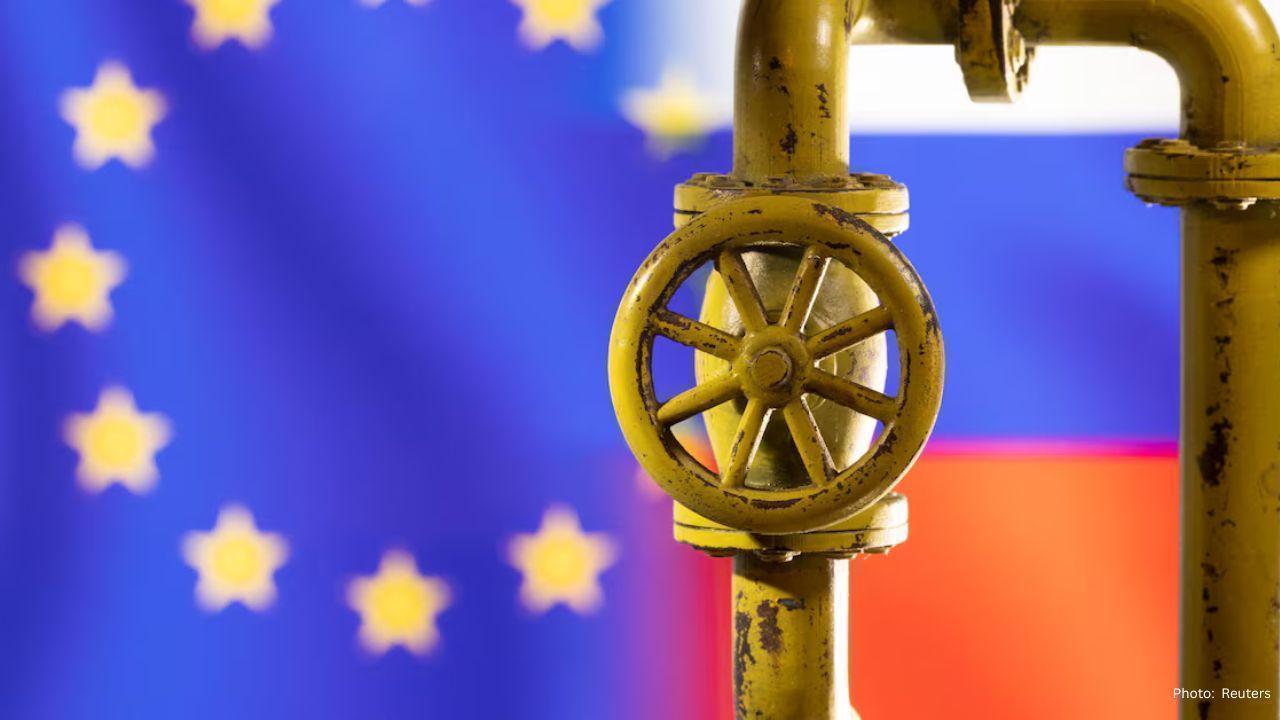
A significant move has been made by the European Union (EU) towards terminating its dependency on Russian gas. On Wednesday, the ambassadors of EU member countries gave their approval to a strategy aimed at eliminating imports of Russian gas by late 2027, as confirmed by a spokesperson for Denmark's EU presidency. This approval advances the legal process before the measure can officially be enacted.
This decision follows a recent agreement by the EU to sever connections with Russia, previously Europe's largest gas supplier prior to the 2022 invasion of Ukraine. The conflict urged the bloc to lessen its dependency on Russian energy and explore alternative sources.
The approved strategy entails halting imports of Russian liquefied natural gas (LNG) by the end of 2026, with complete discontinuation of pipeline gas from Russia by the conclusion of September 2027.
While the ambassadors' decision marks an important milestone, the plan still requires formal ratification from EU ministers and the European Parliament to become law. A vote is set for next week in the European Parliament, with EU ministers expected to provide their endorsement early next year. Despite some opposition from Hungary and Slovakia, officials predict a favorable outcome.
Experts in the energy sector view this decision as part of a broader EU initiative to diversify its energy portfolio and enhance resilience against geopolitical conflicts. The plan also urges member states to invest in renewable energy and related infrastructure to fill the gap left by Russian gas.
The phase-out is anticipated to exert extensive effects. While it will diminish Europe's reliance on Russia, it might lead to an uptick in energy costs temporarily as nations transition to new sources. The EU is optimistic that long-term investments in alternative energy, including LNG from other nations and green energy ventures, will help stabilize supply and pricing.
This decision delivers a potent political message to Russia. By reducing its reliance on Russian gas, the EU seeks to bolster its negotiating position and reduce vulnerability to any energy-related influence from Moscow.
The upcoming months are pivotal as the EU finalizes the legal framework and begins to assist member states through this transition. Coordination among energy ministers and lawmakers will be vital to ensure a seamless and gradual shift away from Russian gas, minimizing disruptions for households and businesses.
This phase-out represents a landmark development in Europe's energy strategy, highlighting the bloc's commitment to achieving a secure and autonomous energy future amid ongoing geopolitical pressures.


 English