Post by : Saif
Al-Najjar
Tokyo, September 30, 2025 – Japan’s economy is showing fresh signs of strain as new government data revealed a drop in both factory output and retail sales in August. This double decline has raised concerns about the country’s growth prospects and highlighted the challenges Japanese businesses are facing from weak demand at home and pressure from U.S. tariffs.
Factory Output Falls More Than Expected
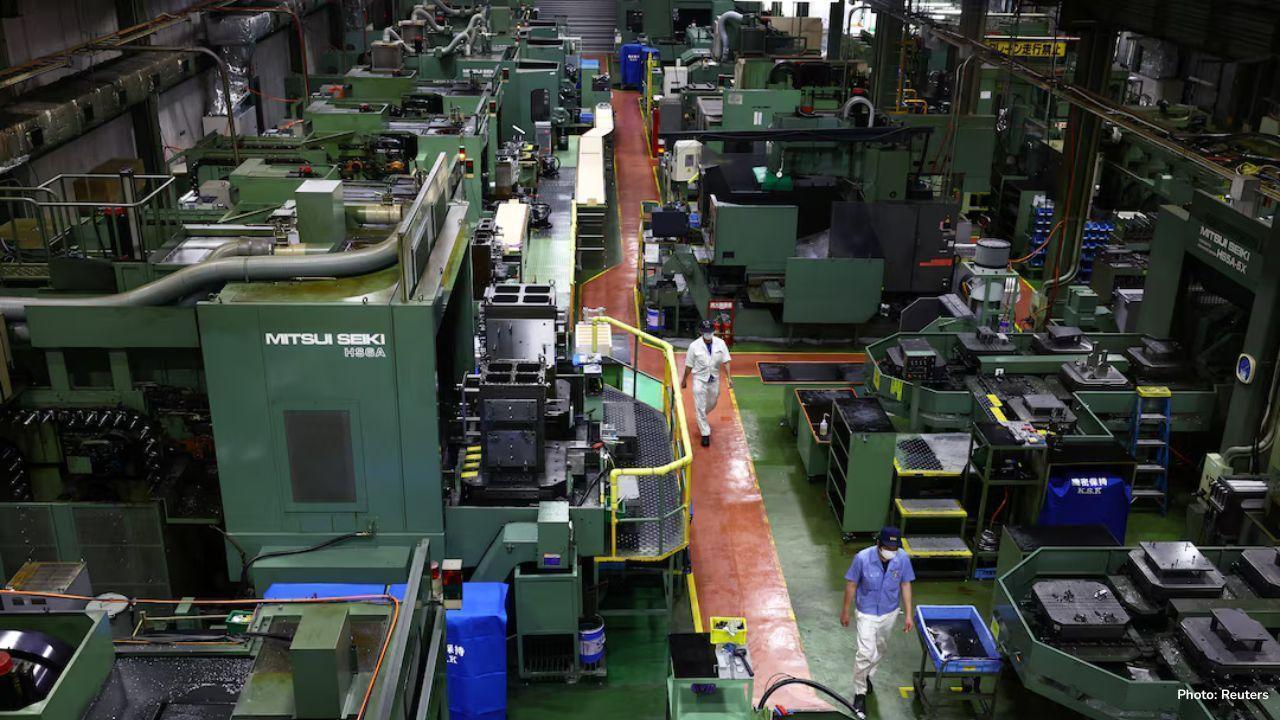
The Ministry of Economy, Trade and Industry (METI) reported that industrial production fell 1.2% in August compared with the previous month. Economists had predicted a smaller decline of 0.8%, meaning the slowdown was worse than expected.
A closer look at the figures shows some sectors were hit harder than others. Production of electrical machinery and electronics equipment, including laptops, dropped 5.7% as demand slowed after strong sales in July. Fabricated metal production also fell sharply, by 7.8%.
Despite this setback, manufacturers surveyed by METI said they expect production to rebound in the coming months. They forecast output will grow 4.1% in September and another 1.2% in October. Still, METI officials said the overall trend remains unstable, describing industrial production as “seesawing.”
Retail Sales Decline for First Time in 42 Months
Adding to the worries, retail sales in Japan fell 1.1% in August compared with a year earlier. This was the first decline in more than three years (42 months).
Economists say the fall in consumer spending could signal that households are becoming more cautious. Rising costs of daily goods and uncertainty about the future may be causing people to save more and spend less. For an economy like Japan’s, where consumer spending is a key driver, this is a troubling sign.
Impact of U.S. Tariffs Still Felt
Japan’s trade relationship with the United States remains another major concern. Earlier this year, Washington and Tokyo reached a deal that set a baseline 15% tariff on most Japanese goods. This was lower than the initial plan of 27.5% on autos and 25% on other products, which had alarmed Japanese exporters.
While the agreement gave some relief, analysts warn the tariffs are still hurting manufacturers. The automobile sector, which is vital to Japan’s economy, did manage to grow. Vehicle production rose 2.5% in August, helped by demand for overseas sales and easing of parts shortages. But experts caution that the overall export outlook remains weak.
“Japanese manufacturers are feeling squeezed on all sides,” said Stefan Angrick, head of Japan and frontier market economics at Moody’s Analytics. “Even with the trade deal, higher U.S. import tariffs are dragging down shipments.”
Bank of Japan Cautious About Raising Rates
The Bank of Japan (BOJ) is closely watching these developments. Governor Kazuo Ueda recently said the central bank would consider raising interest rates further if the economy and prices move in line with forecasts. However, he also stressed the importance of carefully studying how U.S. tariffs and weakening demand may affect Japan’s recovery.
The BOJ has already begun moving away from years of ultra-loose monetary policy, but the latest data may make policymakers more hesitant. Any misstep could either slow growth further or risk inflation rising too quickly.
Analysts See Mixed Outlook
Experts describe Japan’s current situation as a difficult balancing act. On one hand, there are signs of resilience, such as stronger car production and planned growth in factory output for September and October. On the other hand, the fall in retail sales and heavy dependence on exports are creating new vulnerabilities.
“Japan is trying to rebuild momentum, but the economy is being tested from both external and internal sides,” said one Tokyo-based analyst. “Global trade tensions, tariffs, and consumer caution at home make it difficult for growth to stabilize.”


 English