Post by : Bianca
Haleem
The president of the John F. Kennedy Center for the Performing Arts has issued a strong criticism of veteran jazz musician Chuck Redd, who canceled his long-standing Christmas Eve performance, deeming it a political protest that inflicted significant financial and reputational damage to the venue.
In a pointed letter shared with the Associated Press, Kennedy Center President Richard Grenell revealed plans to pursue damages totaling up to $1 million from Redd after the musician pulled out of the event just days prior to its scheduled date.
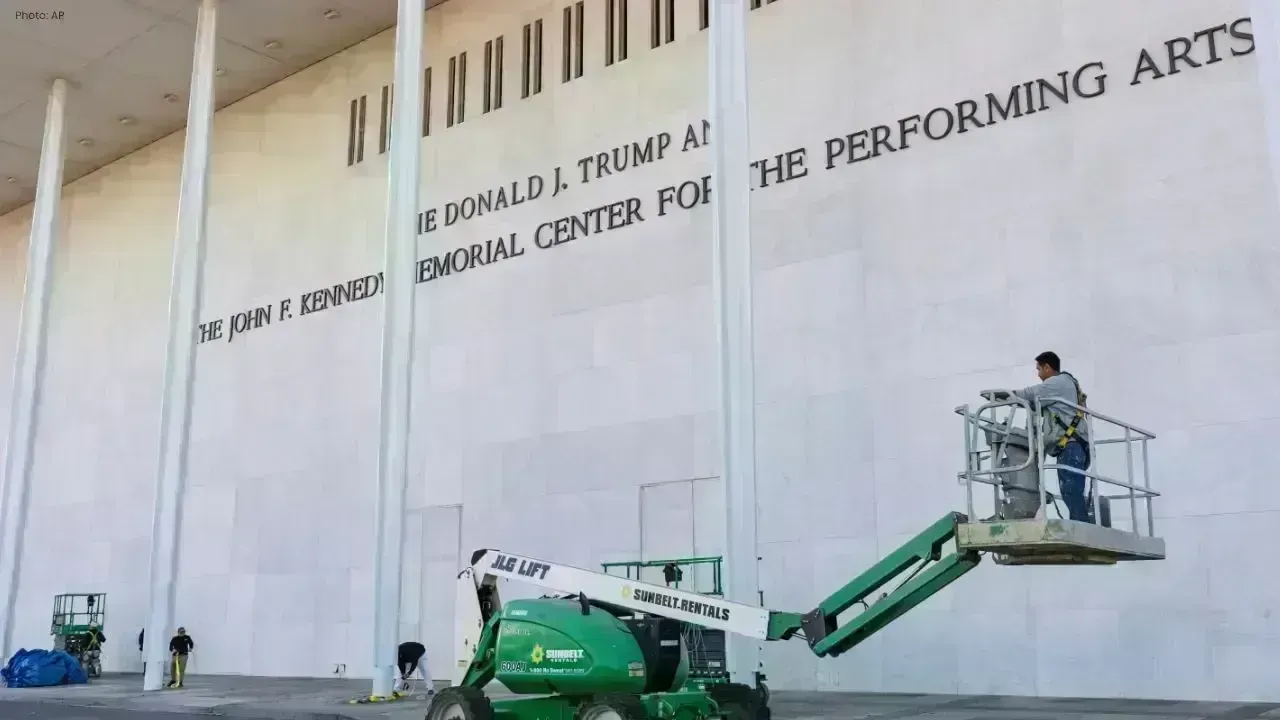
Grenell accused Redd of cancelling “at the last moment” as a direct reaction to the recent announcement of adding Donald Trump’s name to the Kennedy Center building, a move unveiled by the White House this month.
Grenell stressed, “Your decision to withdraw at the last moment — explicitly in response to the Center’s recent renaming — represents classic intolerance and is very costly to a non-profit arts institution.” He labeled the cancellation as a “political stunt” that disrupted a beloved holiday event, affecting audiences, staff, and performers alike.
Redd did not provide an immediate response following Grenell’s correspondence.
Holiday Tradition Comes to an Unceremonious End
Chuck Redd, a distinguished drummer and vibraphone player, has been a key figure in the Kennedy Center's Christmas Eve “Jazz Jams” for nearly two decades, having taken the helm of this cherished event in 2006.
This annual concert has evolved into a hallmark of the Kennedy Center’s holiday offerings, consistently attracting large audiences and pairing student musicians with seasoned jazz artists.
Earlier in the week, Redd confirmed that his decision to cancel was indeed linked to the controversy surrounding the renaming.
He stated, “When I saw the name change on the Kennedy Center website and subsequently on the building, I made the choice to cancel our concert.” He lamented the painful nature of the decision, emphasizing the event's rich history and significance for both audiences and aspiring musicians.
“It was a very sad decision to have to cancel due to these circumstances,” he further lamented.
Legal and Historical Questions Arise Over Renaming
The Kennedy Center was established by Congress as a living tribute to John F. Kennedy, who was assassinated in 1963. Legislation enacted the following year outlined stringent regulations on the institution's naming and representation.
Legal experts and historians have voiced concerns that adding another individual's name to the building contradicts this legislation. The statute expressly prohibits the board of trustees from transforming the center into a memorial for any other individual or placing another name on the building's exterior.
Despite these concerns, a board appointed by Trump reportedly approved the renaming. Grenell, a close Trump ally, assumed the presidency of the Kennedy Center after the previous leadership was ousted.
Critics argue that only Congress has the right to sanction such a modification.
Criticism from Kennedy Family and Scholars
The decision has been met with fierce backlash from members of the Kennedy family and respected historians.
Kerry Kennedy, a niece of President Kennedy, has made a public commitment to seek the removal of Trump's name from the building post his presidency. She and others assert that the renaming compromises the center's intended role as a nonpartisan national memorial.
Former House historian Ray Smock similarly argues that any changes to the Kennedy Center's name would necessitate explicit congressional approval.
Scholars caution that allowing political figures to attach their names to national cultural institutions could create dangerous precedents and provoke future conflicts.
A Cultural Institution at a Political Crossroads
This dispute exemplifies rising tensions within one of the country's most esteemed arts venues, where political actions increasingly permeate cultural spaces that have traditionally been neutral.
For the Kennedy Center, the abrupt cancellation of a beloved holiday concert and the looming legal threat highlight the significant financial and symbolic implications of this controversy. For artists like Redd, this situation evokes broader inquiries about artistic independence and the right to protest.
As discussions persist, this conflict has thrust the Kennedy Center into the spotlight of a national dialogue regarding law, legacy, and the intersection of politics with American cultural establishments.


 English