Post by : Samir
Qureshi
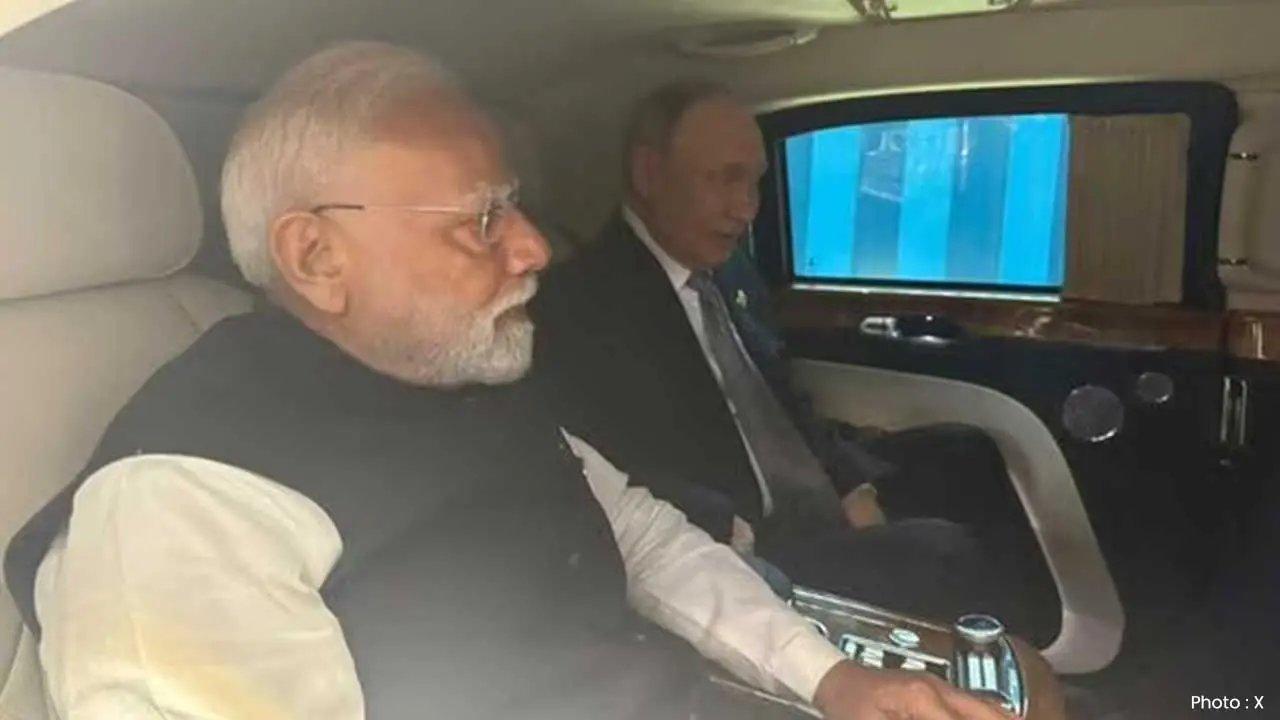
An unexpected dialogue has erupted in the United States, spurred by a photo of Prime Minister Narendra Modi and Russian President Vladimir Putin sharing a car during Putin's visit to India. While this interaction may have been viewed as a friendly gesture in India, US lawmakers interpret it as indicative of a changing dynamic in US-India ties.
During a hearing of the House Foreign Affairs Subcommittee on South and Central Asia, Democratic Ranking Member Sydney Kamlager-Dove displayed the photograph and asserted that the responsibility for the weakening partnership lay with the US. She criticized President Donald Trump's increasing tariffs and confrontational stance for pushing India closer to Russia.
Kamlager-Dove described Washington's approach as “coercive,” undermining years of strategic trust. She warned that Trump's policies were detrimental, suggesting that the harm to US-India relations could be enduring. Holding up the photograph, she claimed it represented a powerful message about how US pressure might be nudging India toward alternative alliances.
The hearing pointed out the rising tensions surrounding Trump's decisions impacting India, such as the 25 percent “Liberation Day tariff” and an additional levy on Indian imports of Russian oil, together imposing a nearly 50 percent burden on Indian goods—making its tariff rates higher than China’s. Lawmakers deemed these policies self-defeating, cautioning against the potential erosion of a crucial partnership.
Democrats also raised concerns regarding a steep increase in H-1B visa fees, labeling a new $100,000 charge as a direct assault on Indian professionals, who constitute about 70 percent of H-1B visa holders in the US. They argued this fee threatens the vibrant people-to-people connections that have fostered cultural and economic ties.
The session further explored the larger geopolitical implications. Experts stated that the strengthening India-Russia relationship, symbolized by Modi welcoming Putin at the airport and sharing a car, underscores how global alliances could realign should trust between Washington and New Delhi diminish. The US-India partnership has traditionally represented a “low-cost, high-benefit” strategy for countering China and enhancing global supply chains.
During Putin's brief visit, Modi personally greeted him at the airport and accompanied him to Lok Kalyan Marg, which was interpreted as a sign of their personal rapport. The duo last shared a car at the Shanghai Cooperation Organisation Summit in China, showcasing their enduring connection amidst fluctuating global politics.
Lawmakers and analysts agreed that the increasing tariffs and rising tensions represent a politically sensitive aspect of the US-India relationship. They expressed concern that continuing along this trajectory could overshadow vital long-term goals, such as technological collaboration, defense partnerships, and regional stability.
As discussions in Washington unfold, a key message emerged from the hearing: without a change in approach, the US risks distancing itself from one of its essential strategic partners. For many Congress members, the image of Modi and Putin together encapsulates the risks of further estrangement between the US and India.


 English