Post by : Meena
Hassan
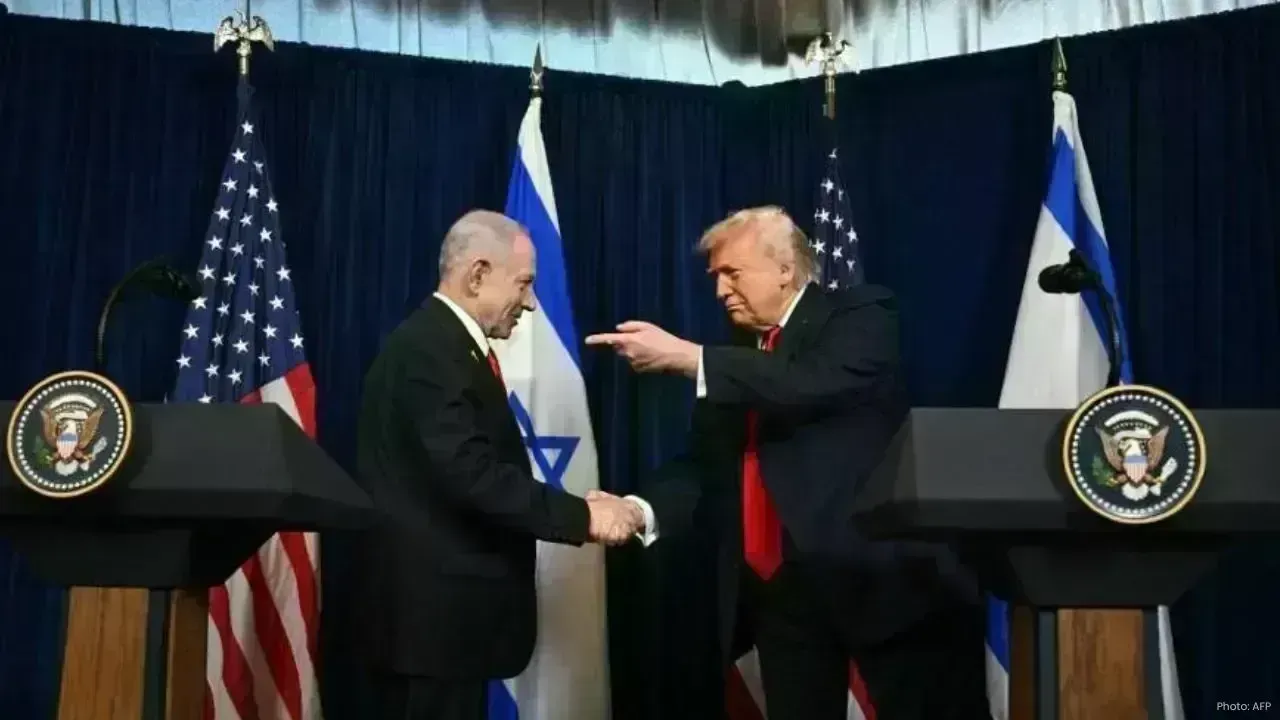
During a recent interview, Israeli Prime Minister Benjamin Netanyahu expressed aspirations for Israel to become self-sufficient in its defense by eliminating the need for U.S. military support over the next decade. He emphasized Israel's increasing economic and military capacity, marking a pivotal turn in the nation’s defense policy.
Historically, the U.S. has been Israel’s closest military ally, approving substantial sales of military equipment valued in the millions to support Israel’s ongoing military operations against Hamas in Gaza. This long-standing defense cooperation remains crucial to the bilateral strategic relationship.
Netanyahu expressed gratitude for the years of military aid provided by Washington, yet he declared that Israel has reached a new level of preparedness, equipped with advanced military technologies and a robust economy that can sustain its defense needs.
He highlighted that Israel’s economy is on a rapid growth trajectory, with projections indicating it could reach approximately one trillion dollars within the next decade. In light of this growth, Netanyahu stated that Israel will begin reducing its dependence on U.S. military support and phase out this assistance gradually over the coming years.
Currently, under a defense agreement reached in 2016, Israel receives about $3.8 billion annually from the U.S. to procure military equipment, a deal that began in 2019 and is set to last until 2028.
In total, international research indicates that Israel has received over $300 billion in military and economic aid from the U.S. since its founding in 1948, adjusting for inflation, positioning it as one of the top recipients of American foreign assistance.
Earlier this year, amidst reportedly strained relations with U.S. President Donald Trump, Netanyahu alluded to the necessity for Israel to eventually "wean itself off" U.S. military aid, though he did not specify a timeline at that moment.
Moreover, during a contentious speech in September, Netanyahu remarked on Israel's perceived global isolation, advocating for what he termed a "super-Sparta" approach. After facing backlash for these comments, he clarified that his remarks specifically pertained to bolstering Israel’s defense sector and achieving self-reliance to secure against potential supply interruptions.
Netanyahu’s statements point towards a significant overhaul in Israel’s defense strategies, aiming for greater independence while also nurturing strong diplomatic and security alliances.


 English