Post by : Abhinav
Rana
Photo : X / @Zawya
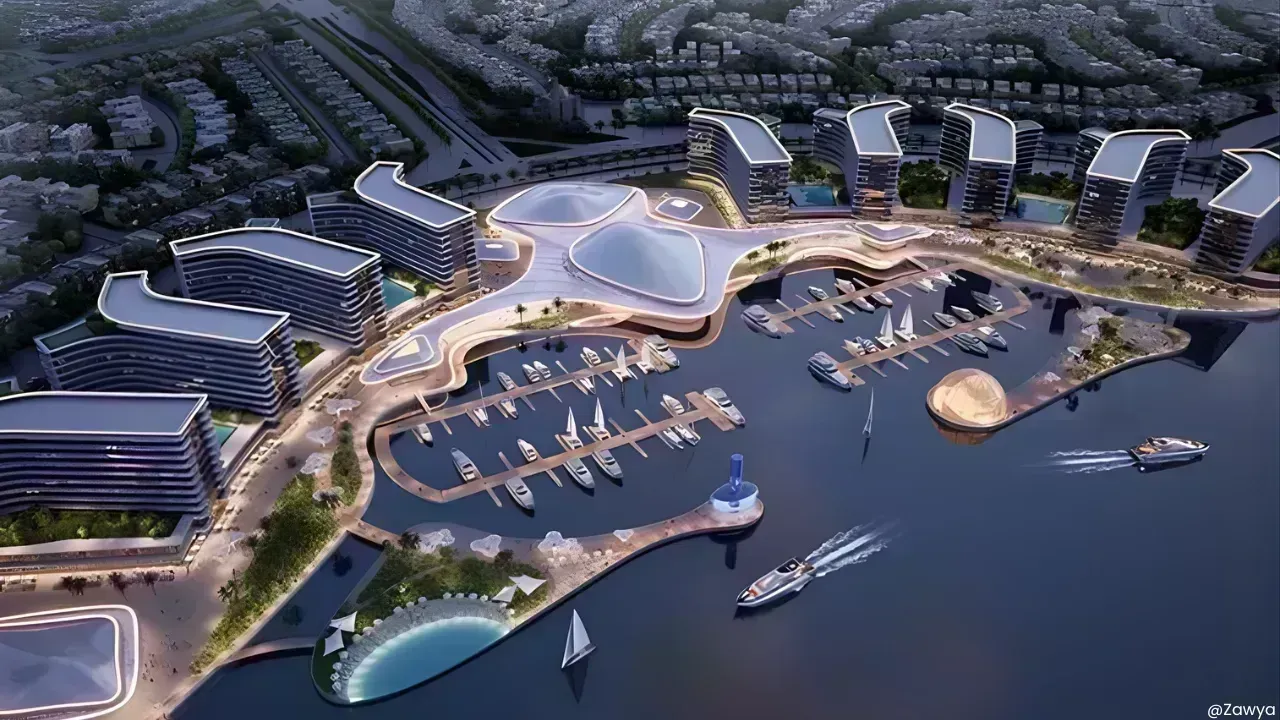
Dubai has once again raised the bar in global urban development with the unveiling of a massive new masterplan in Al Jaddaf, introducing a sprawling creekside district that blends modern living with next-generation transport connectivity. This ambitious project is not just another real estate development—it represents a decisive shift in how cities are being designed for the future. By integrating residential, commercial, and cultural spaces into a highly connected ecosystem, Dubai is reinforcing its position as a global leader in smart, sustainable, and transit-oriented urban growth.
At the heart of this development lies a large-scale mixed-use district spanning approximately one million square feet, designed to function as a complete urban ecosystem. The project will combine housing, offices, retail outlets, hospitality spaces, and cultural zones into a seamless, walkable neighborhood that encourages both economic activity and lifestyle convenience.
What sets this masterplan apart is its emphasis on human-centric design. Rather than prioritizing car-dependent expansion, the development focuses on creating vibrant public spaces where daily needs, work, leisure, and social interaction are accessible within minutes. This “five-minute city” concept reflects a growing global trend toward compact, efficient, and livable urban environments that prioritize quality of life alongside economic growth.
Perhaps the most defining feature of the Al Jaddaf masterplan is its strategic positioning alongside two of Dubai’s most critical future transport links—the Etihad Rail high-speed network and the Creek Metro extension. This proximity transforms the district into a major transit hub, fundamentally reshaping how residents and businesses will move across the city and beyond.
The integration of rail and metro connectivity signals a broader shift in Dubai’s urban strategy, where development is increasingly anchored around transportation corridors. This approach not only reduces reliance on private vehicles but also enhances efficiency, accessibility, and sustainability across the city’s mobility network. For the transportation sector, this marks a pivotal evolution toward infrastructure-driven urban planning.
The Al Jaddaf project highlights a powerful trend shaping global real estate markets—connectivity is now the primary driver of value. By situating the district at the intersection of major transport networks and waterfront development, the masterplan creates a unique proposition that combines accessibility with premium lifestyle appeal.
Historically a dhow-building and industrial area, Al Jaddaf is rapidly transforming into a vibrant residential and commercial hub along Dubai Creek, supported by metro access, healthcare infrastructure, and cultural developments. This transition underscores how infrastructure investment can redefine entire districts, unlocking new economic opportunities and attracting both local and international investors.
For industries linked to logistics, mobility, and urban infrastructure, this development serves as a blueprint for how integrated planning can drive long-term growth and resilience.
To bring this ambitious vision to life, the developers have partnered with internationally renowned architecture firm Pelli Clarke & Partners, known for designing some of the world’s most iconic structures. Their involvement signals a commitment to creating a landmark district that not only meets functional requirements but also sets new standards in architectural excellence and urban aesthetics.
The focus on design innovation extends beyond buildings to include public spaces, waterfront integration, and pedestrian-friendly infrastructure. This holistic approach ensures that the district is not just a place to live or work, but a destination that enhances the overall urban experience.
This masterplan is part of a larger narrative in which Dubai is reshaping its growth model to align with global sustainability and smart city trends. By concentrating development around transit hubs and emphasizing mixed-use communities, the city is moving toward a more efficient and environmentally conscious urban framework.
Such projects are increasingly becoming critical in a world where cities must balance rapid population growth with sustainability and infrastructure efficiency. Dubai’s approach demonstrates how forward-thinking planning can address these challenges while maintaining economic competitiveness on a global scale.
As details of the Al Jaddaf creekside district continue to unfold, the project is poised to become one of Dubai’s most influential urban developments in the coming years. Its success could redefine how cities integrate transportation, real estate, and lifestyle into a unified ecosystem.
For the transportation and infrastructure sectors, the message is clear: the future of urban development lies in connectivity, integration, and adaptability. Projects like this are not just shaping skylines, they are redefining how cities function, grow, and sustain themselves in an increasingly interconnected world.


 English