Post by : Bianca
Haleem
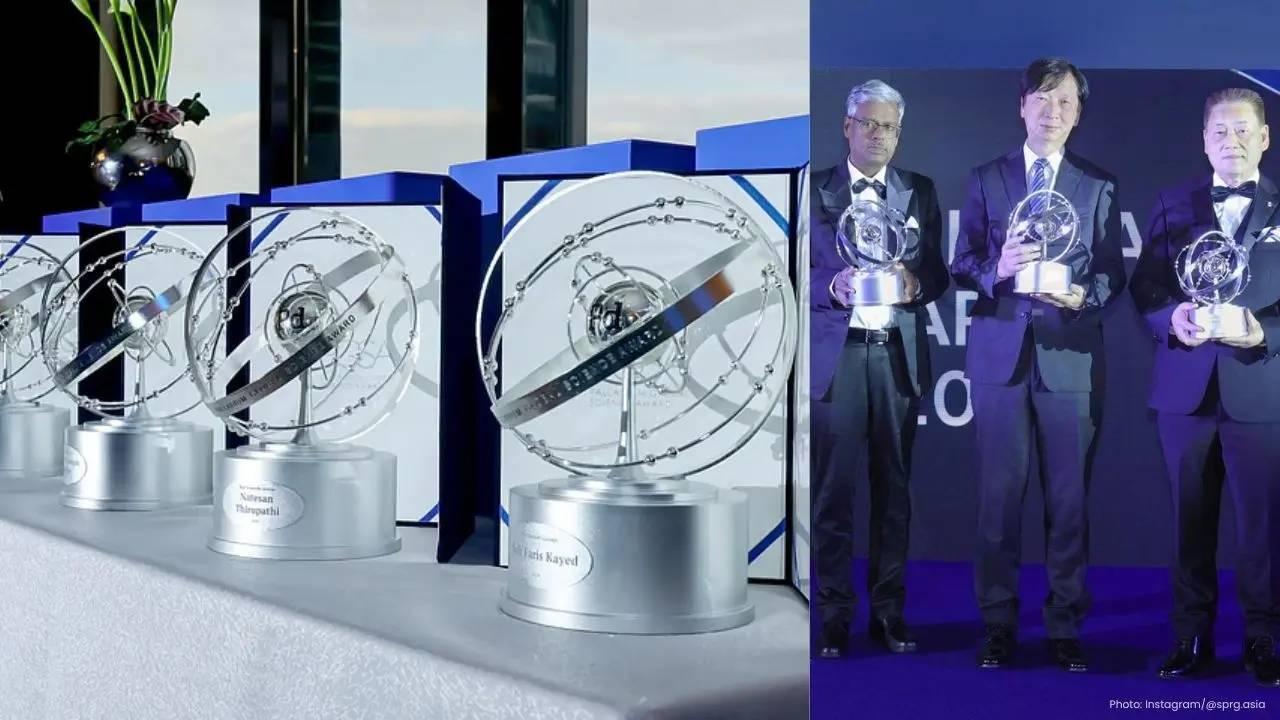
Hong Kong recently celebrated a pivotal milestone in global innovation with the launch of the inaugural Palladium Global Science Award. This new international initiative aims to foster advancements in technologies utilizing palladium. Researchers, industry experts, and global collaborators gathered to honor five distinguished scientists from Canada, Japan, India, the United States, and Saudi Arabia, sharing a prize total of $350,000 across three award categories.
Established in partnership with the China Precious Metals Industry Committee (CPMIC) alongside institutions from South Africa, Japan, and China, the award aspires to expand palladium’s applications beyond traditional industrial uses. This year's focus was on groundbreaking innovations in catalysis, electronics, clean energy, environmental solutions, and next-gen materials.
With nearly 100 submissions from over 30 nations, the event spotlighted a rising worldwide interest in redefining the potential of this platinum-group metal. The awarded projects demonstrated how palladium can facilitate sustainability objectives, enhance green manufacturing, and pave the way for advancements in medical and chemical research.
The ceremony unveiled developments with the power to revolutionize various sectors.
In the Best Scientific Developments in New Palladium Applications category, the top prize was awarded to Prof. Chao-Jun Li from McGill University, Canada, for his innovative method of activating methane and CO₂ using a palladium-infused semiconductor with light, enabling the conversion of harmful emissions into valuable chemicals like methanol, marking a significant progression towards cleaner industry practices. This technology is already set for scaling through a McGill spin-off.
Second place was claimed by Prof. Makoto Fujita of the University of Tokyo, recognized for his palladium-focused self-assembly research that led to the revolutionary crystalline sponge method, reshaping molecular analysis in pharmaceuticals and advanced materials.
India’s Prof. Natesan Thirupathi from Delhi University earned the Best Scientific Article (First Place) award for his research on cyclopalladation processes that promise quicker, cleaner, and more reliable drug development.
The second prize in this category was awarded to Prof. Michael Joseph Krische of the University of Texas at Austin, acknowledged for his advancement of eco-friendlier methods for producing crucial medical compounds using palladium-based cross-coupling approaches.
The Best Applied Concept (First Place) accolade was secured by Associate Professor Safa Faris Kayed from Prince Sattam Bin Abdulaziz University, Saudi Arabia, for PalladClear—a solution tackling the enduring issue of effectively eliminating hazardous dyes and pharmaceutical residues from wastewater. The next stage involves transitioning this promising lab innovation into pilot-scale applications.
As the event drew to a close, organizers confirmed the return of the award in spring 2026, indicating a commitment to cultivating a global innovation ecosystem centered around palladium. With emerging applications across clean energy, environmental challenges, chemistry, and advanced materials, palladium is increasingly recognized not merely as a commodity but as a catalyst for the next phase of industrial advancement.


 English