Post by : Abhinav
Rana
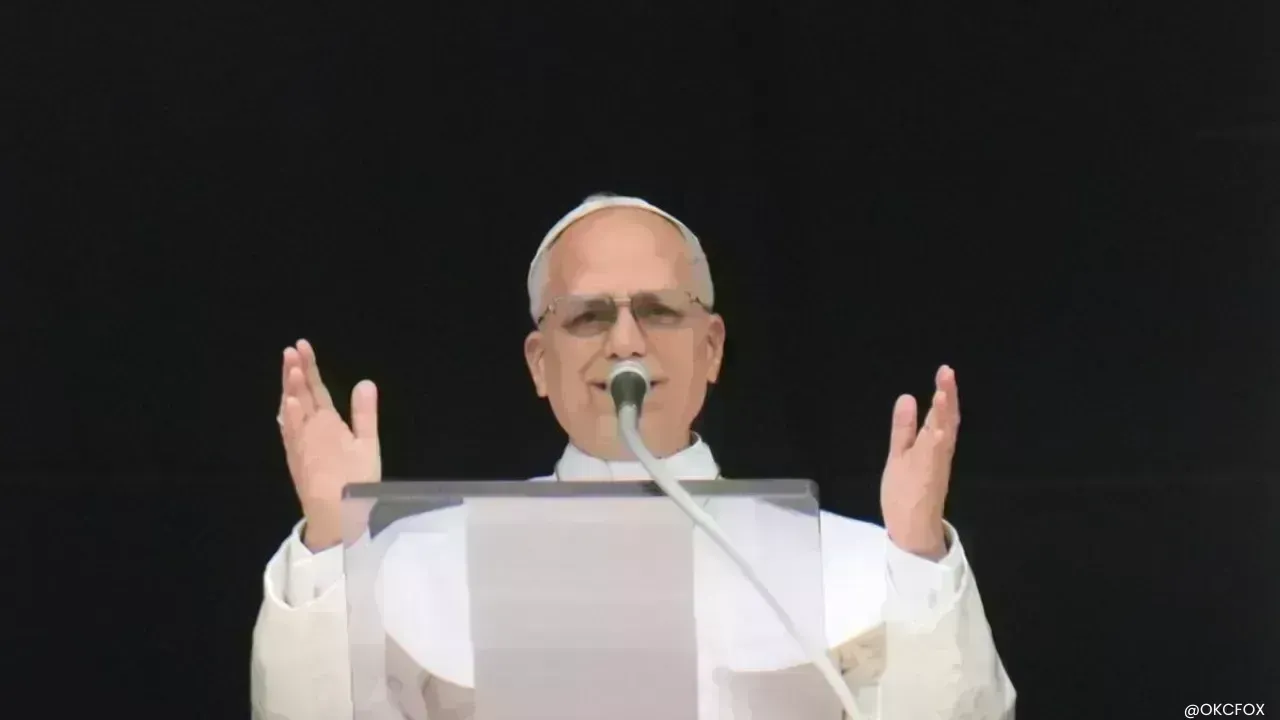
Photo : X / @OKCFOX
The geopolitical stage has taken a dramatic turn as tensions between Pope Leo XIV and Donald Trump intensify over the ongoing Iran war, creating a rare and deeply symbolic confrontation between spiritual authority and political power. What began as a disagreement over military strategy has now evolved into a global debate on morality, diplomacy, and the future of conflict resolution. At a time when the world is already grappling with economic uncertainty and disrupted global supply chains, this ideological clash is adding another layer of complexity to international stability and decision-making.
The backdrop to this confrontation is the escalating Iran war, a conflict that has already triggered widespread geopolitical instability and disrupted critical global trade routes. The strategic Strait of Hormuz, one of the world’s most vital shipping lanes has become a focal point of military tension, with naval activity and blockades raising concerns across industries reliant on uninterrupted logistics and energy flows.
This conflict, which has seen phases of ceasefire negotiations and renewed threats, has not only affected oil markets but also heightened uncertainty across transportation and infrastructure sectors worldwide. For industries dependent on stable global movement from aviation to maritime logistics, the ripple effects are immediate and profound, reinforcing the interconnected nature of geopolitics and economic resilience.
At the heart of the controversy lies Pope Leo’s unwavering stance against war, as he continues to advocate for dialogue over destruction. The pontiff has repeatedly described the ongoing conflict as a “madness of war,” urging world leaders to prioritize negotiation and humanitarian considerations above aggressive military strategies.
His criticism has gone beyond general appeals, directly challenging rhetoric that threatens large-scale destruction and civilian harm. By emphasizing the ethical responsibility of global leadership, Pope Leo has positioned himself as a moral counterbalance to escalating military actions, reinforcing the Vatican’s long-standing commitment to peacebuilding in times of crisis.
In contrast, Donald Trump has defended a more aggressive approach toward Iran, framing it as necessary to counter nuclear threats and ensure global security. His public criticism of the Pope labeling him as ineffective in matters of foreign policy has escalated the dispute into a highly visible international confrontation.
Trump’s stance reflects a broader geopolitical doctrine that prioritizes strength and deterrence, particularly in regions where strategic dominance is closely tied to energy security and military influence. However, this approach has also drawn criticism for potentially intensifying conflict and undermining diplomatic efforts at a time when global cooperation is increasingly critical.
Beyond the political rhetoric, the implications of this conflict extend deeply into global transportation and industry trends. The instability in the Middle East has already begun affecting shipping routes, aviation planning, and fuel pricing, all of which are integral to the functioning of modern economies.
For the transportation sector central to Armust’s coverage, the stakes are particularly high. Disruptions in maritime corridors can lead to cascading delays in supply chains, increased operational costs, and shifts in global trade patterns. The situation highlights how geopolitical decisions are no longer isolated events but key drivers shaping infrastructure, logistics, and mobility systems worldwide.
As the Iran war continues to evolve, the clash between Pope Leo and Donald Trump represents more than a personal or political dispute, it is a defining moment in how the world approaches conflict in the 21st century. On one side stands a call for restraint, dialogue, and humanitarian responsibility; on the other, a strategy rooted in power projection and deterrence.
The outcome of this ideological divide could influence not only the trajectory of the current conflict but also the broader framework for global diplomacy and cooperation. For industries and governments alike, the challenge will be navigating a world where geopolitical tensions increasingly dictate economic and infrastructural realities.


 English