Post by : Bianca
Haleem
The United States has carried out its 10th consecutive night of military strikes against Iran, intensifying one of the most serious confrontations between the two countries in recent years. The latest operation comes as Washington seeks to weaken Iran's military capabilities and restore security in the Strait of Hormuz, a critical maritime route that carries around one-fifth of the world's oil supplies.
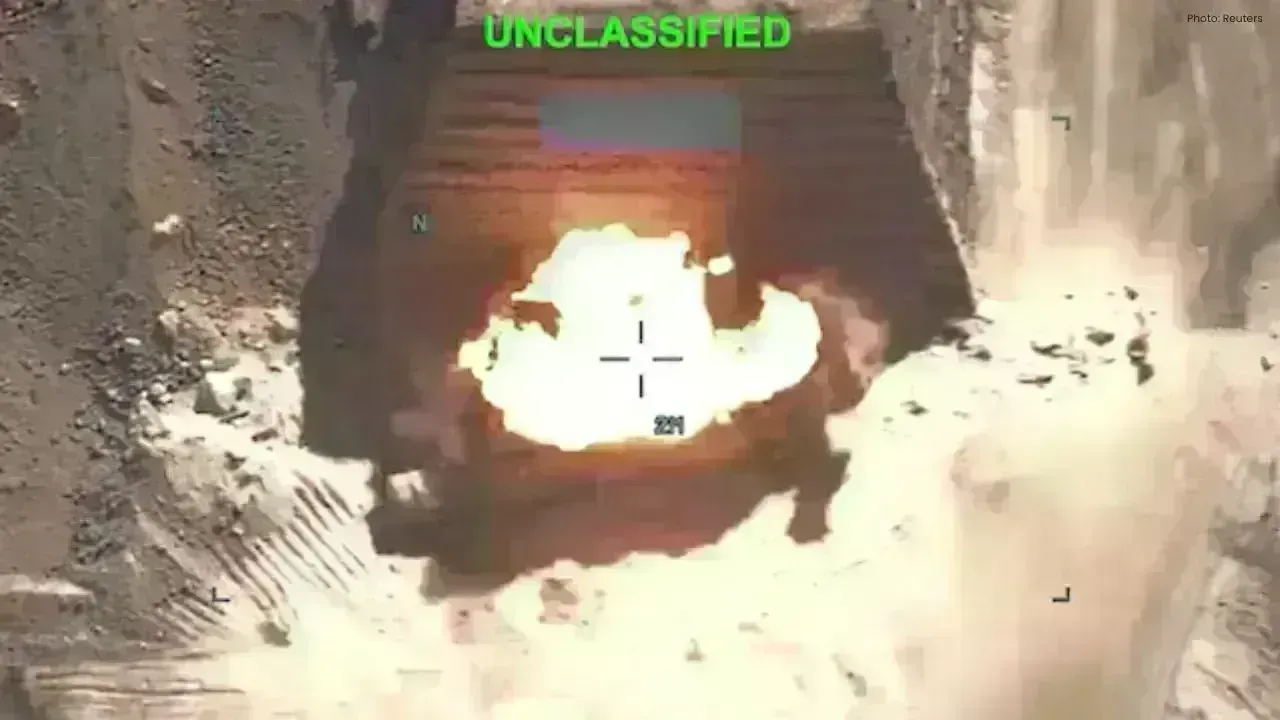
According to US Central Command (CENTCOM), the latest wave of airstrikes targeted military assets used to threaten commercial shipping and regional stability. The military said the strikes were intended to further degrade Iran's ability to conduct missile, drone, and naval attacks in and around the strategically important waterway.
US Expands Military Campaign Against Iran
The renewed attacks followed the death of another American service member, adding to growing US military casualties during the conflict. The Pentagon also confirmed the deaths of two US soldiers in Jordan during recent attacks, while another American soldier died in Iraq during the controlled detonation of a downed Iranian drone.
Following these incidents, US President Donald Trump warned that Iran would face severe consequences for attacks on American personnel, stating that every American soldier killed would be met with a much stronger response.
Read More: Cycle Ambulance in Karachi Gains Viral Attention, Fuels Online Debate
Trump is also expected to attend a ceremony at Dover Air Force Base to receive the remains of one of the fallen service members.
CENTCOM Details Latest Airstrikes
US Central Command said the latest strikes focused on multiple military objectives, including:
- Iranian military command centers
- Air defense systems
- Coastal surveillance facilities
- Maritime military infrastructure
- Missile launch sites
- Drone launch facilities
- Military communications networks
Earlier strikes reportedly targeted bridges and infrastructure at an Iranian port as part of broader efforts to limit Iran's operational capabilities.
Iranian Media Reports Casualties
Iran's state-run IRNA news agency reported that at least one person was killed near the northwestern city of Tabriz, an area believed to host underground missile facilities operated by Iran's Islamic Revolutionary Guard Corps (IRGC).
Iranian media also reported strikes near several strategic locations, including:
- Bandar Imam Khomeini (Khuzestan Province)
- Sirik (Hormozgan Province)
- Jask (Hormozgan Province)
- Konarak (Sistan and Baluchistan Province)
- Chabahar (Sistan and Baluchistan Province)
Independent verification of all reported strike locations has not been confirmed.
Strait of Hormuz Remains a Global Flashpoint
The Strait of Hormuz remains at the center of the conflict. The narrow waterway is one of the world's most important energy corridors, handling approximately 20% of global oil shipments under normal conditions.
Commercial shipping through the strait has been severely disrupted as military operations continue, raising concerns over global energy supplies and maritime security.
The United Kingdom Maritime Trade Operations (UKMTO) also reported another attack on a commercial vessel in the Strait of Hormuz. According to the agency:
- One vessel caught fire after being struck by a projectile near the coast of Oman.
- The crew abandoned the ship, which remained adrift while burning.
- Another vessel was reportedly attacked near the United Arab Emirates.
Iran's Revolutionary Guard later claimed responsibility for targeting tankers operating in the area.
Regional Tensions Continue to Spread
The conflict has expanded beyond Iran and the United States.
Kuwait
Kuwait said its air defense systems intercepted an incoming missile barrage aimed at the country.
Jordan
Jordan's armed forces announced they had intercepted three Iranian missiles, adding that no casualties or property damage were reported.
Bahrain
Bahrain's Foreign Ministry condemned Iranian drone attacks targeting the country's air traffic systems, warning that such attacks threaten civilian aviation and regional security.
Houthi Threat Raises Fresh Energy Concerns
Adding to concerns over global energy markets, Yemen's Iran-backed Houthi movement announced a maritime embargo against Saudi Arabia.
The Houthis said they intend to block shipping between the Red Sea and the Gulf of Aden, blaming Saudi Arabia for an earlier attack on Sanaa International Airport.
Saudi Arabia has increasingly relied on its Red Sea export route after shipping through the Strait of Hormuz became heavily disrupted. Any further attacks in the Red Sea could significantly impact global oil transportation.
Saudi authorities have not yet publicly responded to the Houthi announcement.
Oil Prices Rise Amid Conflict
Growing instability in the Gulf has already affected global energy markets.
- Brent crude oil climbed above $88 per barrel.
- Average US gasoline prices reached approximately $4 per gallon.
- Analysts warn that continued disruptions could further increase fuel prices worldwide.
Diplomatic Efforts Continue Despite Fighting
While military operations continue, diplomatic efforts have not completely stopped.
Iranian Interior Minister Eskandar Momeni arrived in Islamabad for talks with Pakistani Prime Minister Shehbaz Sharif and senior officials.
Pakistan has been attempting to revive a temporary ceasefire agreement reached last month, which collapsed after both sides resumed attacks on military and civilian infrastructure.
Pakistan's Interior Minister Mohsin Naqvi expressed hope that the meetings could produce positive developments.
Meanwhile, US Secretary of State Marco Rubio said Washington remains open to genuine diplomatic negotiations if Iran demonstrates a willingness to engage constructively.
Humanitarian Impact
Iranian authorities said that recent US strikes have killed at least 50 people and injured 517 others in the latest round of attacks.
Since the conflict reportedly began on February 28, the United States says 17 American service members have been killed.


 English