Post by : Saif
Al-Najjar
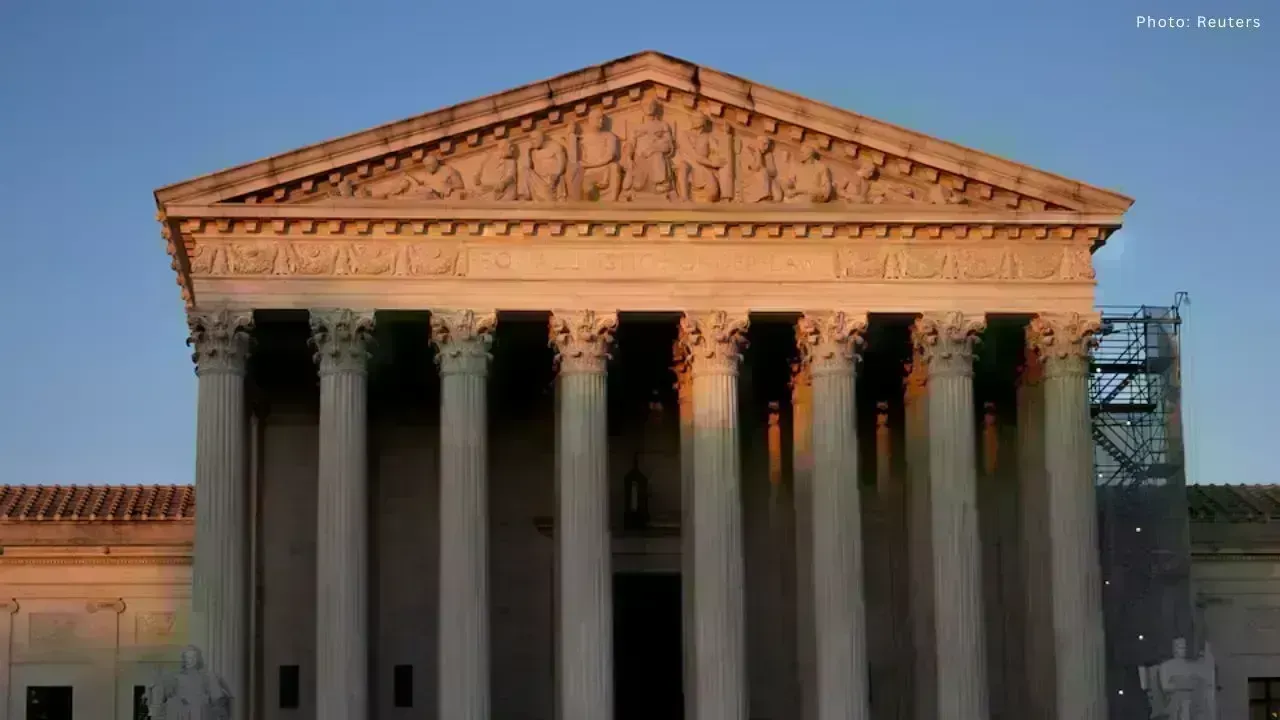
The Supreme Court of the United States is preparing to deliver significant rulings with potential ramifications for the nation's economy and the extent of presidential power. A key focus is the ongoing legal challenge to the global tariffs implemented by President Donald Trump.
As the justices convene for their scheduled session on Friday, attention is zeroing in on cases that critique Trump’s tariffs, which have implications across the board for major U.S. trading nations.
The tariffs were enacted following Trump’s re-entry into office in January 2025, utilizing a 1977 emergency legislation, citing national emergencies stemming from substantial trade deficits and drug trafficking. This policy instituted duties on imports from various countries, including China, Canada, and Mexico.
Several lower courts subsequently determined that the president had overstepped his legal bounds, asserting that the law didn’t grant him such expansive authority. In response, the Trump administration escalated the issue to the Supreme Court.
During November's oral arguments, justices from both sides expressed skepticism regarding whether the tariffs adhered to the confines of the emergency statute. This indicates a potential willingness from the court to curtail presidential powers in this context.
Trump has vigorously supported the tariffs, contending that they have bolstered the U.S. economy and enhanced its leverage in international trade discussions. He cautioned earlier this month that a ruling against these tariffs would be detrimental to the nation.
The lawsuit is spearheaded by businesses affected by increased import costs and by 12 U.S. states, primarily governed by Democrats. They claim the tariffs have inflated consumer prices and disrupted supply chains.
A verdict against the tariffs could not only reshape trade dynamics but also stir uncertainty in financial markets globally. Moreover, it would delineate how far a president might extend emergency powers to execute economic strategies.
In the forthcoming weeks, the Supreme Court is also poised to deliberate on other pivotal cases dealing with voting rights and free speech. Collectively, these rulings could influence U.S. law and political landscapes for future generations.
The global spotlight is on the Supreme Court as its decision on the tariff litigation stands to play a crucial role in redefining the interplay between presidential authority and judicial review.


 English