Post by : Saif
Al-Najjar
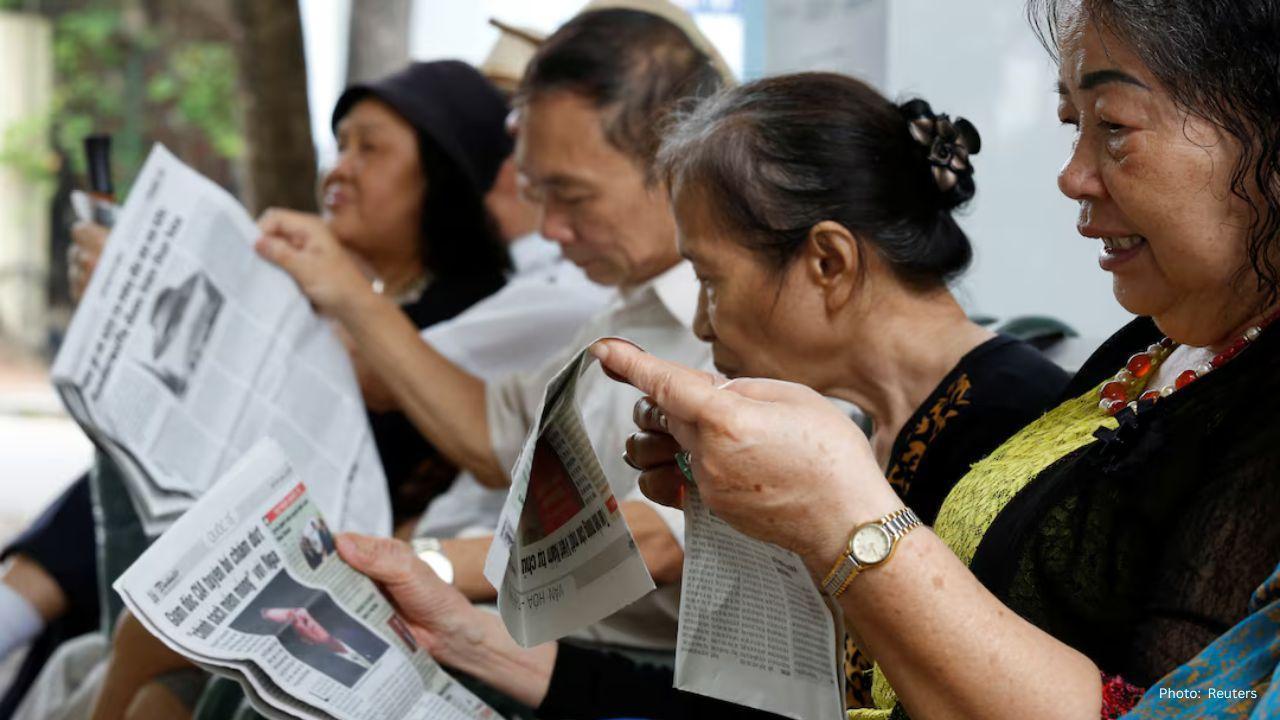
Vietnam’s legislative body has introduced significant modifications to its media and state secrets regulations, raising critical alarms among advocates for press freedom. This new framework, endorsed on Wednesday, complicates journalists' ability to protect their source identities and may elevate legal challenges in reporting.
According to the amended press legislation, effective July, journalists might be compelled to disclose sources if requested by authorities investigating any infractions. Previously, reporters faced disclosure requests only in “serious crime” cases, a privilege solely held by judges. The latest amendments empower the public security ministry and local law enforcement to demand such disclosures, extending governmental oversight over the media.
Aleksandra Bielakowska of Reporters Without Borders stated that these alterations represent “a distressing tightening of the legal structure governing press freedom in Vietnam.” She further commented that the new stipulations could render Vietnam “a nearly impossible environment for journalists to operate freely.” Currently, Vietnam is ranked 173rd out of 180 nations in the Reporters Without Borders World Press Freedom Index.
The press regulatory changes unfold amidst an extensive crackdown on media within Vietnam. Recently, authorities have rescinded passports from foreign reporters, temporarily restricted Telegram messaging services, halted the print edition of The Economist, and broadened the jurisdiction of the public security ministry. Local media remains under strict state control, while international journalists endure constant surveillance, travel pre-approvals, and limited access to press occasions.
Bielakowska also pointed out that at least 28 journalists are incarcerated in Vietnam, frequently under harsh conditions, “merely for fulfilling their professional duties.”
In a distinct measure, Vietnam’s legislators have also revised the state secrets law, expanding the classification of information deemed confidential. This law, poised to take effect in March, now encompasses additional state information like foreign leaders' travel agendas, state remuneration, and outcomes of international investment disputes. Violations related to state secrets carry hefty fines and prison terms, providing authorities more mechanisms to regulate information.
Advocates for press freedom warn that collectively, these legal adjustments pose a severe risk to independent journalism in Vietnam. They fear that the amendments will augment governmental authority to stifle critical reporting and curtail transparency, intensifying control over an already tightly constrained media landscape.
Ultimately, Vietnam’s revised press and state secrets regulations represent a pivotal move towards stifling journalistic expression, equipping authorities with far-reaching powers to compel source disclosures and classify additional information as confidential, potentially leading to enduring impacts on the nation’s media environment.


 English