Post by : Shakul
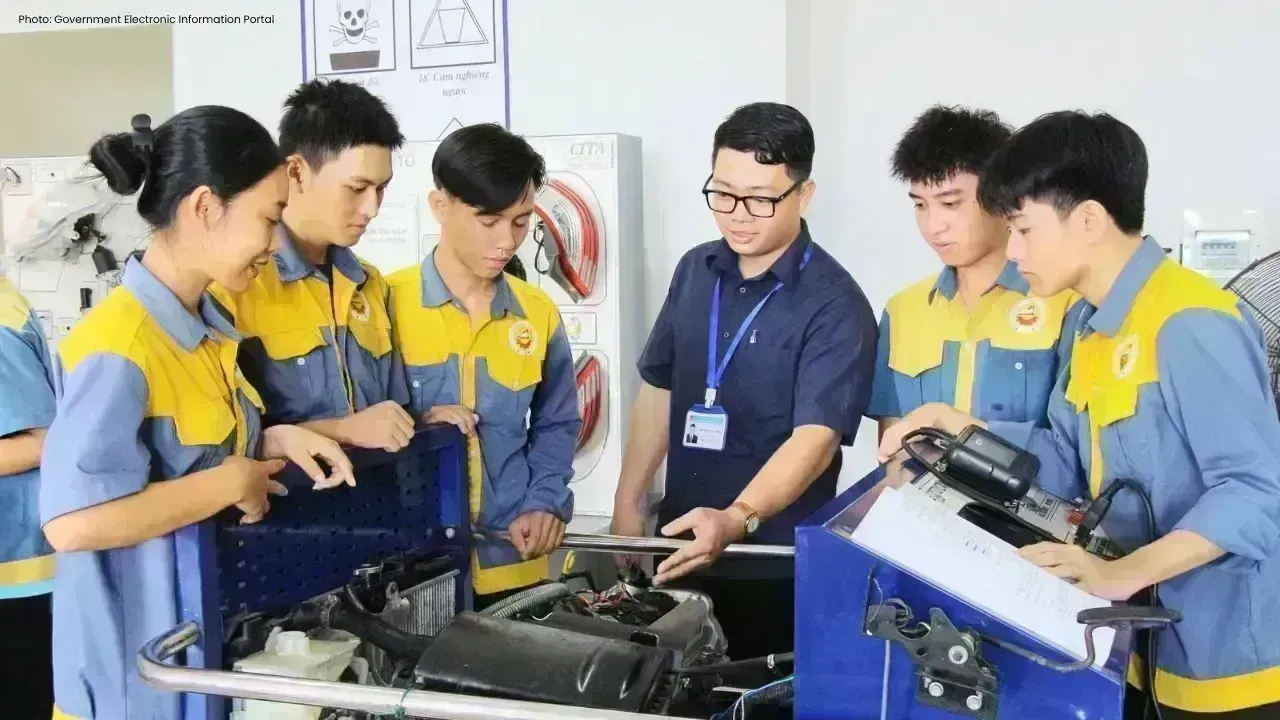
Vietnam is embarking on a comprehensive overhaul of its vocational education landscape with the introduction of a unified regulatory framework aimed at standardizing training, exams, assessments, and graduation recognition across various vocational education levels. This initiative, driven by the Ministry of Education and Training, seeks to modernize the nation’s workforce development strategy.
The forthcoming circular, rooted in the 2025 Vocational Education Law, intends to replace five distinct regulations that currently govern aspects of vocational education. These encompass guidelines for intermediate and advanced training, continuing education, distance learning, and management of academic records. The newly proposed framework will also address vocational secondary education and specialized training programs.
According to officials, this unified regulatory approach will enhance administrative efficiency and minimize redundancies within the vocational education system. Training institutions will conform to a shared set of standards, all while retaining the flexibility to craft programs and internal policies that align with their specific educational objectives and the demands of the industry.
One of the major shifts proposed is the broadening of learning formats. Beyond traditional classroom environments, students can opt for online courses, distance education, and blended learning approaches that mix digital instruction with physical attendance. This strategy aims to grant learners increased flexibility and improved access to vocational training options.
Additionally, the draft introduces a mechanism for acknowledging previously acquired knowledge, skills, and professional competencies. Students may qualify for exemptions or transfer credits in subjects if they can validate equivalent qualifications obtained through work experience, self-education, or professional certifications. This system is intended to help students avoid unnecessary repetition of content they already know.
A noteworthy aspect of the proposed changes is the enhanced role of businesses in vocational education. Students will undergo practical training through workplace learning programs, with businesses actively participating in training, mentoring, and evaluating learners. This initiative aims to close the gap between educational offerings and labor market requirements, thereby increasing graduates’ readiness for employment.
The Ministry anticipates that these reforms will boost transparency, enrich the quality of training, and establish a more responsive vocational education framework. Public input on the proposed circular is currently being gathered via the Ministry’s online portal, ahead of finalization and nationwide implementation.


 English