Post by : Shakul
In April 2026, China experienced a remarkable surge in passenger car exports, even as domestic vehicle sales continued to decline. Data from the China Association of Automobile Manufacturers revealed that exports jumped nearly 85 percent year-on-year, totaling approximately 796,000 vehicles. This trend underscores a growing emphasis among Chinese automakers on international markets amid stagnant demand domestically.
The strongest growth was observed in new energy vehicle exports, including battery electric and plug-in hybrid models, which soared over 120 percent compared to last year, reaching around 420,000 units in just April. Chinese electric vehicle makers are rapidly expanding their footprint globally to meet the burgeoning demand for affordable EVs in markets such as Europe, Southeast Asia, Latin America, and Australia.
Conversely, the domestic automotive sector faces substantial headwinds. Sales of passenger cars plummeted 25.5 percent year-on-year to around 1.3 million units in April, marking the sixth consecutive month of downturn. Analysts attribute this decline to diminished consumer confidence, slower economic performance, and a reduction in government incentives for electric vehicle purchases.
Ongoing challenges in the property market and uncertain economic conditions have made consumers cautious about significant expenditures like cars. Industry analysts note that government support for new energy vehicle purchases has been curtailed this year, further limiting buyer incentives. The competitive landscape has intensified, as numerous automakers introduce new models and cutting-edge technologies to capture consumer interest in a crowded marketplace.
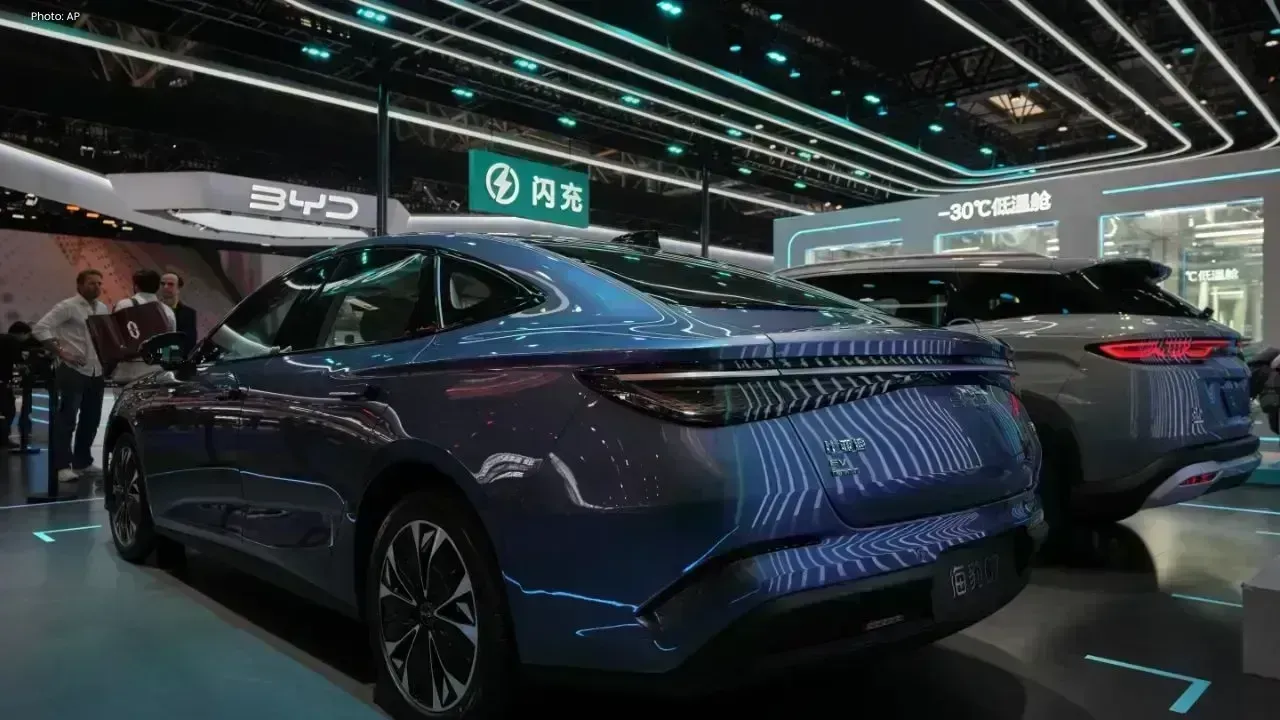
The recent Beijing Auto Show showcased the fierce competition in China's automotive sector, featuring over 1,450 vehicles with cutting-edge advancements like AI-driven driving systems and rapid-charging batteries. Major players such as BYD and Geely Auto are actively pursuing expansion, both domestically and through export and manufacturing investments abroad.
Rising global fuel prices, influenced by tensions in the Middle East and the Iran conflict, are expected to drive more consumers toward electric vehicles. Analysts suggest that increasing petrol prices will benefit Chinese EV exporters, who offer lower prices and greater production capabilities. Reports indicate that in Australia, one in every six newly sold vehicles in April was electric, with BYD emerging as a leading brand.
Looking ahead, forecasts indicate that China's passenger car exports may continue to rise strongly throughout 2026, despite challenges in specific international markets. Chinese firms are boosting manufacturing in Europe and Latin America while enhancing their presence in Southeast Asia. Nonetheless, trade tensions remain a concern, particularly due to heavy tariffs on Chinese electric vehicles imposed by the United States. Market experts are monitoring the upcoming conversations between U.S. President Donald Trump and Chinese President Xi Jinping, as these may significantly impact future trade relations and automotive policies.


 English