Post by : Bianca
Haleem
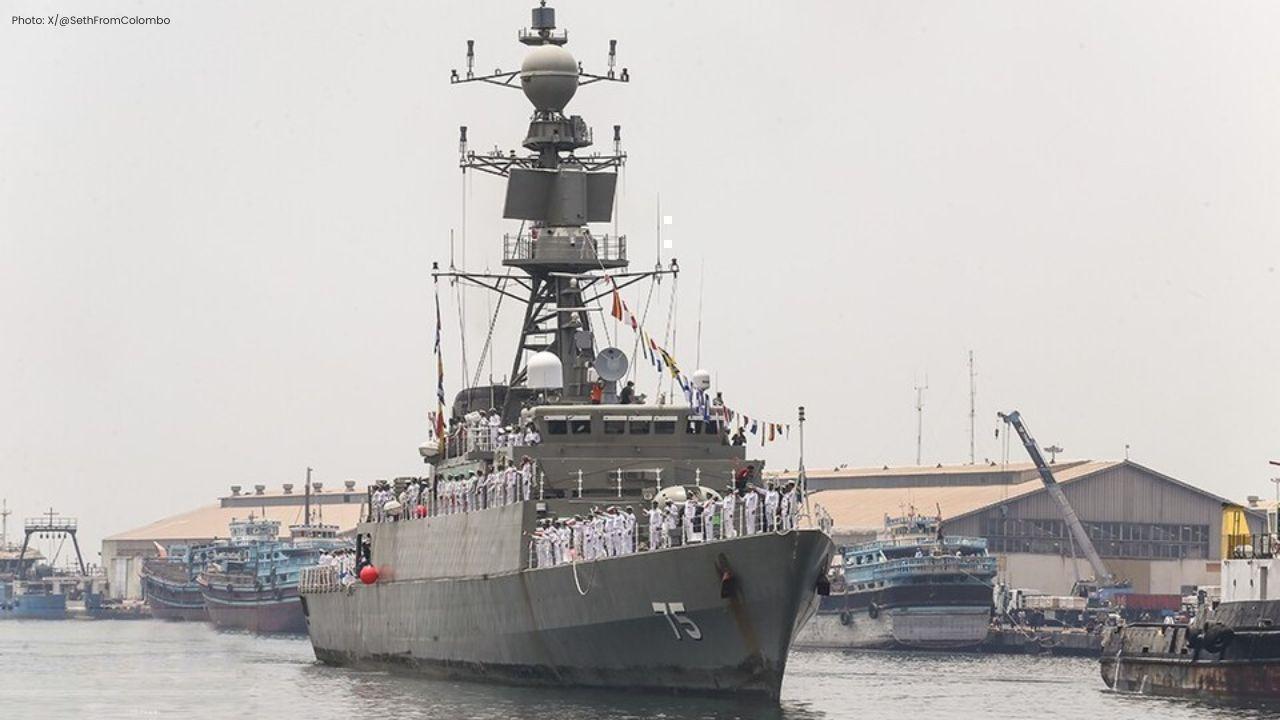
An Iranian naval vessel, IRIS Dena, was sunk in the Indian Ocean after reportedly being struck by a torpedo launched from a United States nuclear-powered attack submarine. The incident occurred roughly 50 nautical miles off the coast of Galle, Sri Lanka, drawing regional attention to another Iranian vessel currently positioned closer to the island nation.
According to reports from naval sources, the torpedo was fired from a Virginia-class nuclear-powered fast attack submarine operating in international waters. The weapon used in the strike is believed to have a range of approximately 20 nautical miles, allowing the submarine to remain concealed while engaging its target. The Iranian corvette was reportedly destroyed during the attack.
The incident has shifted focus to the Iranian military tanker Busheir, which is presently anchored about 10 nautical miles from the outer anchorage of Colombo Port. Unlike the Dena, which was operating in international waters, Busheir is positioned within Sri Lanka’s territorial waters, making any potential action against it a far more sensitive issue under international maritime law.
The sinking of the Dena comes amid escalating hostilities between the United States and Iran across the wider region. Military officials suggest that the US Navy has recently targeted multiple Iranian naval assets as part of efforts to curb threats to international shipping lanes. Reports indicate that several Iranian vessels — including warships and submarines — have been destroyed as tensions intensified in strategic maritime routes.
Naval analysts say the operations are linked to ongoing confrontations in the Strait of Hormuz, where Iran has been accused of targeting commercial vessels and military ships using drones launched from both ships and support vessels. In that context, the Iranian warship was viewed as a legitimate military target once it became involved in hostilities at sea.
Retired naval officials have also weighed in on the debate over whether regional powers should have intervened when the Iranian ship was operating in international waters. However, strategic experts point out that countries not directly involved in the conflict have no legal basis to intervene, particularly when neither party is at war with them.
Meanwhile, tensions across the Middle East remain high following the decimation of Iran’s top leadership in late February, an event that significantly escalated the ongoing confrontation. Iranian authorities have since attempted to expand the conflict by threatening countries in the Gulf region and beyond, including Saudi Arabia and Turkey, accusing them of allowing US forces to operate from bases on their territory.
Despite these threats, Gulf countries such as the United Arab Emirates have reportedly intercepted and neutralised several Iranian drones and missiles, preventing major damage. Analysts suggest that Iran’s missile and drone capabilities may be under pressure as its stockpile diminishes during sustained military exchanges.
While US and Israeli forces continue to carry out strikes on Iranian military infrastructure, the possibility of regime change in Tehran remains uncertain. Security experts note that foreign military pressure often strengthens domestic nationalism, which can consolidate support for the ruling establishment rather than weaken it.
The Islamic Revolutionary Guard Corps (IRGC) and its Quds Force remain operational across Iran, with air defence systems and missile units still active. Intelligence assessments suggest that Iran may have decentralised command structures, enabling missile units to operate independently even if central command facilities are targeted.
Diplomatic observers believe the conflict could continue for several weeks before negotiations resume. Many analysts see renewed talks between Washington and Tehran as the most realistic outcome, particularly over Iran’s nuclear and missile programmes.
For now, the situation across the Indian Ocean and Gulf region remains tense, with naval forces from multiple countries monitoring developments closely as the standoff continues.


 English