Post by : Shweta
Libya Announced a Two-Year Plan for Presidential Elections
Competing bodies unite to formulate a strategy to end years of political strife
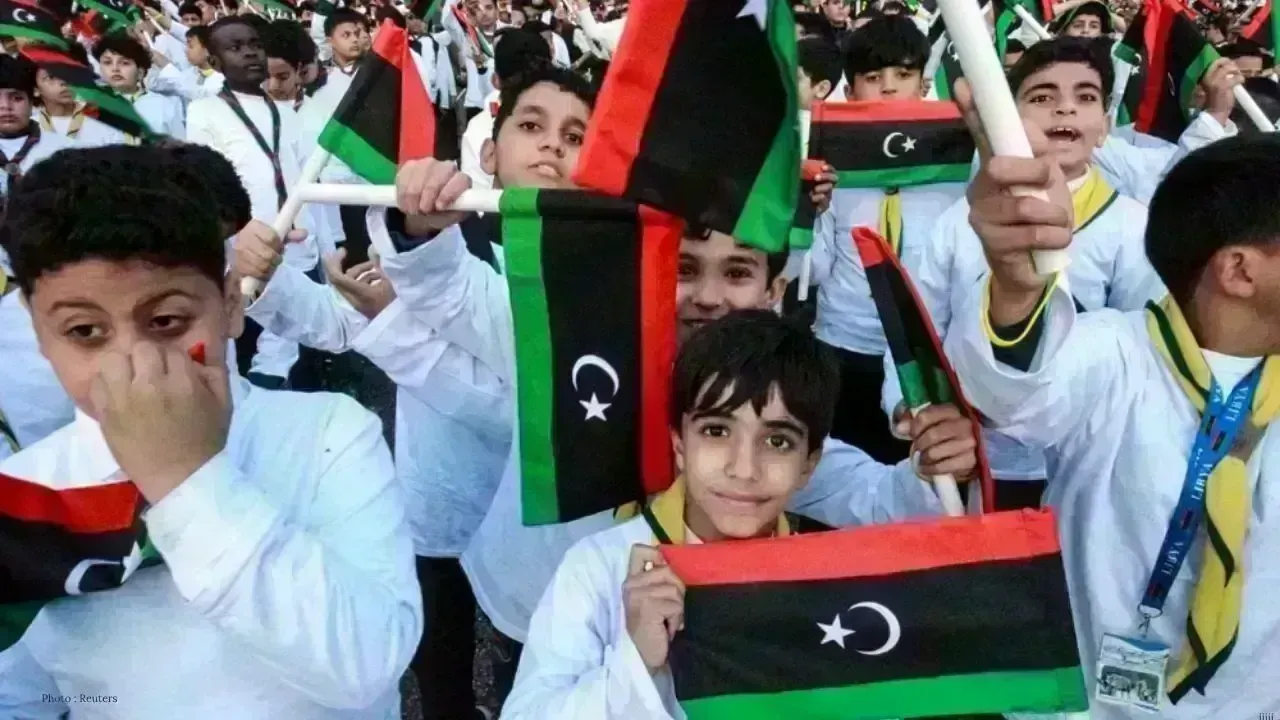
In a significant move, Libya has embarked on a vital phase of its ongoing political transition as representatives from competing factions signed a landmark agreement intended to pave the way for presidential and parliamentary elections over the next 24 months.
This agreement was formalized in Tripoli with the support of the UN Support Mission in Libya (UNSMIL), aiming to tackle unresolved issues around electoral laws, reform the national electoral authority, and set forth conditions to overcome the enduring institutional and political rift in Libya.
Libyan Factions Engage in Constructive Dialogue
Following extensive discussions known as the “4+4” format, the pact was reached involving key representatives from Libya’s major governing bodies, including the Government of National Unity, the High Council of State, the House of Representatives, and the Libyan National Army.
The proposed framework anticipates that presidential and legislative elections will occur within two years, operated under a unified executive authority and cohesive national institutions.
Should the timeline be unachievable, involved parties are expected to collaborate with UNSMIL to devise an alternative strategy to keep the electoral process on course.
UN Demands Action on Agreement
UN Special Representative for Libya, Hanna Tetteh, characterized the agreement as a crucial step to break the political stalemate that has hindered Libya’s electoral progression.
Tetteh emphasized that it is imperative for Libyan political entities to translate this agreement into actionable national policies. This involves the establishment of the electoral framework, execution of the agreed-upon reforms, and fostering conditions suitable for credible elections.
The UN intends to persist in its role as facilitator and supporter of the process.
Leaders in Libya Applaud the Agreement
Libyan Prime Minister Abdul Hamid Dbeibeh expressed his appreciation for the agreement, labeling it an essential stride toward concluding the country’s prolonged transitional phase.
Dbeibeh asserted that it is the Libyans’ prerogative to determine their political destiny through elections that can restore legitimacy to state institutions and mend political divisions.
Speaker of the House of Representatives Aguila Saleh further praised the efforts towards achieving a comprehensive political resolution, supporting initiatives to bridge political divides and facilitate concurrent presidential and parliamentary elections.
Challenges from Libya's Political Landscape
Despite this new accord, considerable obstacles persist. Libya's history has been marred by numerous political initiatives and election strategies that have faltered or ground to a halt since the fall of Muammar Qaddafi in 2011.
Contentions surrounding electoral laws, legitimacy of institutions, authority over state resources, and power distribution have repeatedly thwarted the pursuit of a sustainable resolution.
Analysts cited by Arab News indicated that the real measure of this recent agreement will be its execution, rather than the signing event.
Political Commitment is Crucial
Former Egyptian diplomat Rakha Ahmed Hassan regarded the agreement as a constructive move but cautioned that past UN-led efforts have not succeeded in yielding lasting political stability.
Other experts emphasized the necessity for Libya’s rival institutions to show genuine political commitment for the roadmap to succeed.
The primary challenge will be to avert delays, disagreements, and conflicting interests that may obstruct the electoral process again.
The Importance of the Election Roadmap
Libya remains fragmented between rival political and security entities despite prolonged international mediation. The nation continues to suffer from the ramifications of enduring instability, even with its rich natural resources.
The success of the electoral process could serve as a route towards stronger and more cohesive national institutions and provide Libyans the chance to elect their political leaders through elections.
Nonetheless, adhering to the 24-month timeline will necessitate enduring cooperation between the competing political and security entities.
International and Regional Stakeholder Engagement
This renewed political initiative takes place amid heightened scrutiny from regional and global actors regarding Libya's future.
The Arab League has advocated for a Libyan-led political endeavor focused on unifying state institutions and conducting presidential and parliamentary elections. International engagement is anticipated to remain influential as this new roadmap progresses towards execution.
Libya's political stability holds significant implications for North Africa, regional security, migration flows, trade dynamics, and energy interests.


 English