Post by : Meena
Hassan
On Wednesday, a 4.0 magnitude earthquake shook Myanmar, stirring fears of aftershocks as the country continues to heal from a series of destructive seismic events earlier this year. The quake registered at 11:56:28 IST and occurred at a shallow depth of 10 kilometers, a condition known to amplify ground shaking and raise the likelihood of aftershocks.
The epicenter was pinpointed at a latitude of 25.05 degrees North and longitude of 95.80 degrees East. Fortunately, immediate reports did not indicate significant casualties or devastation, although residents and local authorities remain vigilant, especially in areas that have already endured structural harm in recent months.
Shallow earthquakes are generally more perilous than their deeper counterparts due to the limited distance seismic waves travel to reach the Earth's surface, causing more intense vibrations. These vibrations pose risks to buildings, roads, and vital infrastructure, particularly in regions with aging structures or compromised foundations. Even minor quakes can lead to severe consequences in areas already facing difficulties.
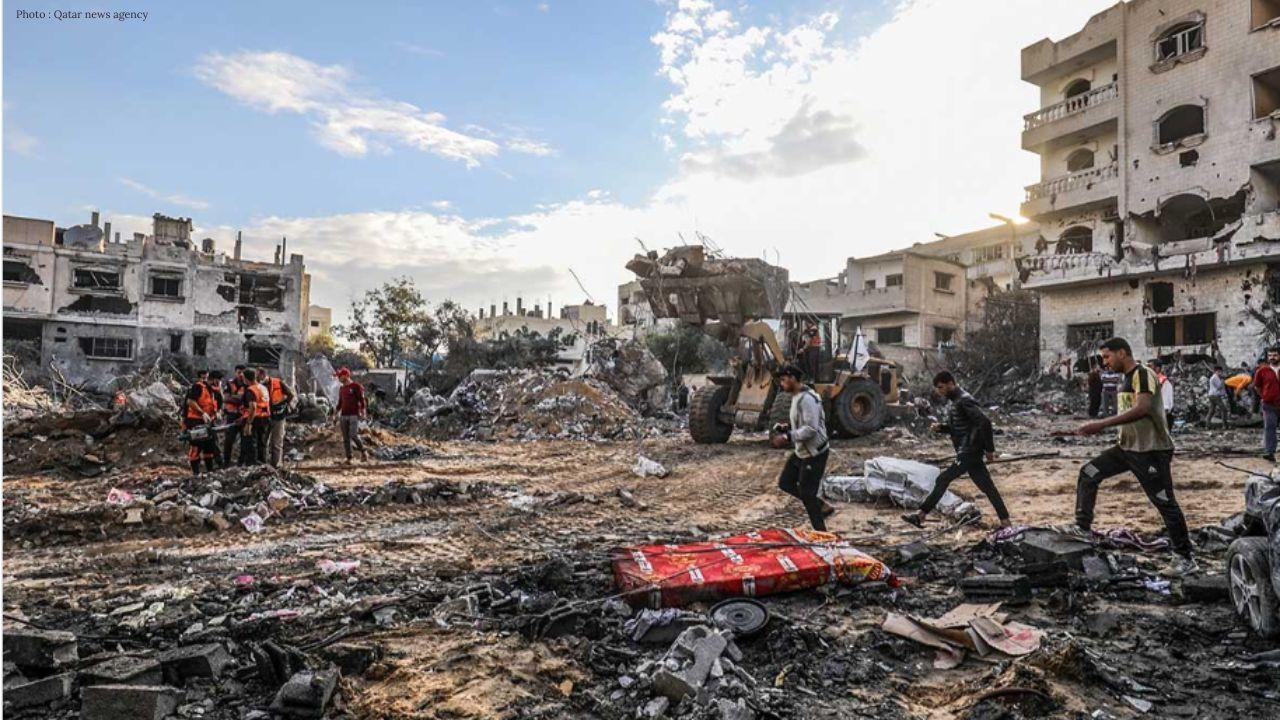
This recent tremor follows two intense earthquakes measuring 7.7 and 6.4 that impacted central Myanmar on March 28. These earlier earthquakes resulted in widespread chaos, displacing tens of thousands and damaging essential facilities such as hospitals and schools. Many former residents are still living in temporary housing, where living conditions remain harsh.
After the March events, global health organizations expressed concerns regarding escalating health risks among displaced populations. A combination of overcrowding, unsatisfactory sanitation, and limited clean water availability has led to increased threats from diseases like tuberculosis, HIV, and various water- and vector-borne illnesses such as dengue, malaria, and diarrhoea. Health systems in numerous affected areas continue to struggle with damaged facilities and scarcity of medical resources.
Earlier this month, Myanmar faced an additional tremor on January 12, measuring 5.0 at a depth of 130 kilometers. Though deeper earthquakes typically result in reduced surface damage, the ongoing seismic activity underscores the country’s persistent vulnerability. The earlier quake was recorded at latitude 24.89 degrees North and longitude 95.07 degrees East.
Myanmar resides within a highly seismically active region, positioned among four significant tectonic plates: the Indian, Eurasian, Sunda, and Burma plates. The constant movement and interaction between these plates contribute to substantial geological stress, making earthquakes a continual risk.
One noteworthy geological hazard is the Sagaing Fault, a 1,400-kilometer-long transform fault traversing the nation. This fault connects the Andaman Sea spreading center in the south to a northward collision zone, significantly elevating the earthquake risk across large portions of the country.
Major urban centers such as Sagaing, Mandalay, Bago, and Yangon are situated near this fault system, housing nearly 46 percent of Myanmar’s population. Although Yangon is distanced from the fault line, experts caution that its concentrated population and urban fabric make it remarkably susceptible. Historical evidence illustrates that a notable earthquake in Bago in 1903, which registered 7.0, caused significant shaking in Yangon despite the distance.
Seismologists are diligently monitoring this region, cautioning that quakes of this magnitude may be succeeded by further tremors. While a 4.0 magnitude quake is typically classified as moderate, its occurrence and location are particularly pertinent given the area’s recent seismic activities. Authorities have advised residents to stay alert and prepared as Myanmar grapples with both geological hazards and humanitarian challenges.


 English