Post by : Anis
Al-Rashid
A Year that Transformed Our Cosmic Understanding
The year 2025 marked a significant leap in modern astronomy and planetary science. Unlike prior years filled with incremental insights, this era unveiled discoveries that were both astonishing and fundamentally changing. A convergence of advanced telescopes, enhanced data analysis capabilities, and ambitious space missions exposed a universe that is more intricate, dynamic, and full of possibilities than previously believed.
What set 2025 apart was not merely the quantity of discoveries, but rather their nature. Researchers uncovered evidence that questioned established models of planetary formation, stellar evolution, and even necessary conditions for life. These breakthroughs didn't just augment scientific databases; they reshaped the inquiries that scientists now pursue regarding humanity’s place in the universe.
A New Age of Observation Enhanced by Advanced Technology
The groundwork for 2025’s revelations lay in technological advancements. Space observatories launched in prior years achieved peak operational success, while data from longstanding missions was revisited with sophisticated analytical techniques. Enhanced spectroscopy, machine learning for data refinement, and more exhaustive sky surveys empowered astronomers to discover patterns and anomalies that were once invisible.
This blend of patience and precision proved vital. Many of the year's most unexpected findings stemmed not from new missions but from novel interpretations of existing data, reinforcing that the universe still conceals secrets in areas we thought we knew well.
Unexpected Complexity Indicated on Mars
Mars has consistently sparked scientific fascination, but 2025 added a new dimension of interest. Subsurface radar analysis unveiled extensive and stable ice deposits closer to the Martian equator than anticipated. This finding implies that Mars may have held accessible water resources much longer into its geological past than previously believed.
Even more surprising was the associated chemical composition of these ice deposits. Scientists discovered organic compounds lodged within mineral structures, hinting at processes that could indicate signs of ancient microbial activity. While this does not confirm past life, it considerably strengthens the argument that Mars once nurtured environments capable of sustaining it.
These discoveries are reshaping the focus of future missions. Plans for human exploration and robotic lander targets are being reevaluated, emphasizing regions once deemed too dry or geologically inactive.
Exoplanets Challenge Habitability Norms
Some of the most notable revelations of 2025 arose from exoplanet studies. Astronomers observed atmospheric compositions that contradicted traditional expectations, with planets exhibiting thick cloud layers that reflect extreme radiation while maintaining stable surface temperatures.
Among the most astonishing findings was the detection of complex molecules in the atmospheres of worlds previously thought to be uninhabitable. These chemical signatures indicated active atmospheric cycles and unforeseen energy balance mechanisms. Such discoveries challenge the conventional definition of the “habitable zone,” broadening the scope of worlds that could potentially harbor life.
These revelations highlight an important understanding: life-supporting conditions may exist in a broader array of environments than scientists had once anticipated, shifting the direction of future exoplanet research.
Black Holes Exhibit Unexpected Characteristics
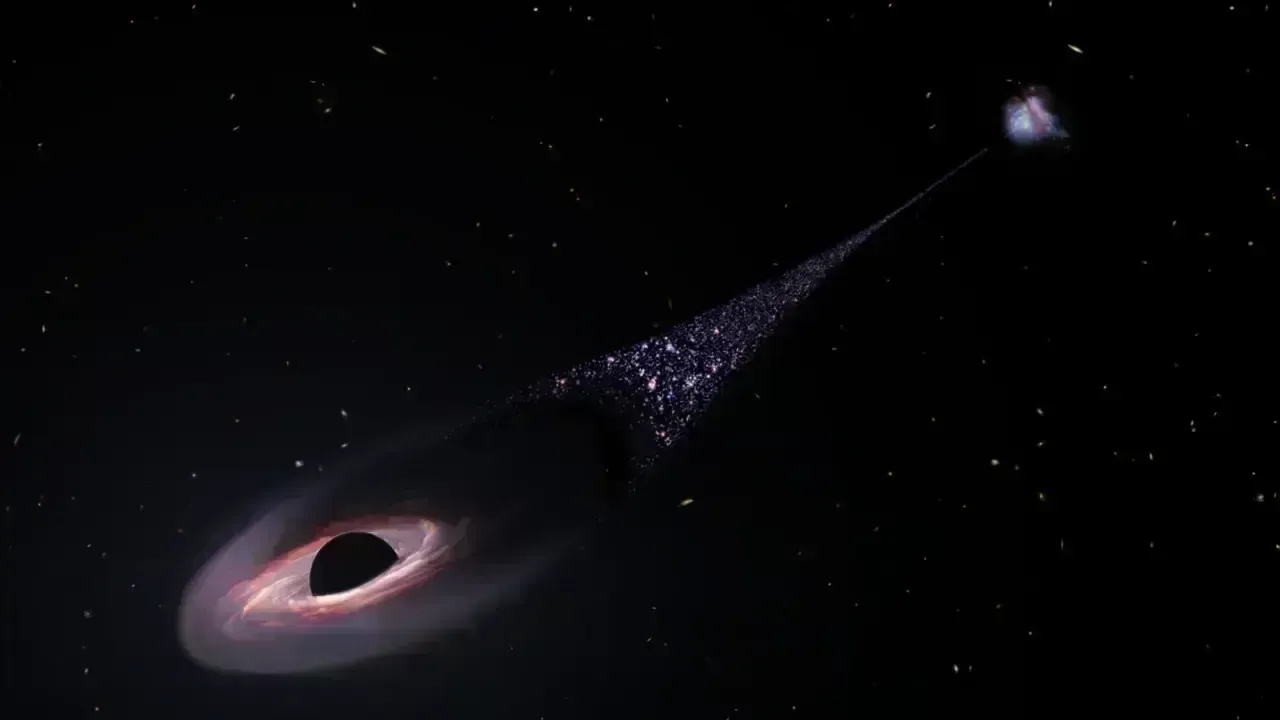
Black holes, typically viewed as cosmic destroyers, revealed more complex behavior in 2025. Observations indicated that some supermassive black holes emit energy in organized jets, influencing star formation across entire galaxies. Instead of hindering growth, these jets can initiate the birth of new stars by compressing surrounding gas.
More surprising was the evidence suggesting that black holes can experience cycles of activity and dormancy, echoing natural systems on Earth. This pattern indicates a feedback mechanism between black holes and their host galaxies, emphasizing the role of black holes as essential architects of cosmic structure rather than merely destructive forces.
This evolving perspective is prompting astronomers to reconsider longstanding models of galaxy evolution.
Asteroids Provide Insights into Earth’s Origins
2025’s asteroid missions yielded fresh insights into the early solar system. Analysis revealed complex organic molecules and water-bearing minerals strikingly similar to those found on Earth. These findings bolstered the theory that asteroids played a crucial role in delivering water and organic material to our planet.
The most surprising aspect for researchers was the diversity of chemical compositions within a single asteroid sample, suggesting that early solar system bodies were much more interactive and dynamic than previously thought, engaging in continuous material exchange during their formation.
These results deepen our understanding of Earth's habitability and highlight asteroids as vital records of planetary history.
The Moon Shows Unforeseen Geological Activity
For years, the Moon has been considered geologically inactive. However, in 2025, this assumption was overturned. High-resolution imaging and seismic data unveiled subtle tectonic activity and heat signals below the lunar surface, implying that the Moon still possesses internal energy, albeit at lower levels than Earth.
This discovery carries practical implications. Understanding lunar geological activity is vital for future human habitation, as it impacts habitat stability and resource extraction strategies. It also reshapes assumptions about how long rocky bodies can remain geologically active after their formation.
New Insights into Cosmic Explosions
Gamma-ray bursts, known as some of the universe's most intense phenomena, gained new clarity in 2025. Researchers identified previously unknown precursor signals occurring just before these explosive events. This advancement allows astronomers to predict such events with enhanced accuracy and examine their environments in previously unattainable detail.
The discovery revealed that these bursts are not singular events but part of a broader sequence of stellar evolution occurrences. This understanding aids scientists in mapping the life cycles of massive stars with unprecedented precision.
Interstellar Space More Dynamic Than Assumed
Once thought to be a relatively empty expanse, interstellar space revealed new intricacies in 2025. Researchers found evidence of dynamic chemical reactions happening within interstellar clouds, producing molecules essential for star and planet formation. This indicates that the components of life are more widely distributed than previously believed.
These findings reinforce the notion that the universe is not a static setting, but an ever-evolving landscape where chemistry and physics interact on extensive scales.
AI Revolutionizes Discovery Processes
A largely unnoticed yet transformative element behind many of 2025’s discoveries was the implementation of artificial intelligence in data evaluation. Machine learning systems analyzed vast amounts of astronomical data, uncovering subtle patterns that human researchers might overlook.
AI-assisted techniques expedited the identification of rare phenomena, from unconventional stellar activities to faint signals in deep-space observations. This collaboration between human insight and computational capabilities is now an indispensable part of contemporary space science.
The Broader Implications of 2025’s Discoveries
The ramifications of the 2025 space discoveries extend beyond scientific domains. They affect how humanity envisions future explorations, resources allocation, and its understanding of its place within the universe. Each finding helps us inch closer to answering fundamental questions regarding life, origins, and destiny.
These revelations also fuel technological advancements, from cutting-edge materials used in space missions to refined data scrutiny methods with applications on Earth.
Looking Forward After 2025
While the achievements of 2025 were extraordinary, they also paved the way for future breakthroughs. Upcoming missions are being redesigned in light of these findings, focusing on areas and phenomena that were initially undervalued or ignored.
Researchers anticipate that the next decade will further blur the boundaries between scientific fact and fiction, with discoveries that test even the most creative hypotheses.
Conclusion: The Universe Awaits Further Discovery
The surprising space discoveries of 2025 share a unified theme: the cosmos is much more dynamic, interconnected, and intricate than we once understood. From Mars and the Moon to remote exoplanets and black holes, each finding has broadened the horizons of human comprehension.
Rather than offering definitive answers, these discoveries have prompted new inquiries, ensuring that curiosity remains the core driver of exploration. As we peer into the future, one truth remains clear — the universe still harbors numerous mysteries waiting to be unveiled.
Disclaimer: This article serves as a general science overview based on publicly discussed space research trends and findings articulated throughout 2025. Interpretations may evolve as additional scientific data becomes accessible.


 English