Post by : Saif
Al-Najjar
The proposed Israeli heritage bill concerning the West Bank has generated heightened apprehension among Palestinians. They fear that these ancient sites may not solely be for preservation but also a mechanism for greater political control over the land. Central to this contention is legislation that would elevate archaeological and heritage sites in the West Bank under stronger Israeli civil jurisdiction and allow for land acquisition related to these sites. Many Palestinians, along with rights organizations and some Israeli scholars, argue this could erode Palestinian self-rule, intensify settlement expansion, and heighten land confiscation, especially in areas like Sebastia near Nablus.
This issue transcends mere historical preservation; control over ancient landmarks is deeply interconnected with tourism, agriculture, water resources, and land ownership in the occupied West Bank. For Palestinian communities adjacent to these sites, any administrative changes can significantly impact their daily lives and local economies. Consequently, the proposed legislation has evoked a strong backlash, as critics contend that archaeology is becoming entwined with broader struggles for sovereignty and settlement growth. Israeli proponents, however, maintain that the law aims to protect heritage linked to ancient and biblical histories.
The bill, dubbed the “Heritage Authority in Judea and Samaria”, has already cleared one of the three necessary parliamentary votes in Israel. Should it receive final approval, the management of archaeological sites from the Roman, Byzantine, and Crusader periods would shift to Israel’s Ministry of Heritage. This would permit the “expropriation and purchase of real estate” associated with these heritage sites. Practically, this implies that the Israeli government could assume a broader role in regulating archaeological zones and nearby land in territories governed by the Palestinian Authority, which operates under the Oslo peace accords established in the 1990s. Palestinians view this as a substantial political shift, even though supporters assert it does not alter the territory's legal status.
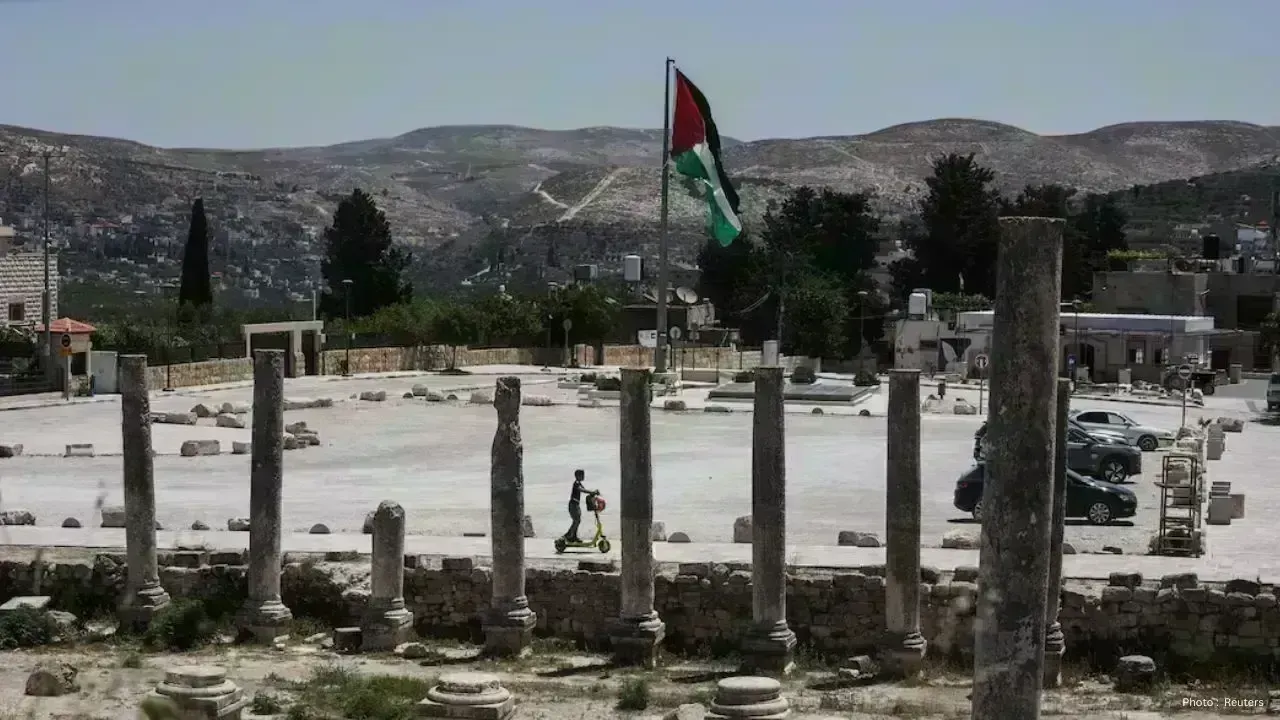
Sebastia, a village in the northern West Bank, exemplifies the sensitivity of this issue. Home to a significant archaeological site with remnants from the Israelite kingdom and various historical periods, Sebastia plays a critical role in local tourism, with many families depending on visitors for their livelihoods. The village believes that the site is not merely a tourist attraction but integral to their community, economy, and ties to their land.
This urgency is underscored by Israel's recent plans, announced in late 2025, to seize about 1,800 dunams, roughly 445 acres, in the Sebastia region for development related to the archaeological site, as reported by local officials. Representatives from the village indicated that this move could threaten approximately 5,000 olive trees and impact essential resources like roads and water supplies. In an area where agriculture and tourism are vital for survival, such land loss poses significant risks. Nizar Kayed, Sebastia's deputy mayor, expressed fears that the plan would deprive residents of crucial resources, characterizing it as part of a broader initiative to enhance settlement control.
Local businesses are already feeling financial strain, as tourism in portions of the West Bank has faltered since late 2023 amid ongoing regional conflict and security unrest. Residents of Sebastia worry that if Israeli authorities tighten their grip on the site and adjacent lands, the village may be severed from one of its last viable economic sources. Nahed Sakha, a local restaurant owner, noted that his property is among areas targeted for confiscation, expressing concern that the archaeological site seems to be increasingly disconnected from the local community. This sentiment embodies the broader Palestinian argument: that heritage protection serves to alienate rather than support local populations.
Palestinian officials have voiced their concerns regarding the implications of this measure. The Palestinian Authority's tourism minister, Hani Al-Hayek, asserted that controlling these antiquities aims to expand Israeli settlement activity within Palestinian territory. His statement echoes long-standing apprehensions among Palestinians that archaeology and historical narratives are exploited to justify political and territorial advances. In the West Bank, where geography and heritage sites routinely intersect with larger disputes, the discourse surrounding preservation is inextricably linked to themes of occupation and land control.
Israeli politicians advocating for the bill dismiss claims that it equates to annexation. Zvi Sukkot, a prominent figure in advancing the legislation, emphasizes that its purpose is to safeguard ancient relics and reaffirm the historic Jewish connection to the land. He contends that the bill does not alter the legal status of territories, which many in Israel refer to as Judea and Samaria. According to this perspective, the initiative is framed as a measure to protect historically significant sites and prevent neglect.
However, this rationale has failed to quell criticism domestically. The anti-settlement organization Peace Now has labeled the bill a push for annexation, warning it could lead to significant land expropriation from Palestinians. They argue that archaeology has been previously leveraged to facilitate settlement growth and caution that current efforts exceed all prior attempts. An open appeal from the Israel Academy of Sciences and Humanities urging the bill's cancellation highlights broader unease regarding its potential impact on Israel's international archaeological standing and collaborative ventures. This concern signifies that criticism extends beyond Palestinian fears, engaging some Israeli academics and professionals who apprehend the repercussions of politicizing heritage management.
The proposed heritage bill also aligns with a disturbing trend in the West Bank. Recently, Israel has sought to assume planning and construction authority at the Ibrahimi Mosque/Tomb of the Patriarchs in Hebron from Palestinian governance, thereby disrupting existing arrangements. Concurrently, Israeli authorities have pressed forward with new settlement housing initiatives in the region. Taken together, these actions fortify Palestinian assertions that the heritage bill is not an isolated legal measure but rather part of a broader agenda to enhance Israeli control over land, planning, and historical sites.
The complex legal and political backdrop renders the situation even more charged. Israel occupied the West Bank following the 1967 war, with the region remaining under Israeli governance since then, albeit through varying administrative frameworks. The Palestinian Authority exercises limited self-rule in certain areas, while Israel maintains comprehensive military control in many segments. The majority of countries and United Nations bodies classify Israeli settlements in the West Bank as illegal under international law, citing violations of the Fourth Geneva Convention by relocating civilians into occupied territory. Israel disputes this perspective, asserting that the land is disputed rather than occupied, bolstered by historical and security claims.
This legal contention profoundly influences perceptions of the heritage bill. For Israeli advocates, it stands as a safeguard for vital archaeological sites and affirms an ancient connection to the land. Conversely, Palestinians interpret it as a step toward de facto annexation, whereby control is incrementally asserted through legislation and logistical arrangements rather than a single overt declaration. This underscores the bill's significance, extending beyond museums or tourism to the fundamental questions of land ownership and historical narratives.
From an editorial perspective, one of the most alarming aspects of this discourse is how the preservation of culture intertwines with territorial authority in one of the world's most contentious regions. Ancient sites warrant safeguarding—a stance no sensible observer would contest. However, when a law promising to protect historical sites simultaneously facilitates land expropriation and curtails Palestinian oversight, the line between archaeology and politics becomes blurred. In such a context, heritage risks becoming a means of control rather than a pathway to mutual understanding.
Additionally, the human repercussions of this legalese are often obscured. For villages like Sebastia, the loss of land control goes beyond mere archaeological points on a map; it threatens families' olive crops, vital water sources, access roads for schools and healthcare, and tourism revenue crucial for small-scale businesses. These concerns are not abstract; they represent the daily struggles of people already enduring occupation, restrictions, and economic precariousness. When land surrounding heritage sites is vulnerable to appropriation, the ramifications extend well beyond the stones that comprise those ruins.
Crucially, one must consider whether such actions will truly protect archaeology in the long term. Should local populations begin to perceive ancient sites as instruments of displacement rather than shared history, trust will erode. Efforts towards preservation will become more challenging, collaboration will dwindle, and heritage itself may transform into a battleground. The warnings from Israeli scientists are significant; their anxieties extend beyond diplomatic ramifications, encapsulating concerns that weaponizing archaeology will undermine scholarly integrity and international academic collaboration.
At present, the ultimate outcome of the bill remains uncertain as it still awaits further parliamentary validation, with Israel potentially heading towards elections later this year. Nevertheless, even prior to becoming law, the proposal has intensified concerns among Palestinians that the struggle for control over the West Bank is now escalating into a phase where history, tourism, land governance, and heritage preservation are all becoming interwoven in the quest for authority. Sebastia stands as a cautionary tale of this impending reality—a site of ancient significance now symbolizing the fears of local inhabitants concerning their future in this evolving landscape.
Ultimately, the contention surrounding ancient West Bank sites is not merely a discourse regarding remnants of bygone eras but rather a reflection of current power dynamics and future ownership. The proposed Israeli heritage bill presents itself as an initiative to safeguard history, yet to many Palestinians, it appears as a vehicle for redefining control over the land intertwined with that history. This is why reactions have been so impassioned and why this matter will likely continue to be a contentious issue in the months to come.


 English