Post by : Saif
Al-Najjar
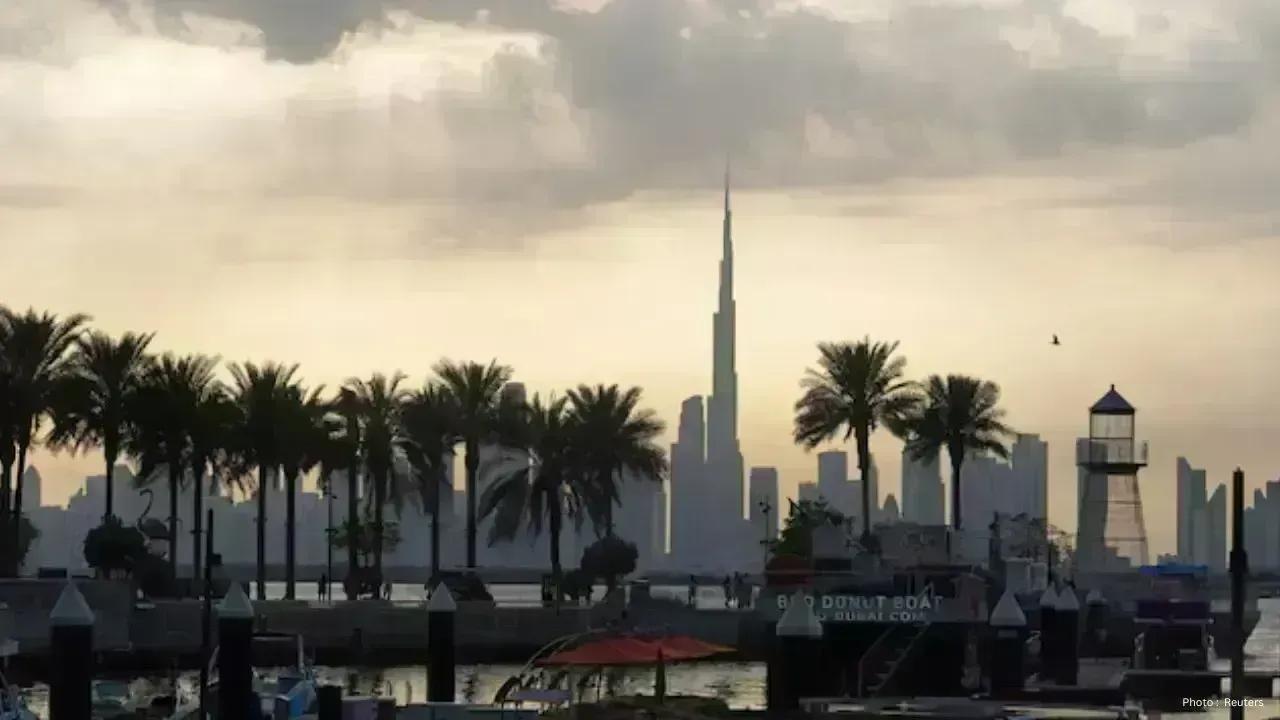
In light of the recent Iran war shock, Dubai is taking decisive steps to restore investor and business confidence, focusing on its role as a top-tier hub for global trade, tourism, and finance. The conflict has sent ripples through the region, impacting travel, unsettling investors, and dampening business morale. To counteract this, Dubai’s leadership swiftly convened with business leaders to strategize recovery efforts aimed at preventing this security disruption from morphing into a deeper economic challenge.
This initiative is about more than just addressing immediate losses; it’s about safeguarding Dubai’s reputation as a reliable and efficient link between East and West. The dynamics of its economy are built on sectors such as aviation, real estate, logistics, and hospitality, with minimal reliance on oil revenues. Thus, maintaining confidence is crucial to preserving Dubai’s allure for international companies, high-net-worth investors, and travelers alike.
Immediately following the onset of the regional conflict, high-ranking officials gathered business executives to discuss ways to mitigate the economic fallout. Practical questions emerged: how to draw tourists back, how to reassure investors, and what support businesses urgently required. This strategic dialogue transitioned into broader initiatives, including financial assistance, sector-specific support, and an overarching message aimed at global markets that Dubai would remain resilient and competitive amidst the surrounding turmoil.
A pivotal outcome was a support allocation of 2.5 billion dirhams, primarily intended for sectors hit hardest by the conflict like tourism and retail. Additionally, monetary authorities across the UAE have enacted liquidity support measures to fortify the financial infrastructure and maintain the flow of credit. This proactive stance signals the government’s recognition of the stakes involved; the primary risk for a city like Dubai during geopolitical unrest is often a rapid decline in confidence rather than direct destruction from conflict. Falling tourist numbers, delayed investments, and slower business expansions can pose severe threats if not addressed promptly.
Tourism represents one of the clearest areas of impact. Dubai has meticulously cultivated its image as a global destination for leisure, shopping, and business. Yet, the travel industry is notoriously sensitive to regional tensions. Despite hotels and attractions remaining operational, media reports concerning conflict can discourage travelers. Preliminary data indicates that while restaurant sales and flight operations are rebounding, hotel occupancy remains under pressure—a substantial concern since hospitality intertwines closely with the broader economy. Reduced tourist footfall equates to less spending in various sectors, affecting retailers and service providers alike.
Challenges also emerge in trade and logistics. As a pivotal shipping and re-export hub, Dubai links multiple continents: Asia, Africa, Europe, and the Gulf. Conflict-induced fears regarding freight routes can prompt shipping and logistics firms to rethink their operational pathways. Consequently, some trading activities are reportedly shifting to neighboring nations to sidestep uncertainties surrounding shipping lanes. This situation poses a significant warning for Dubai, which relies on being recognized as a dependable conduit for regional trade.
The financial sector is equally under scrutiny. In recent years, Dubai has positioned itself as an attractive financial hub for banks, fintech firms, and other financial entities, flourishing as a wealth management center while keeping its tax base favorable. However, trust is paramount in finance; if global investors perceive Dubai as increasingly vulnerable to regional instability, capital may flow elsewhere. Thus, ongoing dialogues between officials, banks, and investors are aimed at restoring that vital sense of trust, which increasingly parallels the urgency of reviving tourism and other economic activities.
Observations from the stock market illustrate the volatility of investor sentiment: foreign inflows turned to outflows post-conflict, indicating how rapidly confidence can wane amid stability concerns. Some analysts now speculate a marked slowdown for the region’s economies if uncertainty continues, highlighting the vulnerability of non-oil sectors that predominantly fuel Dubai and Abu Dhabi’s growth.
Leadership in Dubai appears cognizant of the fact that merely offering emergency support won’t suffice. A compelling message that emphasizes ongoing development and the city’s resilience is essential. Therefore, officials persist in revealing major investment plans like transport expansions, airport developments, and real estate projects. The narrative is clear: Dubai continues to invest in its future, and this approach has been central to its economic strategies that aim to offset uncertainty with ambitious growth.
Nonetheless, the Iran war shock has raised deeper questions about Dubai’s reputation. Historically, the city has thrived on its perception as a safe haven amidst regional turbulence, but this conflict has directly challenged that narrative. Disruptions to flights, fluctuations in supply chains, and hesitance from tourists and investors could undermine its status. The pressing issue is not whether Dubai can weather such shocks—it undoubtedly can—but whether it can sustain its image as a safe and reliable hub if tensions rise again.
From an editorial perspective, Dubai’s current strategy reveals both its sensibility and vulnerabilities. Immediate engagement with the business community, sector-focused assistance, and proactive investor outreach are prudent steps for recovery. However, this situation underscores an inherent fragility within the Gulf growth model that is frequently overlooked. While diversifying into various sectors like tourism and finance can modernize the economy, these industries are also highly susceptible to external fears and uncertainties—the impacts of which can reshape investor behavior long after immediate crises stabilize.
Dubai’s future must now balance its economic recovery with a renewed commitment to building confidence. The city faces the task of demonstrating that the recent disruptions are anomalies rather than indications of a new reality. Infrastructure and public administration must convey their capacity to manage crises effectively. Competing with fellow Gulf cities for global capital and talent will only intensify in this context; hence, how Dubai narrates its recovery journey will significantly influence its attractiveness to global investors.
Despite these hurdles, Dubai retains several competitive advantages: responsive governance, robust state-backed enterprises, and established connections with global financial systems. These assets provide more leeway than many cities may have in comparable circumstances. Still, resilience should not be mistaken for invulnerability—the economic ramifications from regional conflicts can linger, potentially reshaping business strategies and travel norms well after the crisis has subsided.
Looking forward, much hinges on the Gulf's ability to return to calm and whether businesses perceive adequate signs of recovery. Should stability prevail, Dubai may swiftly regain its operational momentum. Conversely, prolonged uncertainty could prompt officials to implement additional support tailored to vulnerable sectors such as tourism and retail. Ultimately, the important takeaway remains: in a city shaped by trust, both confidence and infrastructure must be preserved to maintain Dubai’s hub status.
Why is Dubai collaborating with businesses post-Iran war shock?
Dubai is committed to solidifying its status as a prime Gulf business hub following the conflict’s negative impacts on tourism, trade, and investor faith. Officials have actively engaged companies to understand their support needs and restore confidence.
What support initiatives has Dubai enacted after the regional conflict?
Dubai has introduced a 2.5 billion dirham assistance package primarily aimed at sectors like tourism and retail, complemented by broader UAE liquidity measures to bolster the financial sector.
What was the economic fallout of the Iran war on Dubai?
The conflict resulted in disruptions to travel, diminished hotel occupancy, investor concerns, trade route pressures, and jeopardized Dubai’s reputation as a reliable commercial hub.
Why is it crucial for Dubai to maintain its hub status?
Dubai’s economic vitality is heavily reliant on sectors such as tourism, logistics, finance, and international business, underscoring its reputation as a trusted link between diverse global markets.
Can Dubai swiftly rebound from the Iran war shock?
With strong financial backing and government support, Dubai is well-positioned for recovery, yet the speed will depend on the restoration of regional stability and investor sentiment.


 English