Post by : Shweta
This week, the relationship between Canada and the U.S. was marked by renewed political friction as President Donald Trump reiterated his view of Canada as a potential "51st state" amidst ongoing trade discussions in Washington. These remarks surfaced at a critical moment when Canadian officials are striving for advancements in key trade and economic matters with the U.S.
Trump issued the statement via social media in response to reports indicating that Canada has slipped into a technical recession, marked by two successive quarters of economic downturn. Along with a news headline on the subject, he tagged his discussion with the term "51st state," reviving contentious rhetoric that has ignited criticism from Canadian leaders and provoked debate on both sides of the border.
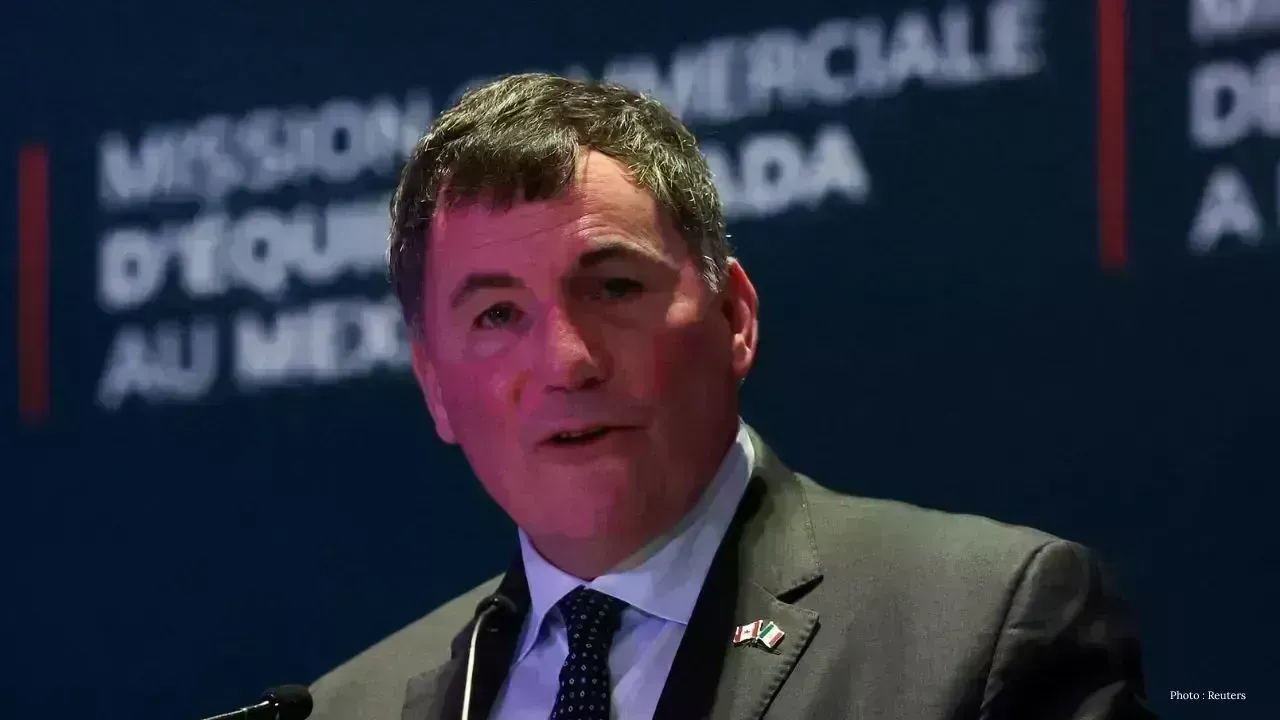
Simultaneously, Canada’s U.S. Trade Minister Dominic LeBlanc was meeting with high-ranking American officials in Washington to deliberate the future of the United States-Mexico-Canada Agreement (USMCA), or CUSMA as it is known in Canada. While LeBlanc characterized the talks as beneficial, he did indicate potential for considerable "turbulence" in the upcoming weeks and months as negotiations persist. He emphasized the complexity of trade discussions, underscoring that significant divergences between the two nations must still be navigated.
Canada is advocating for a 16-year renewal of the North American trade pact instead of entering a cycle of annual reassessments. Canadian officials assert that a long-term renewal would foster greater stability for businesses, investors, and workers throughout North America. However, U.S. representatives have expressed a desire to reevaluate various aspects of the current agreement, heightening uncertainty over whether all parties can reach an accord before the July review deadline.
Prime Minister Mark Carney of Canada attempted to mitigate the impact of Trump’s remarks, affirming Canada’s dedication to nurturing robust economic and security relations with the United States. He stated that his administration will refrain from responding to each social media post by the American president and will persist in pursuing negotiations despite potential political distractions.
These recent exchanges underscore the intricate dynamics of the bilateral relationship. Despite cooperative efforts on trade, security, and economic matters, Trump’s repeated suggestions of Canada aligning more closely with the U.S. stoke controversy and discontent among Canadians. Analysts suggest that while these comments are unlikely to threaten Canada’s sovereignty, they can cloud diplomatic interactions amid challenging trade negotiations.
As discussions advance, Canadian officials remain dedicated to safeguarding national interests and establishing a reliable trade framework that encourages economic growth. The ability of both sides to reconcile their differences before the impending review deadline is now one of North America's most closely observed political and economic narratives.


 English